
For almost 200 years, a small town in New England was the birthplace of tools that helped shape America.
But now, New Britain, Connecticut—affectionately dubbed ‘Hardware City’—is witnessing the closure of the last Stanley Black & Decker facility still operating in its original hometown.
Stanley Black & Decker is set to shut down its Myrtle Street factory on May 18, resulting in the loss of approximately 300 jobs, including over 200 union positions. This decision has stirred up significant discontent among employees and local authorities.
This closure brings to a close a storied manufacturing history that started back in 1843 when Frederick Trent Stanley established what would become The Stanley Works.
During its heyday, Stanley provided employment for thousands in New Britain, transforming it into one of the most famous factory towns in the United States. By the end of this month, the company’s corporate headquarters will be the sole remaining significant Stanley presence in the city of its origin.
Stanley has stated that the plant’s primary product—single-sided tape measures—has become outdated, as consumers now prefer double-sided tape measures, which are deemed ‘more efficient.’
Stanley chose not to upgrade the New Britain plant to produce double-sided tape measures because it already has a factory in Thailand that makes them – and labor costs there are approximately 75 percent lower than in the US.
New Britain mayor Bobby Sanchez said he was ‘deeply disappointed’ by the decision.
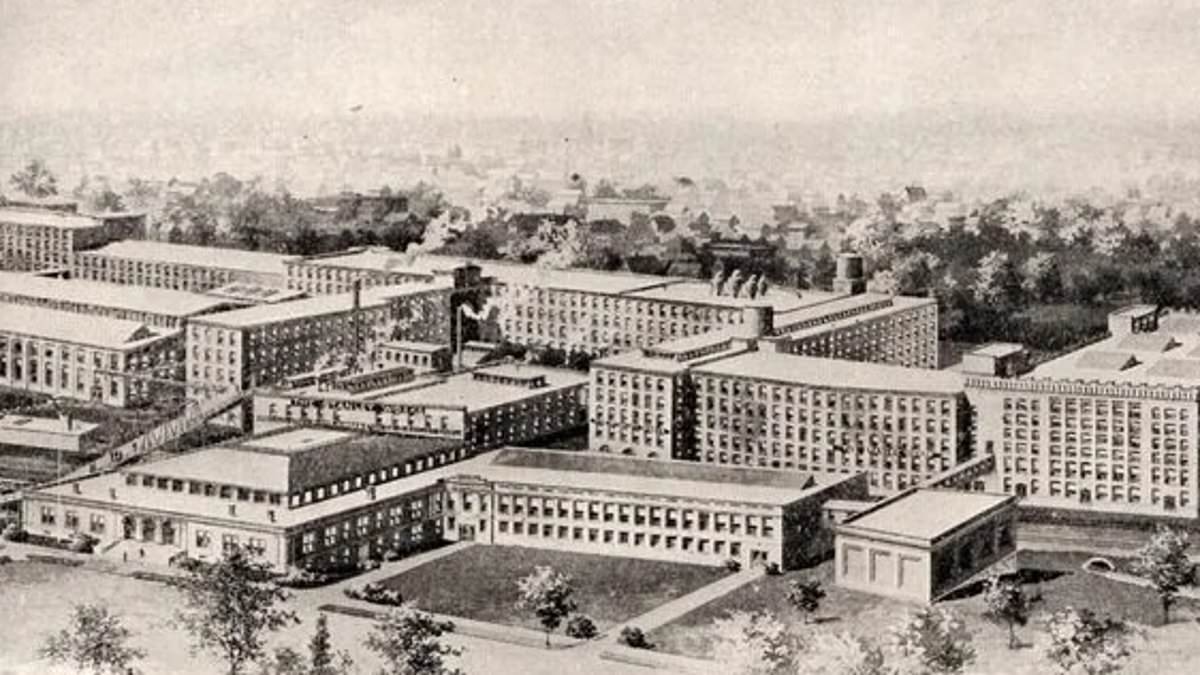
Stanley Black & Decker was founded in New Britain, Connecticut, in 1843 as the Stanley Works, and it rapidly became the heart of the city’s economy. A historic postcard shows a view of New Britain’s Stanley Works in 1919
Stanley’s New Britain plant was tooled to produce single-sided tape measures (left), which the company said are less popular than double-sided tape measures (right)
‘For generations, Stanley Works has been part of the fabric of our city, providing good-paying jobs, supporting families and helping New Britain’s proud reputation,’ he told NBC Connecticut.
Stanley merged with Black & Decker in 2010, to form Stanley Black & Decker, but kept its headquarters in New Britain.
The Trump administration’s tariff policies hit Stanley hard – it moved manufacturing out of China and increased prices due to the tariffs.
In 2025, the company saw revenue contract slightly, although its profitability rose thanks to higher prices and cost reduction efforts.
The factory in Thailand helped with those cost reductions, although it started making tape measures in the 1990s for the US market.
Six years ago, Stanley began making double-sided tape measures at the plant, to meet rising demand in overseas markets.
‘It’s not necessarily an indictment of manufacturing in the state of Connecticut,’ said Paul Lavoie, vice president of innovation and applied technology at the University of New Haven and the state’s former chief manufacturing officer.
Lavoie told NBC Connecticut that the state’s manufacturing base is focused on high-value products like submarines, jet engines and advanced technology – rather than commodity tool products.
Not very long ago, Stanley Black & Decker factories lined New Britain’s streets and cranked out millions of hand tools, earning the city the nickname ‘Hardware City’

The company claimed the products made at the plant – single-sided tape measures – are obsolete due to buyers demanding double-sided tape measures
Despite the losses, New Britain still has a decent manufacturing base, accounting for around 15 percent of the city’s jobs.
Smaller companies make everything from airplane parts to shotguns – Sanchez said that submarine builder General Dynamics Electric Boat is hiring around 8,000 new workers in the area.
The plant closure will lead to approximately 300 job losses, including more than 200 union jobs.
Union representative Jeff Santini, of the International Association of Machinists and Aerospace Workers, told the Wall Street Journal that most of the union workers did not buy Stanley’s explanation.
‘They just figured [Stanley] didn’t want to invest in the membership and themselves here in Connecticut,’ he told the WSJ.
This is only the latest US plant Stanley has closed recently: It shut two factories in Texas and South Carolina in 2023, and a North Carolina facility in 2024 – all before the Trump tariffs arrived.