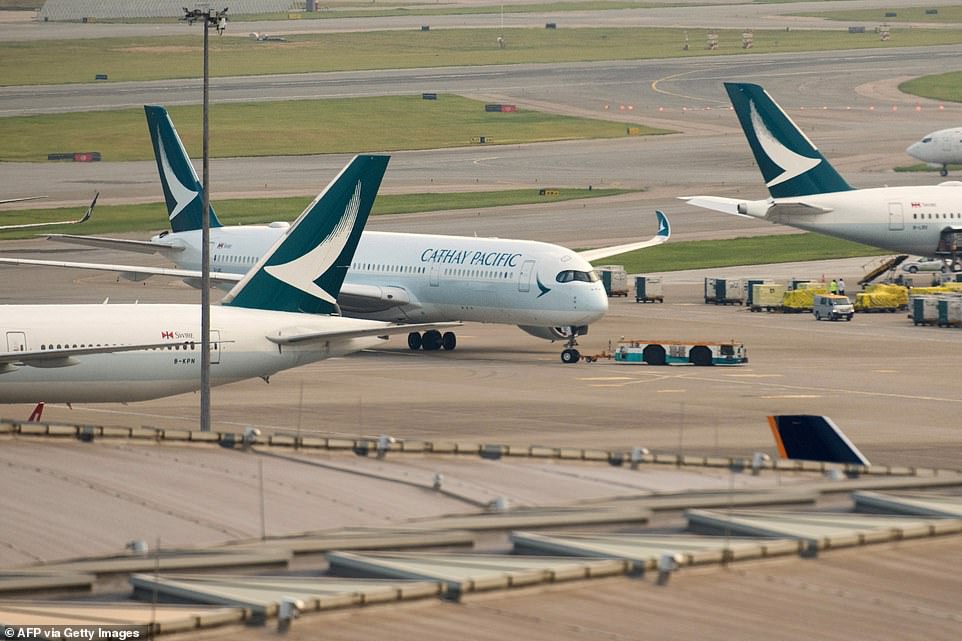

Australians with travel plans are bracing for a significant hit to their wallets as airfares are poised to soar, and flights are being trimmed down due to tightening jet fuel supplies and China’s recent export restrictions. Starting tomorrow, passengers flying from Sydney to London with Cathay Pacific will face an additional $800 fuel surcharge along with the standard ticket cost. Meanwhile, Qantas has already hiked international fares by 5%, and Virgin Australia is also increasing its prices. In New Zealand, Jetstar is quietly canceling 10% of its flights scheduled for May, while Air New Zealand has already cut around 1,100 services. The situation is expected to worsen, with the International Air Transport Association reporting a staggering 11.2% jump in global jet fuel prices in just one week, now reaching $175 a barrel—an increase of over 80% since late February.
Beyond the Ticket
Vivek Dhar, Commonwealth Bank’s Head of Commodities and Sustainable Economics, highlights that the expectation is for flights to become more expensive for the foreseeable future amidst this crisis. This price surge doesn’t only affect travelers; air freight, which depends on the same fuel supply, might also experience increased costs and reduced capacity. “If airlines struggle to secure fuel for cargo operations, we could start seeing disruptions and cancellations impacting the availability of certain goods,” Dhar warns. He anticipates that this disruption will span months rather than weeks, as supply chains require time to adapt and stabilize. “We expect jet fuel prices to remain elevated while this disruption continues,” he adds. Australia’s vulnerability is accentuated by its heavy reliance on imported aviation fuel, with China being a major supplier, accounting for approximately 32%.
The Export Freeze
In March, China ordered an immediate stop to refined fuel exports, sparking fears of a global supply shortfall. Industry insiders revealed to Reuters that this ban will extend into April, with ongoing discussions about limiting oil exports to Southeast Asian countries. Energy Minister Chris Bowen mentioned that shipments are anticipated to continue until late April or early May, but the future remains uncertain. With the deadline looming, concerns are heightening over airlines’ ability to secure fuel in the coming months. Concurrently, airlines in South Korea, another crucial supplier, are urging their government to prioritize domestic fuel needs, exacerbating the supply strain.
David Leaney (pictured), a supply chain specialist at the Australian National University, said the government has already moved to secure alternative supplies in case Chinese shipments are cut further. ‘What’s happened is, because we normally buy so much from China, we’ve negotiated with other suppliers, and we’re buying more via Singapore,’ he said. ‘That’s mainly diesel and petrol, but it does include some aviation fuel.’ Mr Leaney said Australia’s natural gas exports was a key advantage, which could be used as leverage to secure fuel supplies. ‘We can say to some of those big players in the region – Japan, South Korea, Singapore, China – if we guarantee you supply of natural gas, you can guarantee us supply of fuel,’ he added. He said the crisis also offers an opportunity to build up resilience in Australia’s own supply chain, with less reliance on China. ‘The more you can diversify, the more you can put in options, then the more robust and easy to recover your supply chain becomes,’ he said.
Global aviation expert Geoffrey Thomas warned the situation is being worsened by pressure within supplier countries to keep fuel at home. ‘The airlines in South Korea are lobbying their government not to export the jet fuel,’ he told the Daily Mail. ‘We supply South Korea the majority of their liquefied natural gas, and their coal, which they absolutely have to have. ‘I would imagine there will be some serious discussion about, If you’re going to cut off our jet fuel supply, we might cut off your LNG.’ The same would apply to China.’ Mr Leaney said aviation fuel may face supply pressure, but the distribution network is more stable than retail fuel, with less risk of panic buying. ‘If necessary, if you’re running an international flight from Australia to Europe, you can fill up in Europe,’ he said.
Over the weekend, Prime Minister Anthony Albanese and Bowen announced they would underwrite ‘shiploads of fuel’ to secure supply in Australia. ‘The government has stepped in to help the petroleum industry purchase cargoes on the high seas,’ Mr Thomas said, adding these shipments typically include crude oil, refined petrol or aviation fuel. ‘There are tankers out there on the high seas looking for the highest bidder. ‘It’s going to be a mix of two things, government-to-government negotiations, and probably buying additional cargoes on the high seas at a more elevated price.’


