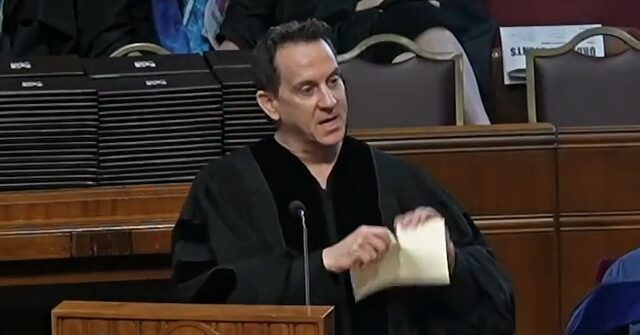

Renowned fashion designer Jeremy Scott received thunderous applause from graduates after discarding a generic commencement speech crafted by generative artificial intelligence at the Kansas City Art Institute on May 16.
Scott began his address by reciting from the AI-generated script, which lauded the students for arriving at their “threshold of a new beginning” and assured them that their “power is limitless.”
At that point, he paused, as reported by Business Insider.
“Sounds kind of clichéd, right? Doesn’t sound authentic, does it? Feels like you’ve heard it before, doesn’t it? That’s because it’s AI,” he remarked to the assembled graduates.
He then proceeded to tear the script apart, advising the graduates to resist the notion of “AI overlords dictating what’s right and wrong.”
Scott emphasized that AI lacks the ability to genuinely create, as it merely imitates, reflects, and mimics true human creativity.
Scott went on to point out that AI can’t create. It can only echo, mirror, and ape real human creativity.
“It can’t do what you do. It can’t have an original idea. It can’t even differentiate the difference between a good idea, a unique idea, and one that’s mediocre,” he said.
“That’s what makes your role as an artist so much more urgent right now,” the designer continued. “In this space and time that we’re living, I argue that the artist is even more crucial than ever. It’s because an artist doesn’t tell the truth. They decide what truth feels like. They’re a bender of reality while being a mirror to society.”
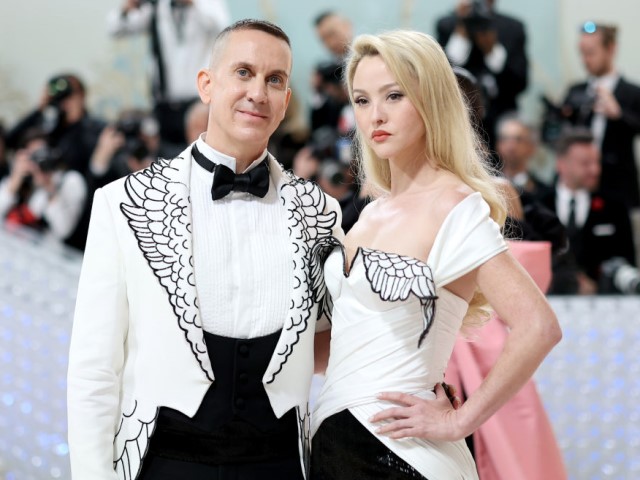
Jeremy Scott and Devon Aoki attend The 2023 Met Gala Celebrating “Karl Lagerfeld: A Line Of Beauty” at The Metropolitan Museum of Art on May 01, 2023 in New York City. (Mike Coppola/Getty Images)
Americans are developing a complicated reaction to AI. Many, for instance, are rising up to oppose the data centers needed to facilitate AI systems from being built in their areas. Others are decrying the AI memes and images swamping their favorite Internet sites, such as X, Facebook, and other social media sites.
This anti-AI sentiment flies in the face of the many experts who continue to insist that AI is on the verge of remaking mankind and ushering in a wonderful new era for humanity.
The experts and technocrats continue to warn that the society that eschews AI will be left behind and will find themselves on the losing end of economic prosperity and technological advancement, but many average citizens seem to feel that AI will mean a loss of their humanity, instead of a revelation for it.
Scott’s broadside against AI is more evidence that the battle lines are increasingly being drawn in the march toward AI supremacy.