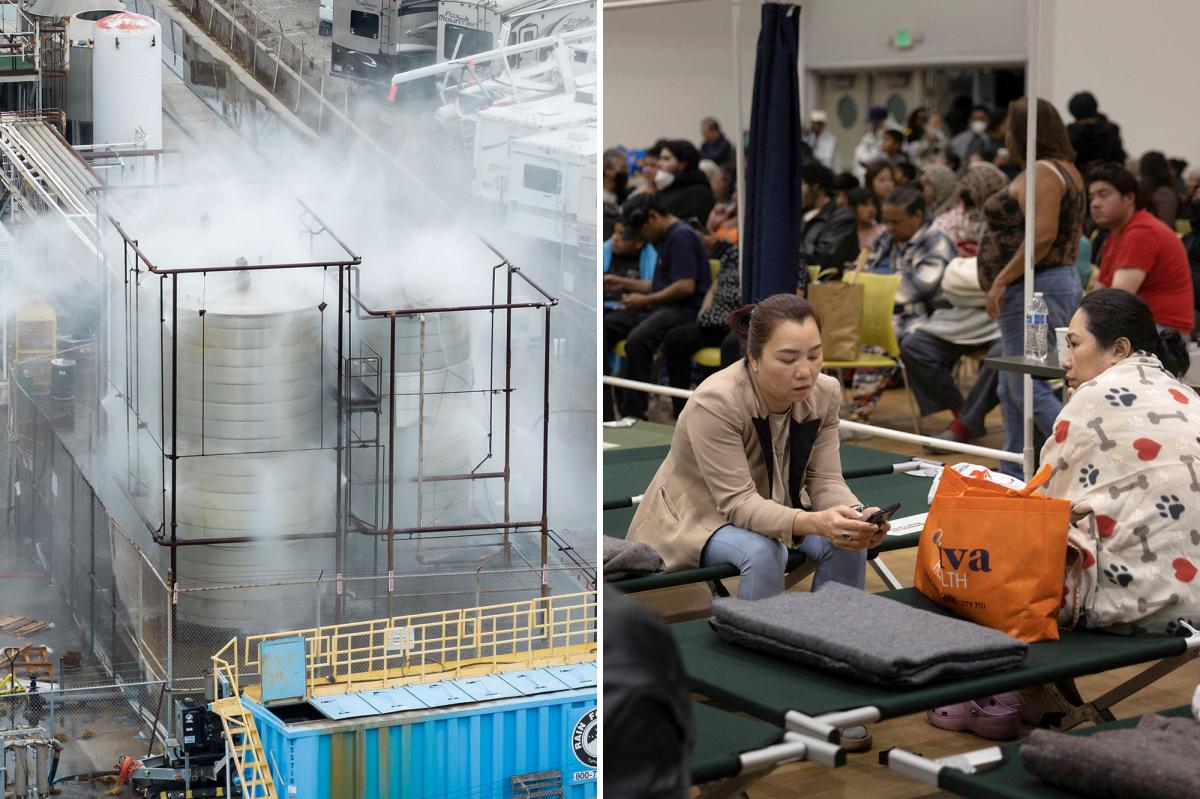


A class-action lawsuit has been initiated against GKN Aerospace, aiming to hold the company accountable for a chemical tank that poses an explosion risk and has displaced 50,000 residents in California.
The legal action was filed over the weekend by The X-Law Group P.C. and Presidio Law Firm, representing the residents of Garden Grove. The lawsuit alleges that GKN Aerospace did not adequately protect the community from the dangerous materials stored in the tank.
“Garden Grove families did not agree to live next to a significant industrial chemical threat. They deserve clarity, accountability, and legal representation immediately—not after crucial decisions about testing, cleanup, and compensation have been determined,” stated Filippo Marchino, the founder and Managing Partner of The X-Law Group, as reported by KTLA.
Authorities have been working tirelessly since Thursday to stabilize a 34,000-gallon tank at the facility, which contains methyl methacrylate, a highly volatile chemical used in the production of acrylic plastics.
Marchino explained to the media that “the risks associated with chemicals like MMA are well-known in the aerospace industry,” and any failures involving storage tanks can lead to “large-scale public safety emergencies within minutes.”
The Post has reached out to The X-Law Group and Presidio Law for further comments.
The lawsuit aims to recover compensation for evacuation costs, including the diminished property value and related damages for Garden Grove residents.
Officials were concerned the pressurized tank could explode, however, on Sunday afternoon experts said the situation has improved dramatically.
In a joint statement from the city of Westminster and the Westminster Police Department, experts described the situation as “critically positive.”
“OCFA has reported the tank has cracked and released some pressure, taking away the potential of a catastrophic explosion. There is no leak of chemical substance. This is a new positive development and the science experts are still evaluating this,” according to the city and police officials
Air quality sensors placed around the site have not detected any toxic releases, despite the structural change in the tank.