
Nestled just off Pall Mall, within a charming Georgian square known for housing some of London’s most prestigious gentlemen’s clubs, sits the global headquarters of BP. This company once played a significant role in reinforcing the ‘great’ in Great Britain.
For over a century, this iconic energy titan has been pivotal in powering the United Kingdom. It supplied vital fuel to the Armed Forces through two world wars and pioneered the North Sea oil discovery that triggered an economic surge in the 1980s.
At its peak, BP’s operations stretched across all seven continents, making it arguably the most valuable business in the country at the time.
BP’s success has allowed generations of British retirees, whose pension funds are invested in the company’s blue-chip shares, to live comfortably.
Even today, BP contributes over a billion pounds annually to the UK treasury.
However, in recent years, this once-daring industrial leader has become entangled in a trend of corporate activism, which some argue has proven financially detrimental.
It began with a high-profile ‘pivot’ to Net Zero, which in 2020 saw BP’s top brass announce that they’d decided to ‘reimagine’ their dirty oil company ‘for people and our planet’.
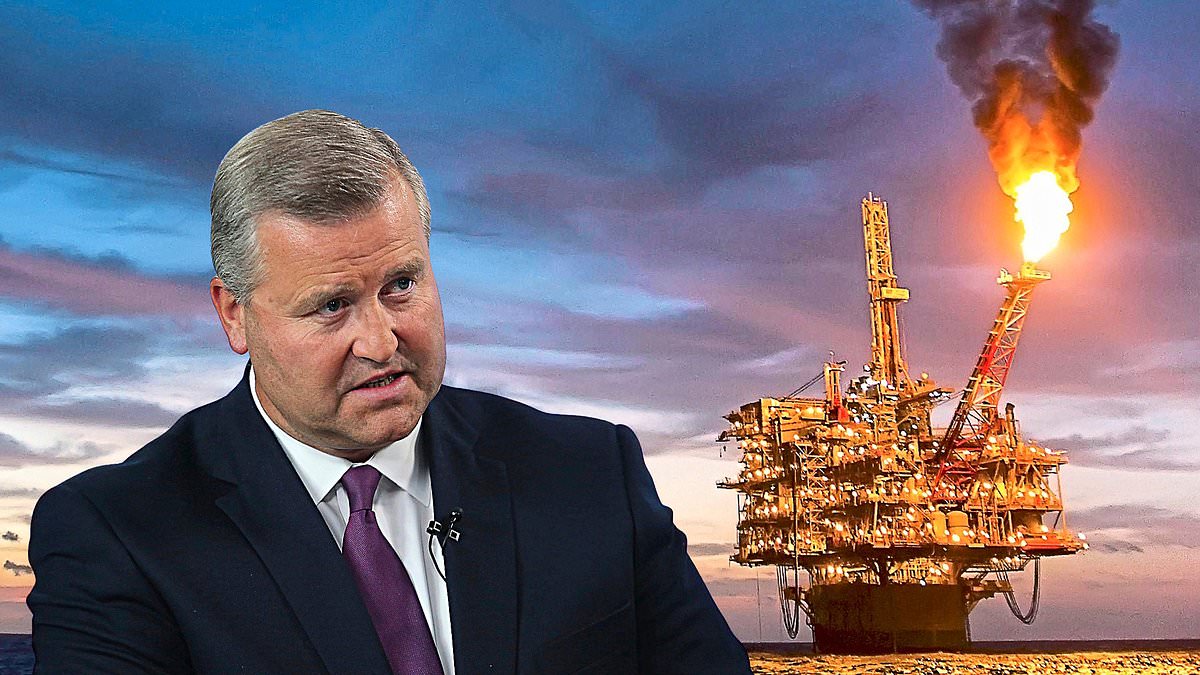
BP chairman Albert Manifold (pictured) was fired on Tuesday
Bernard Looney, its then CEO, pledged to cut oil production by 40 per cent over the course of the next decade and instead focus on eco-friendly wind, solar and battery projects.
Groups such as Greenpeace loved the plan, which had been cooked up with help from Blairite consulting firm McKinsey.
The Guardian characterised the announcement as a major victory which ‘highlights the importance of climate protests’.
But there was a glaring problem. Traditional oil production is complex and specialised but highly profitable.
Renewable ventures are also complex but they instead offer comparatively low profit margins and involve technology in which BP had comparatively little experience.
Within months, the firm’s shares had fallen to their lowest price in a quarter of a century.
And 600 of the company’s 700 world-leading geologists, engineers and scientists were meanwhile being disposed of. Many took their talents to rival firms. They are yet to return.
It wasn’t till 2025 that BP’s disastrous green policy was fully reversed, following the sacking of the aptly named Looney two years earlier (he’d gone due to a scandal involving workplace rumpy-pumpy).
Shareholders, who’d suffered throughout this dismal period, counted the cost.
‘The disastrous pivot towards low margin renewables has seen BP underperform peers for a number of years’, is how investment bank Panmure Liberum greeted the eventual U-turn.
‘We would imagine that investors will be thrilled to see the end of the woke management ethos.’
So did BP learn from the episode? Sadly, it would appear not.
Last week, the firm once more found itself at the epicentre of a toxic row over political correctness. This one revolved around news that its new chairman, one Albert Manifold, was to be suddenly, and unceremoniously, fired.
Manifold, a straight-talking Irishman who’d made a fortune in the building trade, had been hired last October with a remit to sort out the mess caused by the company’s costly pursuit of the green agenda.
But upon turning up at the company HQ for a board meeting on Tuesday morning, he was pulled aside and told that his time was up.
The company has now rattled through three chairmen and as many chief executives in the past three years.
According to a BP press release, Manifold’s sacking was due to ‘serious concerns raised to the board related to important governance standards, oversight and conduct’.
It contained a quote from Dame Amanda Blanc, the firm’s senior non-executive director, saying that the company’s board had voted to fire Manifold after being ‘surprised and disappointed to learn of governance oversight and conduct issues it deems unacceptable’.
In corporate terms, that statement represents the equivalent of a drive-by shooting.
And ever since it dropped, the City has been gripped by a furious briefing war over what, exactly, the former’s chairman’s ‘unacceptable’ behaviour might have involved.

BP has seen the once-swashbuckling industrial giant infected by a fashionable but financially disastrous strain of corporate wokery (file photo)
Both sides in this ongoing row, which has seen Manifold hire feared law firm Mishcon de Reya to advise him, seem to agree on very little.
However, it appears to be generally accepted that the whole thing revolves around allegations of workplace ‘bullying’.
Specifically: fellow board members appear to have received ‘several’ complaints about the manner in which the chairman sought to improve BP’s fortunes.
‘This wasn’t just a case of being a bit shouty,’ is how a source loyal to BP puts it.
‘There was no way this action would have been taken if that had been the case. These were serious reports of verbal abuse and bullying.
‘This wasn’t just one incident. It was several. And it involved things that happened in front of a number of witnesses.’
Other sources have described the chairman as being ‘aggressive’ during interactions with colleagues, saying that on occasion foul language was used.
‘This wasn’t a borderline case’, says one. ‘The board was unanimous in its decision.’
Allies of Manifold are, meanwhile, spitting feathers. The truth, they insist, is he’s being punished for attempting to hold underperforming executives to account and cut down on expensive perks enjoyed by senior staff, including private jets, executive limousines and free corporate tickets to events such as Wimbledon.
His sacking, they add, followed a Kafka-esque process during which no one actually told him who he’s supposed to have bullied, or how, or when the incidents in question occurred.
‘It’s impossible to defend yourself when you aren’t being told what you are supposed to have actually done,’ says one. ‘It’s Orwellian. He’s at a complete loss as to what the complaints might be.’
Apropos his management style, allies describe Manifold as a ‘hard-charging’ character. One commented that he ‘demands the best from himself and the people around him’.
Another said he’s ‘happy to tread on a few toes and upset the status quo’ if it might help improve the business.
‘He doesn’t shout at people but he does speak his mind,’ is how they put it.
That source admits he has on occasion used swear words in a work environment but adds ‘they were used as adjectives and certainly weren’t directed towards other people as a slur’.
Moreover, says a second source, Manifold only dealt with very senior executives at the company.
‘These are not junior people, or trainees. They are grown-ups, who are earning salaries of many hundreds of thousands of pounds and should be expected to do a proper job and own the consequences if they get things badly wrong.’
To Manifold supporters, his treatment sums up everything wrong not just with BP but with corporate Britain, where power is increasingly held by bloated HR departments rather than strong leaders who uphold rigorous standards.
The company’s last annual report is a case in point. Despite the company’s supposed decision to scale back its green agenda, the document contains 100 mentions of ‘Net Zero’ and 25 of ‘climate change’ in the first 50 pages.
By comparison, the word ‘oil’ gets 120 mentions. There are 22 pages covering ‘sustainability’. That’s five times as many are devoted to ‘group performance’.
On the HR front, the document says that ‘around 1,300’ employees left the company over complaints of ‘nonconformance with our code, including unethical behaviour… the most frequently raised concerns in 2025 related to alleged bullying, harassment and discrimination, with these accounting for around half of all concerns’.
Since the firm has roughly 93,000 employees, that means 1.4 per cent are, like Manifold, being booted out every single year, while disgruntled staffers are filing around a hundred complaints against colleagues each week.
Whether or not this is justified, BP’s long-suffering shareholders may take the view that its failing executive class deserves to be shouted at, so woeful has the company’s performance been during recent decades.
The facts, on this front, are as follows. A pound invested in the company 20 years ago would today be worth around £1.70, a rate of growth that has barely kept up with inflation.
If dividends had been reinvested, that figure would rise to around £3. But a FTSE 100 tracker fund would have turned it into between £3.50 and £4 while a global version would give you upwards of £5.
To critics, the culture that spawned today’s crisis dates back to the early 2000s, when the firm decided to drop the word ‘British’ from its name (in 2001, it changed from ‘British Petroleum’ to ‘BP’) and adopt the trendy advertising slogan ‘beyond petroleum’.
The architect of that move, which some might regard as a preposterous attempt at green-washing, was John Browne, who later became a crossbench peer.
He resigned as chief executive in 2007, following 12 years in charge, after admitting that he’d lied in a court deposition in a bid to prevent The Mail on Sunday from publishing an interview with an ex-boyfriend, who was making disputed claims that company resources had been improperly diverted to support their jet-setting domestic life.
A second setback was 2010s Deepwater Horizon disaster in the Gulf of Mexico, the largest marine oil spill in history.
It killed 11 people, halved the firm’s share price, cost upwards of $65billion in fines and court settlements, and saddled the firm with a mountain of debt which it is still repaying. In many ways, BP has never entirely recovered.
The Deepwater affair did for Browne’s successor Tony Hayward, who was forced out after a string of PR blunders including a decision to go sailing around the Isle of Wight during the early days of the disaster and an ill-advised TV interview in which he moaned: ‘I want my life back.’
There followed a decade of relative calm under Bob Dudley, a robust Texan, before Looney’s doomed reign, which ended after it emerged that he’d failed to declare a string of workplace relationships with subordinates, at least one of whom was married.
This month’s ructions have, meanwhile, left longstanding company insiders mystified.
‘The oil industry is a pretty tough world. It’s not a village tea party. You are doing a dirty job in some very tough parts of the world. The idea that you would sack someone for being a bit sweary seems preposterous,’ says one.
Adds a second source: ‘Someone whose view I trust said that Albert Manifold was very tough with people but that’s not a reason to give him the chop.
‘I know at least one person he did raise his voice at but so what? I can also remember a prior chairman picking up an executive by the lapels, pushing him against a wall and saying ‘don’t ever f*****g do that to me again!’ after a heated meeting. It happens.’
The fallout is proving toxic. Not to mention increasingly personal.
One supporter of Manifold this week blamed his departure on ‘weak and woke’ senior figures in the company, who ‘backed the Net Zero lunacy and have never suffered any consequences.
When Albert arrived, there were still four people on the board who were there during the ‘pivot’ to renewables.
Two of them left soon afterwards, but the other two, Tushar Morzaria and Johannes Teyssen, are somehow still there.’
So, too, is company secretary Ben Mathews, who has been at BP since 2019 and is reported to have ‘repeatedly clashed’ with Manifold over efforts to reform the firm.
According to The Financial Times he has ‘been put on medical leave because of stress’ following the latest crisis.
Other conflict involves Dame Amanda, the head of insurance firm Aviva who takes a famously dim view of alpha males (and in 2021 quit the board of the Welsh Rugby Union over claims of misogyny and a failure to treat the women’s game with sufficient respect).
‘Amanda is wedded to the woke ideology and DEI [Diversity, Equity and Inclusion] so there was an obvious personality clash,’ says one observer.
‘She’s sort of person who if Albert held the door open for her it would put her nose out of joint because she’d think that was sexist.’
A friend of Blanc responds: ‘Amanda will certainly stand up to bullies but it is quite another thing to describe her as woke.
‘It’s wrong to see this as a fight between her and Manifold. It was, in fact, a unanimous board decision to dismiss him and there were a variety of misconduct charges.’
Elsewhere, Manifold has publicly suggested that hostility to his reign stems from efforts to cut down on BP’s bloated cost base.
In a lengthy public statement last week, he said that ‘where I saw unnecessary or excessive expenditure, I called it out.
‘I had no interest in having a dedicated chauffeur-driven limousine at my beck and call… I had no interest in taking private aviation, nor in availing myself of corporate tickets for sports events.
‘I made my own coffee, bought my lunch in a local cafe. I sat in a small office, eschewing the grand corner-office privilege of previous chairmen.’
In response, sources loyal to BP pointed out that Manifold had little need to use the company limousine since, when he visited the London HQ, he stayed on company expenses at the five-star Haymarket Hotel around the corner, where rooms typically cost £480 a night.
A spokesman for Manifold hit back, saying that the Haymarket is used by almost all senior BP executives since the firm enjoys a discount there, saying: ‘It is not Claridge’s. It is not The Ritz.’
And with that petty exchange, this deeply unedifying row, which sums up so much that is wrong about corporate Britain, continues.