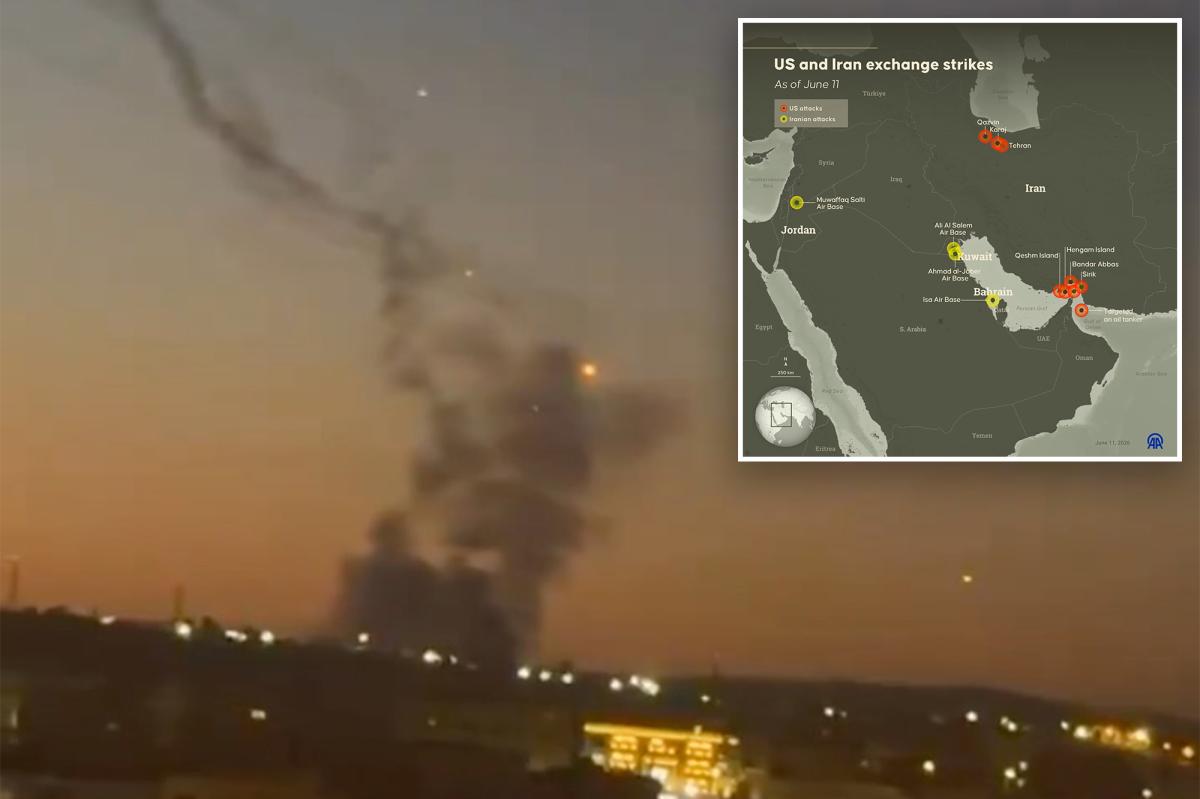

In a dramatic escalation of tensions, Iran launched a series of missile strikes targeting three U.S.-aligned nations in the Middle East early Thursday. This aggressive move came in retaliation to the United States conducting a second round of airstrikes aimed at countering what it termed Tehran’s “unwarranted and continued aggression.”
The countries hit by Iran’s missile offensive—Bahrain, Jordan, and Kuwait—had also been targets the previous day following the initial U.S. military actions.
In response to the attack, Kuwait temporarily closed its airspace for several hours. While the Kuwaiti authorities did not specify any damage, the closure underscores the severity of the situation. Meanwhile, Jordan reported successfully intercepting 20 Iranian missiles aimed at an area housing a U.S. military base, with no casualties reported.
In Bahrain, the Interior Ministry reported that an 11-year-old girl sustained injuries, and several cars and homes suffered damage from debris caused by defensive interceptions of the Iranian missiles.
According to U.S. Central Command (CENTCOM), their retaliatory strikes, which unfolded over a four-hour period and concluded just before dawn across Iran, were designed to dismantle the regime’s “military surveillance capabilities, communication systems, and air defense sites.”
While specific details about the U.S. targets or the extent of damage inflicted remain undisclosed, loud explosions were reportedly heard in Tehran, the bustling capital, and Bandar Abbas, a strategic port city, as well as other locations in Iran’s southern region along the Strait of Hormuz.
Iran’s paramilitary Revolutionary Guard later said sites hit included a manufacturing complex, a military barracks and a local Guard base outside of Tehran.
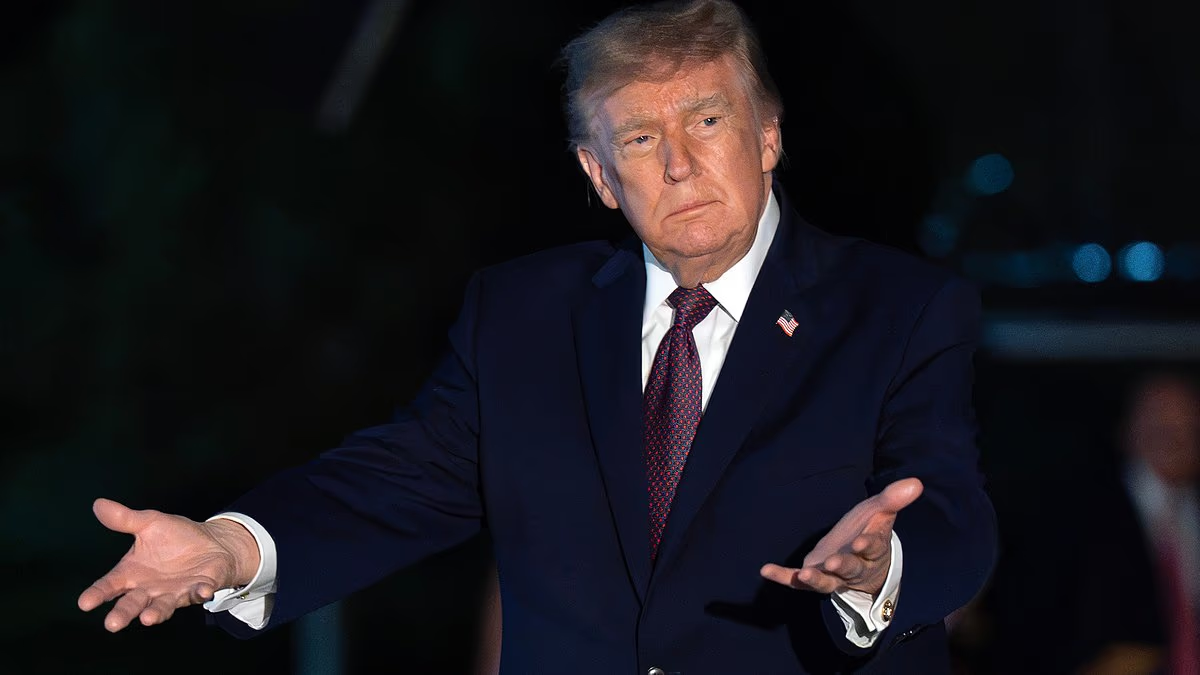
President Trump claimed in an interview with Fox News that took place during the ongoing strikes that 49 Tomahawk missiles were launched at targets inside Iran, while American fighter jets took out radar and air defense systems around the Persian Gulf.

Trump also claimed that Iranian officials had directly asked him to stop the bombing while he was monitoring the operation in the White House Situation Room and vowed to “bomb the s— out of them tomorrow night” if Tehran did not agree to a US peace proposal.