
Wetherspoons founder Sir Tim Martin has launched a fresh attack on Labour, accusing the party of taking an “anti-business” approach and steering Britain back toward the economic malaise of the 1970s.
Martin said the current climate reminds him of his time working at a bed factory in Wokingham during one of the toughest stretches of that decade, when the UK was grappling with weak growth, rising joblessness and surging inflation.
He argued that many of the same pressures that defined that era are once again weighing on the country, a view he said was reinforced after reading research from London Business School.
According to Martin, three key themes in particular emerged from the study.
He pointed to the struggle businesses face in securing planning approval, the difficulty people have moving around the country because of an unforgiving rental market, and wider constraints on the labour force.
Across each of those areas, the veteran pub boss said Britain appears to be slipping into reverse once more.
Pubs have been closing at a rate of two a day so far this year after being struck by the worst of Labour’s tax gouges and minimum wage increases, made more difficult by high energy and ingredients costs.
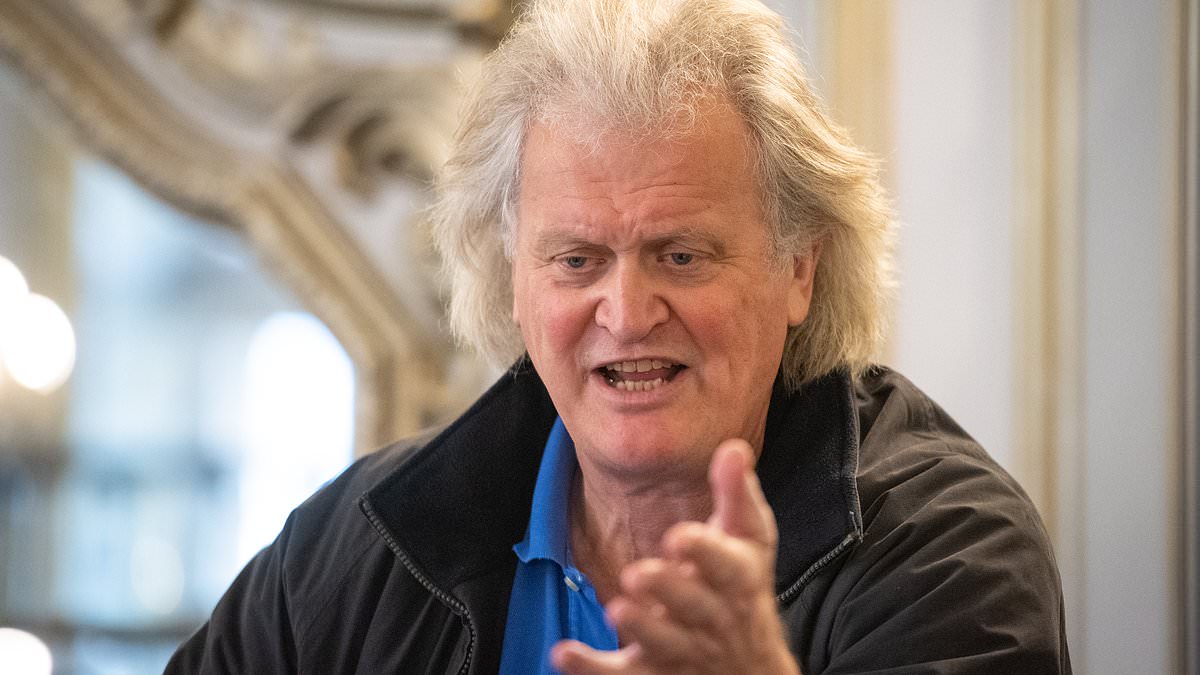
Wetherspoon boss Sir Tim Martin said the UK is slipping into the mistakes it made during the economic crisis in the 1970s
Sir Tim told the Telegraph: ‘So we’ll definitely get the consequences we suffered in the 1970s, to one degree or another.
‘It’s the old cliché, if you don’t learn from history you are doomed to repeat the mistakes.’
He believes trouble started under Gordon Brown’s Labour premiership after Tony Blair and Margaret Thatcher’s ‘pro-enterprise’ government.
Since Brown came in, Sir Tim says there began ‘a long hiatus of relatively sensible economics’, which was not even remedied by Conservative governing by Boris Johnson, he believes.
He too ‘wasn’t a free-enterprise guy’ to Sir Tim.
He added that the problems with planning started with Brown and continued under David Cameron.
Wetherspoons was born under Thatcherite liberalism, but Sir Tim, born in Norwich in 1955, remembers the chaos of the 1970s.
He lived through 1974’s disastrous three-day week – an unprecedented policy limiting commercial electricity use to conserve coal amid rampant strikes.
The 1978 to 1979 Winter of Discontent saw rubbish go uncollected, unburied dead and widespread disruption after Labour capped public sector pay increases to 5 per cent.
It was this year that Sir Tim opened his first pub – Martin’s Free House – in Muswell Hill, London, after being frustrated with the poor quality of drinking holes in the city.
A year later, in 1980, he renamed the pub JD Wetherspoon – after an old teacher who said he wouldn’t amount to much.
Now Wetherspoon is the biggest pub chain in the UK with 794 branches – down from the pre-pandemic peak of 955.
Sir Tim said that since the pandemic, Britain has been a tough place to run a hospitality business.
He said: ‘For 40 years, up to Covid, with a couple of blips here and there, we were shooting the lights out.
‘We went from zero to £2bn in sales and £100m of profits. Then Covid came along and everyone assumed that it would be a quick recovery.
‘But six years after the first lockdown, we’re struggling to get two-thirds of the profit we had before. People changed their habits.
‘Pub-going in the UK was a habit, like anything. You go to the office to work, then you stop and work from home.
‘It’s difficult to change back. We were doing better than almost any other pub company. Now it’s a slow climb without a rope. It’s the north face of the Eiger.’
Now looking back and seeing the worrying similarities between our time and the 1970s, Sir Tim reflected on how the UK pulled itself out of the difficulties it faced.
He said: ‘The two changes from the 1970s that propelled Wetherspoon along were the ability to get planning and licensing permission for pubs, which was thought to be impossible, and to employ staff from the North and Ireland, and so on, and move them to London.
‘We were able to build a business based on a certain liberalisation.’
With Andy Burnham’s challenge on Keir Starmer’s Labour leadership, the country is in for something of a shakeup, but Sir Tim is unworried by this, saying that democracies ‘more or less end up in the same place’ in the grand scheme of things.
Pubs are closing at a rate of two day after Labour’s tax gouges against them and raises to minimum wage as energy prices skyrocket

The shakeup in government being threatened by Andy Burnham does not worry Sir Tim, who believes things will ‘more or less end up in the same place’
He did admit that ‘maybe a correction is required’ when talking about the possibility of radical government and called for regulation to be cut down.
Sir Tim was a fervent Brexiteer and believes that leaving the EU was a success for the UK – creating 2.4 million jobs since leaving, rather than losing 850,000 as some economists warned – he said.
In fact, he believes that the UK should go further and dismantle the more than 12,000 tariffs with the trading bloc.
Back at home, Sir Tim said that Nigel Farage’s ReformUK ‘will get the pub industry vote’ because of his promises to cut VAT on pubs, but he did not go as far as endorsing Farage himself.