Gilgo Beach serial killer Rex Heuermann kept 'Dexter'-style kill room but wasn't as smart as he thought: DA

RIVERHEAD, N.Y. — Rex Heuermann, who will spend the rest of his life behind bars after admitting he was the Gilgo Beach serial killer, kept what prosecutors described as a “Dexter”-like kill room in the basement of his home.

Suffolk County District Attorney Ray Tierney, who was directly involved in the prosecution team that secured Heuermann’s guilty plea, said investigators were able to identify and reconstruct the space in its original location inside the house.

“Very evocative of that, and I think when we realized what it was, you know, that was some of the comments that were made,” Tierney said, comparing the room to the one seen in the television series “Dexter.” “We were actually able to recreate that, in the basement, in the exact location.”

The disturbing detail has taken on a new dimension in the docuseries “The Gilgo Beach Killer: House of Secrets,” in which Heuermann’s ex-wife says she now sleeps in that same room.

On Wednesday, Suffolk County Court Judge Timothy Mazzei handed Heuermann the harshest sentence available: three consecutive life terms without the possibility of parole, followed by four additional consecutive sentences of 25 years to life.
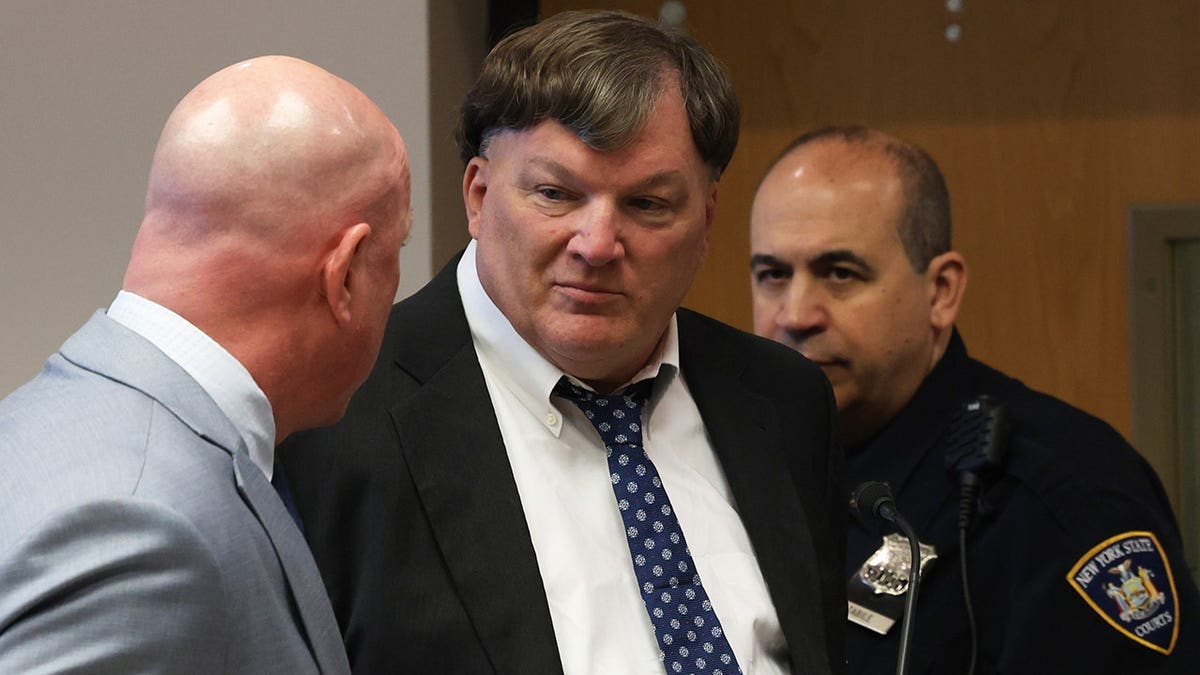
During sentencing in Riverhead, Mazzei delivered a blunt condemnation of the defendant.

Moments later, he told the court officers to “get him out of here.”

Heuermann is expected to be in state prison before the end of the week, Tierney said.

So he took that book, not to gain insight, but to become a better serial killer, specifically not to get caught.

In an interview with Fox News and News Agency after the sentencing hearing, Tierney explained why investigators returned to Heuermann’s basement long after they’d arrested him and spent days searching the house.

They recovered a deleted document that Heuermann labeled “HK,” which Tierney said stood for “hunt-kill.” Although Heuermann had made and deleted multiple versions of it over time, investigators could only recover one.

Prosecutors have described it as a planning document. He noted the locations of traffic cameras to and from the places he dumped victims’ bodies. He wrote down supplies he’d need for the murders and reminded himself to be well rested and mindful of screams.

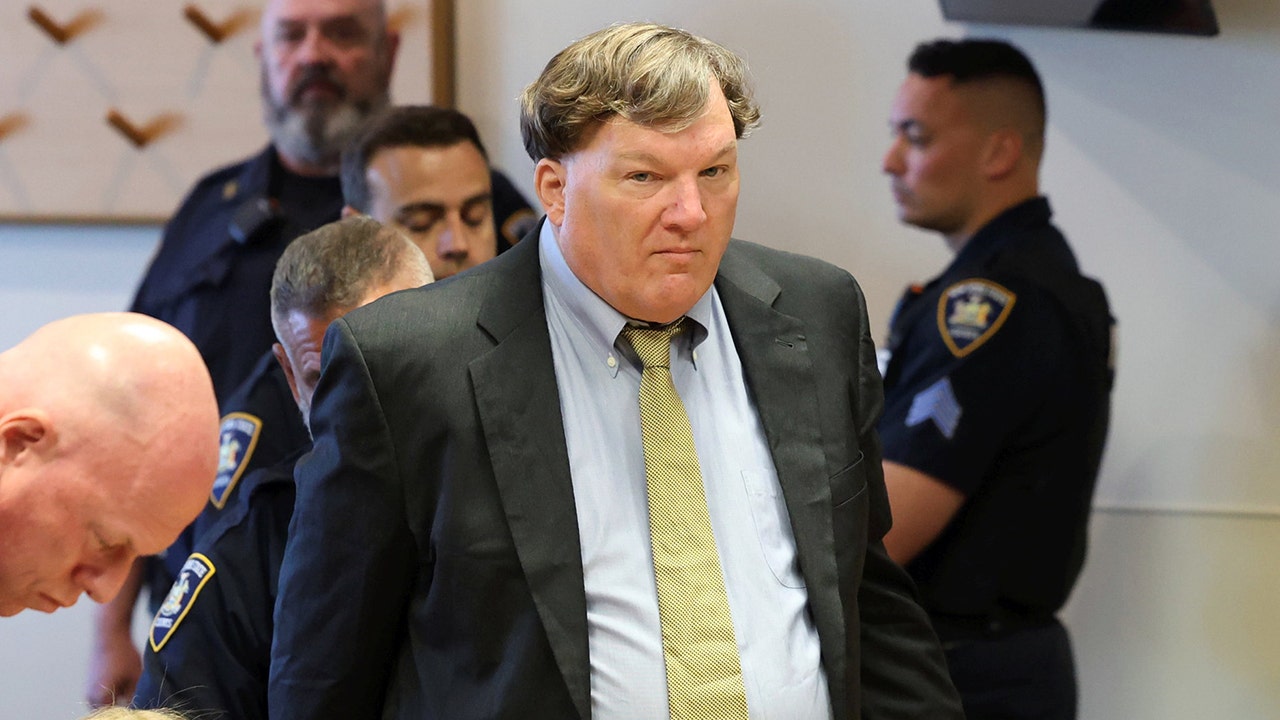
Gilgo serial killer Rex Heuermann enters a courtroom for sentencing at Suffolk County Court in Riverhead, N.Y., on June 16, 2026. (James Carbone/Newsday)

He also discussed the merits of using tape vs. pins to hang drop cloths in the basement where he is believed to have killed seven of the eight victims.

“He was hanging plastic sheets from the ceiling and on the walls,” the district attorney said. “That’s what the document talks about, and then what he says is don’t use push pins, because it ruins the ceiling. Use tape.”

When detectives returned to the home with infrared and ultraviolet lights, they found more evidence.

“We could see the adhesive stains on the wall,” Tierney said. “And then what we are able to do is we were able to see that they made a perfect square — and that’s where, we believe, the crimes occurred.”

Heuermann, described as an “ogre” by the only eyewitness in the case, stands at about 6 feet 4 inches tall and weighs close to 300 pounds. The victims were all around 5 feet tall and 100 pounds, and in the “HK” document, he noted that “small is good.”

The victims were Sandra Costilla, 28, found in North Sea; Karen Vergata, 34, found on Fire Island and near Tobay Beach; Valerie Mack, 24, found in Manorville and along Ocean Parkway near Gilgo Beach; Jessica Taylor, 20, found in Manorville and along Ocean Parkway — and the so-called Gilgo Four, who were all found just east of Gilgo Beach in the brush north of Ocean Parkway. They were Maureen Brainard-Barnes, 25; Melissa Barthelemy, 24; Megan Waterman, 22; and Amber Lynn Costello, 27.

Rex Heuermann appears in a booking photo released by authorities. The convicted Gilgo Beach serial killer was sentenced to life without parole after pleading guilty to seven murders and confessing to an eighth killing. (Suffolk County District Attorney’s Office)

Investigators believe Heuermann’s known killings spanned from Costilla’s 1993 murder through the 2010 disappearance of Costello.

Before Heuermann was sentenced, relatives of his victims delivered emotional statements about the decades of pain and loss left behind by the killings.

Mack’s adoptive parents were among the first to address the court. Her father told Heuermann that despite the brutality of his crimes, “you never touched her soul,” adding that “Valerie is the one who is free today, and you are not.”

Taylor’s relatives recounted the anguish of learning that only some of her remains had initially been recovered and the pain of seeing the case repeatedly return to public attention over the years. One cousin mocked Heuermann’s efforts to evade capture, telling him he had created elaborate plans to get away with murder but still left behind evidence that led investigators to him.

The most emotional testimony came from the family of Brainard-Barnes, one of the so-called Gilgo Four. Her sister, Melissa Cann, recalled the last conversation they shared before Brainard-Barnes disappeared.

“The last words she said to me were, ‘I love you. I’ll see you tomorrow,’” Cann told the court.

Cann described years of survivor’s guilt and said she dedicated herself to helping ensure the killer was eventually identified and brought to justice.

Brainard-Barnes’ daughter, Nicolette, said she was just 7 years old when her mother was killed and is now older than her mother was at the time of her death. She said the victims “mattered infinitely more” than Heuermann and described him as “a coward who takes out his own shortcomings on others.”

Rex A. Heuermann standing in Suffolk County Court during guilty plea hearing

Rex A. Heuermann pleads guilty to murdering seven women and admits to an eighth killing during a hearing in Suffolk County Court in Riverhead, N.Y., on April 8, 2026. (James Carbone/Newsday via Pool)

Heuermann pleaded guilty to seven murders on April 8 and confessed to Vergata’s 1996 slaying, which he had not been charged with.

Asked if there may be more victims, Tierney declined to speculate. If the evidence ever indicates there were, he said, he’d bring it to a grand jury and seek a new indictment.

He revealed that prosecutors have more evidence against Heuermann that has not yet been made public and described how Heuermann evolved over the years from a “disorganized” killer to an “organized” one.

Tierney said Heuermann appeared more disorganized early in his criminal career before becoming increasingly methodical and deliberate over time, as shown by the planning document, his evolving modus operandi and digital evidence that showed he was scouring news reports for updates on the murders he’d committed.

At some point, he also picked up the book “Mindhunter” by famed FBI analyst John Douglas.

“If you’re a high school football player and you get, Peyton Manning’s book, you want to become a better quarterback,” he said. “So he took that book, not to gain insight, but to become a better serial killer, specifically not to get caught.

As part of the plea deal, Heuermann has agreed to sit down with the FBI’s Behavioral Analysis Unit to be analyzed clinically, Tierney said. Douglas, a pioneer of criminal profiling, had been chief of the FBI’s Behavior Science Unit, the BAU’s predecessor.

“That was a suggestion of mine,” Tierney revealed. “I’m a former federal prosecutor. I’m familiar with the work of BAU. I know I knew about the ‘Mindhunter’ book by this defendant. I knew that that was something that he was interested in, so I thought it would be a good opportunity.”

Investigators could potentially learn from Heuermann in a clinical setting and use the knowledge to assist in new cases as they come up, he said.

-->

Leave a Reply

Your email address will not be published. Required fields are marked *