

A tense session of the European Parliament broke into rival chants after lawmakers backed a major overhaul of the European Union’s migrant return system, a vote that underscored the bloc’s increasingly hard-edged approach to immigration enforcement amid mounting pressure from voters.
Members of the European Parliament voted Wednesday to approve the Return Regulation by 418 votes to 218, with 30 abstentions. The proposal is intended to accelerate the removal of third-country nationals who are living in the European Union without legal authorization.
The result immediately sparked an emotional response in the chamber. Video from the meeting showed right-wing lawmakers rising to applaud and chanting “send them back,” while lawmakers on the left answered with chants of “shame on you.”
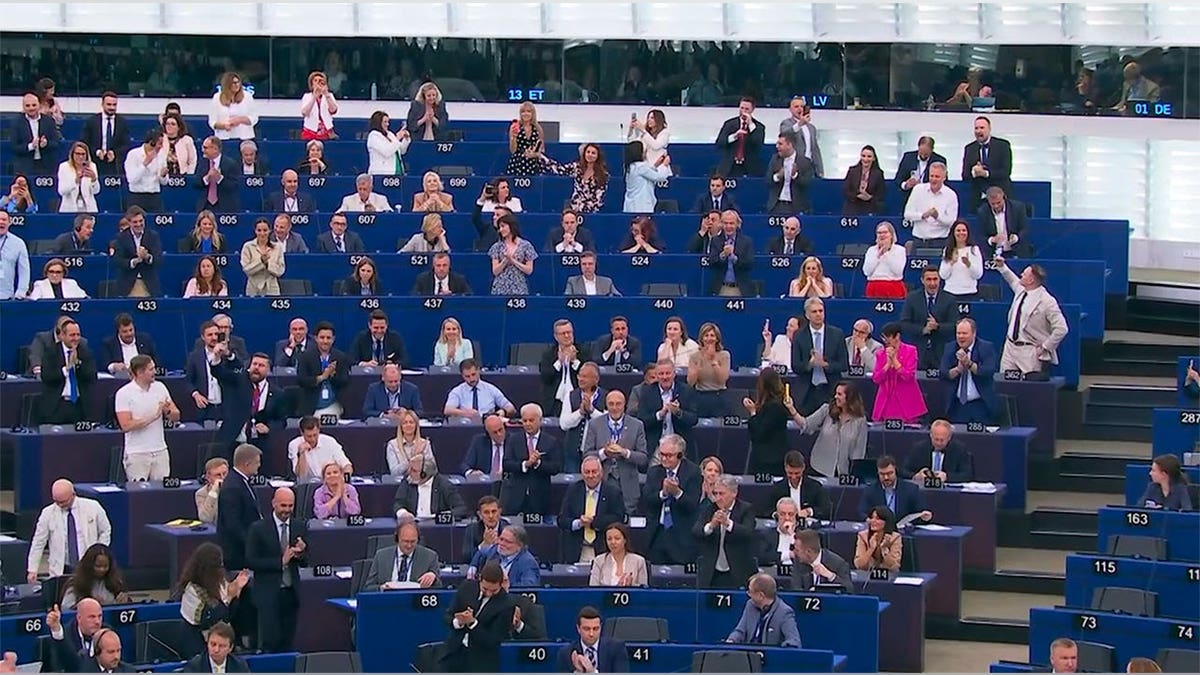
European Parliament members chant “send them home” during a June 17 vote on new EU migration rules. (European Parliament streaming service)
The measure is not yet law. It still needs formal approval from the Council of the European Union and must be published in the Official Journal before taking effect. Even so, the heated scene illustrated how deeply migration continues to divide Europe, as EU institutions advance policies that were once considered politically difficult or off-limits.
Under the proposed rules, member states would be able to detain certain migrants for as long as 24 months, with the possibility of an additional six-month extension. The regulation would also establish a framework for “return hubs” outside the European Union, in third countries willing to accept migrants who have been issued return decisions.

Migrants wade into the water near Gravelines, France, as traffickers with covered faces manage the scene before boarding a small boat at sunrise on July 2, 2025. (Dan Kitwood/Getty Images)
Backers of the regulation argue the changes are needed because EU countries have struggled to carry out deportation orders. The European Conservatives and Reformists Group, citing figures from the European Commission, said only about 20% of migrants who receive a return decision are ultimately returned.
The vote comes after News Agency reported earlier in June that the European Union appeared to be moving toward tougher border and asylum rules amid growing concern over illegal immigration across the continent. The new measures include stricter screening, identity and security checks, and the use of biometric data such as fingerprints and facial recognition.

Members of the European Parliament are seen during a June 17 session in which chants of “send them home” were heard during a vote on new EU migration rules. (European Parliament streaming service)
Conservative leaders hailed the Parliament vote as a victory. Italian Prime Minister Giorgia Meloni called the result a “great success,” calling the legislation a “historic measure,” according to her post on X.
Other right-wing figures in France and Austria praised the moment as evidence that pressure from the right was reshaping European Union policy.

Italian Prime Minister Giorgia Meloni addresses the 78th United Nations General Assembly at U.N. headquarters in New York City on September 20, 2023. (LEONARDO MUNOZ/AFP via Getty Images)
Critics, however, accused lawmakers of dehumanizing migrants and weakening core protections.
The Guardian reported that socialist vice president of the European Parliament Javi López called the plenary session “disgraceful,” while Italian Green and Left Alliance Member of the European Parliament Ilaria Salis described the celebration as “horrifying.”

Migrants packed tightly on a small inflatable boat bail water as they attempt to cross the English Channel near the Dover Strait off the coast of Dover, England, on Sept. 7, 2020. More than 400 migrants made the journey from France to England by sea last Wednesday, either intercepted by UK border forces or arriving on shore in small boats. (Luke Dray/Getty Images)
Human rights groups have also raised alarms.
United Nations human rights chief Volker Türk warned the new rules risk expanding detention, Reuters reported, creating offshore return hubs and weakening safeguards against forced returns.