
Three U.S. presidents have died on the Fourth of July, a fact often treated as one of the republic’s most striking historical coincidences. John Adams and Thomas Jefferson died within hours of each other in 1826, on the 50th anniversary of the Declaration of Independence. Five years later, in 1831, James Monroe died on the same date, deepening the sense that July 4 carries a symbolism all its own.
Yet the two figures who offered perhaps the most demanding lesson about Independence Day did not die on the holiday. One of them, Frederick Douglass, stood before an audience in Rochester, New York, on July 5, 1852, and began with respect for the nation’s founders. “Fellow Citizens, I am not wanting in respect for the fathers of this republic. The signers of the Declaration of Independence were brave men … [and] the Constitution is a GLORIOUS LIBERTY DOCUMENT. Read its preamble, consider its purposes,” he said, speaking in the tense years before the Civil War.
But Douglass was not there simply to praise the promise of America. He was there to confront the painful distance between that promise and the reality endured by millions.
“I say it with a sad sense of the disparity between us. I am not included within the pale of this glorious anniversary! Your high independence only reveals the immeasurable distance between us. The blessings in which you, this day, rejoice, are not enjoyed in common … You may rejoice, I must mourn … Fellow citizens; above your national, tumultuous joy, I hear the mournful wail of millions!”
Those words, delivered by one of the 19th century’s most photographed and morally forceful Americans, still resonate alongside the reflections of another towering figure from that same era.
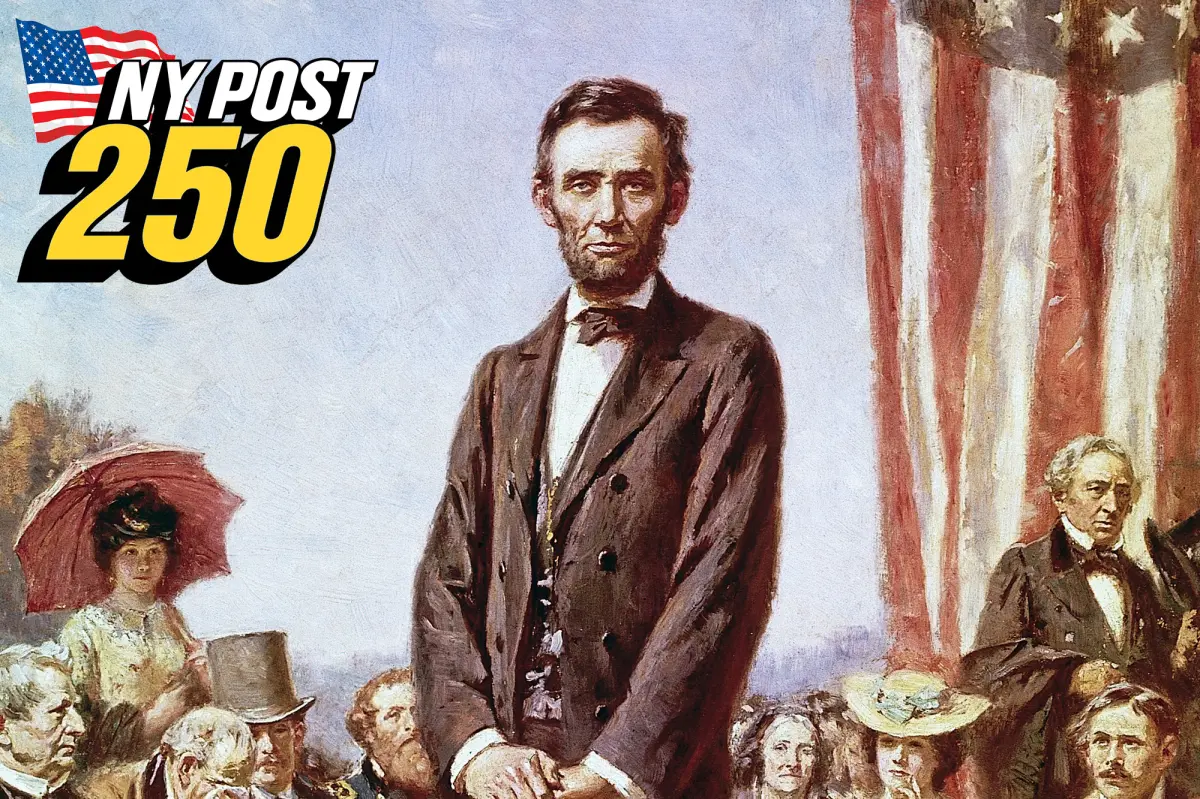
“Four score and seven years ago our fathers brought forth on this continent, a new nation, conceived in Liberty, and dedicated to the proposition that all men are created equal,” President Abraham Lincoln declared at Gettysburg in 1863. His address came after the Battle of Gettysburg, a brutal turning point in the Civil War that ended with Gen. Robert E. Lee’s retreat on July 4 following more than 45,000 casualties.
Lincoln insisted that the ceremony was not merely about words, but about duty. “The world will little note, nor long remember what we say here, but it can never forget what they did here. It is for us the living, rather, to be dedicated here to the unfinished work which they who fought here have thus far so nobly advanced,” he said. “It is rather for us to be here dedicated to the great task remaining before us that we here highly resolve … that this nation, under God, shall have a new birth of freedom — and that government of the people, by the people, for the people, shall not perish from the earth.”
Together, Douglass and Lincoln — two of the essential voices of America’s 19th-century “second founding” — leave us with a clear civic charge. The celebration of being American is inseparable from the responsibility it demands: to confront injustice, strengthen democracy and take part, deliberately and actively, in the unfinished work of the American experiment.
July 4th has often been a day — from the death of presidents to solemn calls to action — when reflection was required amid the inflection points our nation confronted. Douglass’ stark remarks pointed his audience back to the pressing times. He understood their desire to celebrate, but he also told them that America demands an ongoing recommitment to the work required to uplift victims of cultural circumstance, paving the road for those people to eventually join in the celebration of a more Perfect Union.
For Lincoln, his tempered remarks harken back to the founding reasons that the men of 1776 gathered on July 4th of that year: freedom, within a nation under God, that is ruled by a government by the people and for the people. He said, firmly yet earnestly: Those who sacrificed for us did so to provide the opportunity to advance the best of America in any way we can.
The leaders of the Civil War Era and the Americans that toiled for our More Perfect Union back then, still teach us with the collective example of their lives. They showed us that each July 4th brings the reminder and opportunity to embrace the moment with grace and gratitude. The inflection points of their lives must prompt us to follow their lead: Enjoy our patriotism with solemn celebration.
During the Civil War era — and as the country felt tensions building up like tectonic plates for decades before the great earthquake of 1860 — Americans from all backgrounds and perspectives engaged in a battle that fought for the soul of the nation. This time is often remembered for slavery and soldiers, but its true lessons are broader.
MORE STORY: Unmasking the Church: Hugh Jackman's Faith and Emily Watson's Chilling Accusations
The conflict was made up of abolitionists and women’s suffragists who fought for freedom, classmates from military academies who fought on opposite sides of the war, and poor men (such as Lincoln and Douglass) who used education and grit to become statesmen — even as violence was the language of our land and condoned on the floor of the US Senate in 1856.
Their solemn celebration of America invoked a resolute commitment: Act with tangible steps to chase our better angels.
Harriet Tubman and Harriet Beecher Stowe showed us how. Their courage and clarity proved that women could lead in thought, word and deed — even in the most trying of times — and their contributions demanded a broader vision of equality. Radical Republicans and United States Colored Troops showed us how. They formed the bedrock of a new political tradition, one born from Lincoln’s resolve and Douglass’s fire, and proved that black patriotism was not merely a passenger in the survival of the
Republic, but a necessary engine.
Clara Barton, the Team of Rivals and the everyday men and women who healed a nation after our bloodiest war showed us how. They formed a collaboration that proved how, even during the worst of times, our motto “E Pluribus Unum” — “out of many, one” — still applied.
Now, in our own time, amid cultural tension and economic uncertainty, the lessons of that era still resonate.
Each generation faces the tugs of division and frustration. Each generation must choose to celebrate the greatness of this country, and work to deepen the promise of the American Dream and its accessibility to those locked away from it through socioeconomic or cultural circumstances. Each generation — from the runaway teenager that was Benjamin Franklin to the runaway slave that was Frederick Bailey (before changing his name to Frederick Douglass post-slavery) — has the obligation to stand on civic pride, all while uplifting the standards for America for current and upcoming generations.
There is pain throughout the American Story. Today is no different, and certainly the Civil War era exemplifies the existence of shared pain within our shared history. And yet, with that solemn acknowledgment, there is also a reason to remain celebratory — every day and, notably, during our 250 commemoration: because we are Americans.
Douglass closed his 1852 address with the words of abolitionist William Lloyd Garrison: “God speed the year of jubilee The wide world o’er! … God speed the day when human blood Shall cease to flow! … Until that year, day, hour, arrive, With head, and heart, and hand I’ll strive, To break the rod, and rend the gyve.”
Celebrate, yet act with an eye toward the best of our traditions.
Revel, yet remember our history — learning its harsh lessons and leading as the best before us did.
Take pride in America, yet take part in advancing our more perfect union.
Be patriotic, yet practice the values that make true patriots of us all.
That is the charge each generation inherits — to rend the shackles its own era confronts America with, and to rend them as one. This is the work. This July 4th, let us get back to it.
Lenny McAllister is the author of the forthcoming book, “A Venn Diagram of One: An American Story,” to be published by Frederick Douglass Books Aug. 11.