
Israel’s election ends without a clear winner, leaving government formation uncertain
Chief correspondent Jonathan Hunt reports from Tel Aviv as Israel’s political parties negotiate over the formation of a coalition with President Isaac Herzog. Benjamin Netanyahu and his leading challenger, Gadi Eisenkot, are seeking enough support to secure the mandate to form the next government.
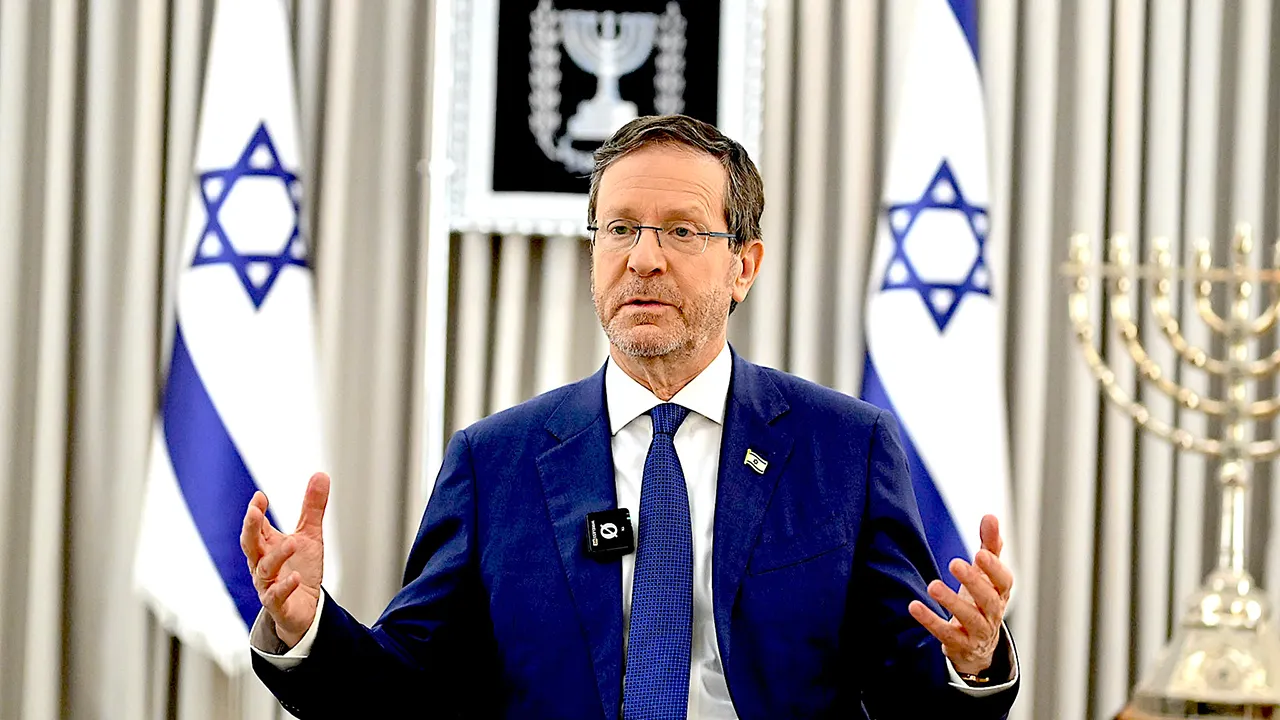
Israeli President Isaac Herzog said Saturday that he would give opposition leader Gadi Eisenkot the first chance to form the country’s next government, placing Netanyahu’s principal rival at the center of coalition talks after an inconclusive national election.
Herzog announced the decision on Nov. 7, with the formal handover of the mandate set for Sunday, November 8, at 5 p.m. Israeli time. Eisenkot will have 28 days to put together a coalition and may request an additional 14 days.
The move could represent a major turning point in Netanyahu’s long political career, but it also opens a challenging negotiation in which the parties opposed to him remain divided over how to govern.
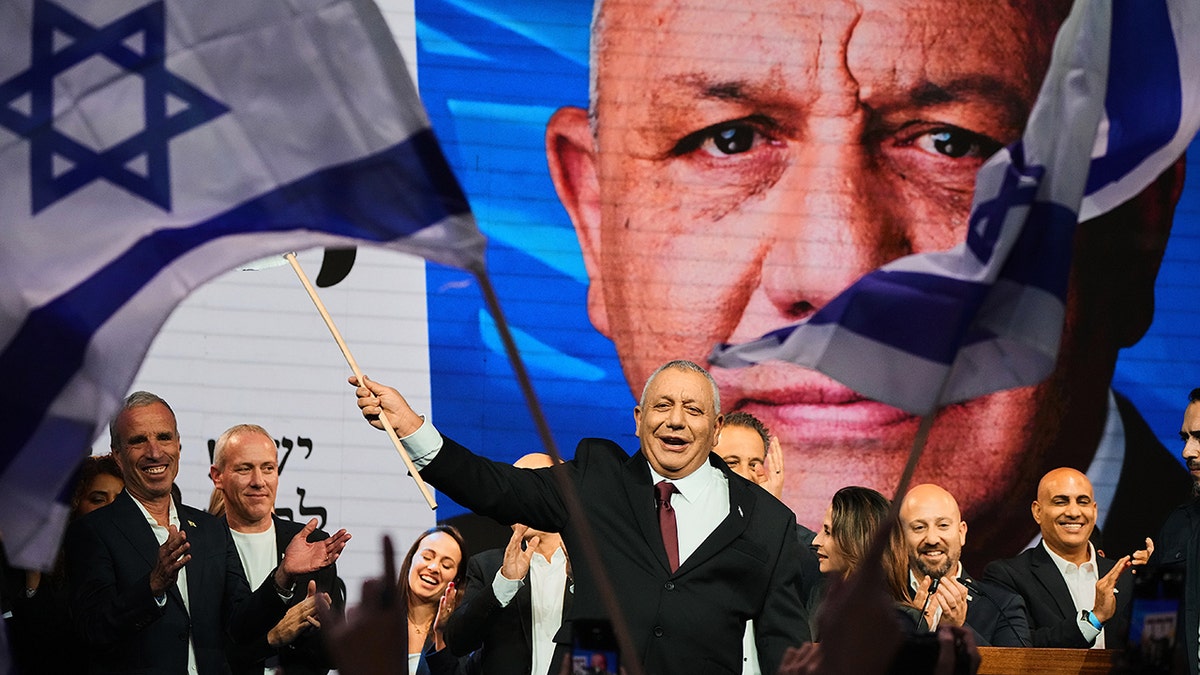
Gadi Eisenkot, leader of the Yashar (“Straight”) party, waves an Israeli flag onstage after initial exit poll results were released in Israel’s general election in Tel Aviv, Israel, Wednesday, Oct. 28, 2026. (Ariel Schalit/AP Photo)
After two days of meetings with Israel’s newly elected parliament, Herzog said Thursday that lawmakers representing 67 of the Knesset’s 120 seats had recommended Eisenkot, the head of the Yashar party, as the next prime minister. Netanyahu received recommendations from 46 lawmakers, while seven members of the ultra-Orthodox United Torah Judaism party declined to support either candidate.
“The results of the consultations may appear clear,” Herzog said in a Nov. 5 statement, while warning that competing demands and political vetoes could still prevent the formation of a government.
The central problem is that Eisenkot’s 67 recommendations do not amount to a stable 67-seat coalition.
In the Oct. 27 vote, Netanyahu’s Likud party won 27 seats, the most of any single party, while the broader bloc supporting him captured 53 seats. The four-party alliance seeking to remove him won 48 seats.
Eisenkot’s additional support came from the Arab-led Joint List and Ra’am, which hold a combined 19 seats. Although both parties recommended him to Herzog, their involvement creates a political problem for potential coalition partners who have promised not to rely on Arab parties to form a government.
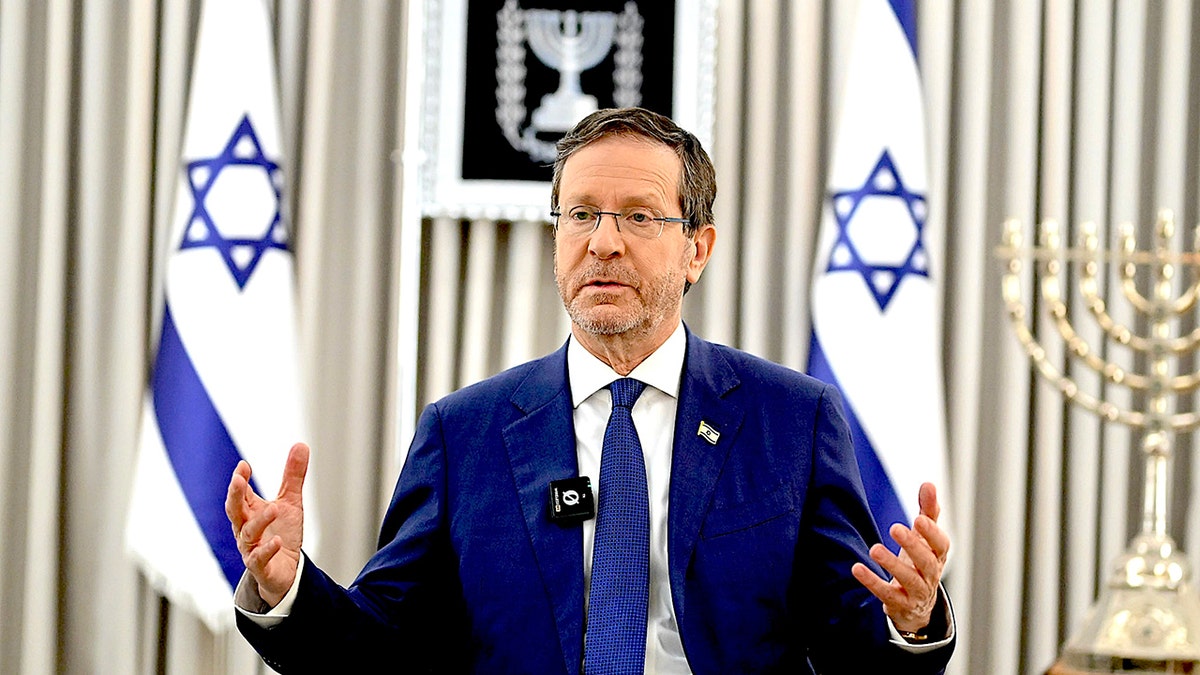
Israeli President Isaac Herzog during an interview with News Outlet in Jerusalem, Israel. (Yoav Dudkevitch/TPS-IL for News Outlet)
In a lengthy statement Friday, Eisenkot described his vision for a “National Emergency Government.” The proposed administration would initially unite the four parties determined to replace Netanyahu, while allowing other lawmakers and parties to join later.
“Israel is facing a genuine, tangible and dangerous national emergency,” Eisenkot said. He accused the outgoing government of endangering Israeli democracy and argued that ongoing political turmoil could worsen the country’s security and diplomatic problems.
Eisenkot said discussions with his prospective partners had already made substantial progress, with additional negotiations continuing.
His plan rests on four core principles: defining Israel as both a Jewish and democratic state; upholding the values of the Declaration of Independence; requiring universal military, national or civilian service; and recognizing Hamas as a terrorist organization while working to eliminate its military and governing capabilities.
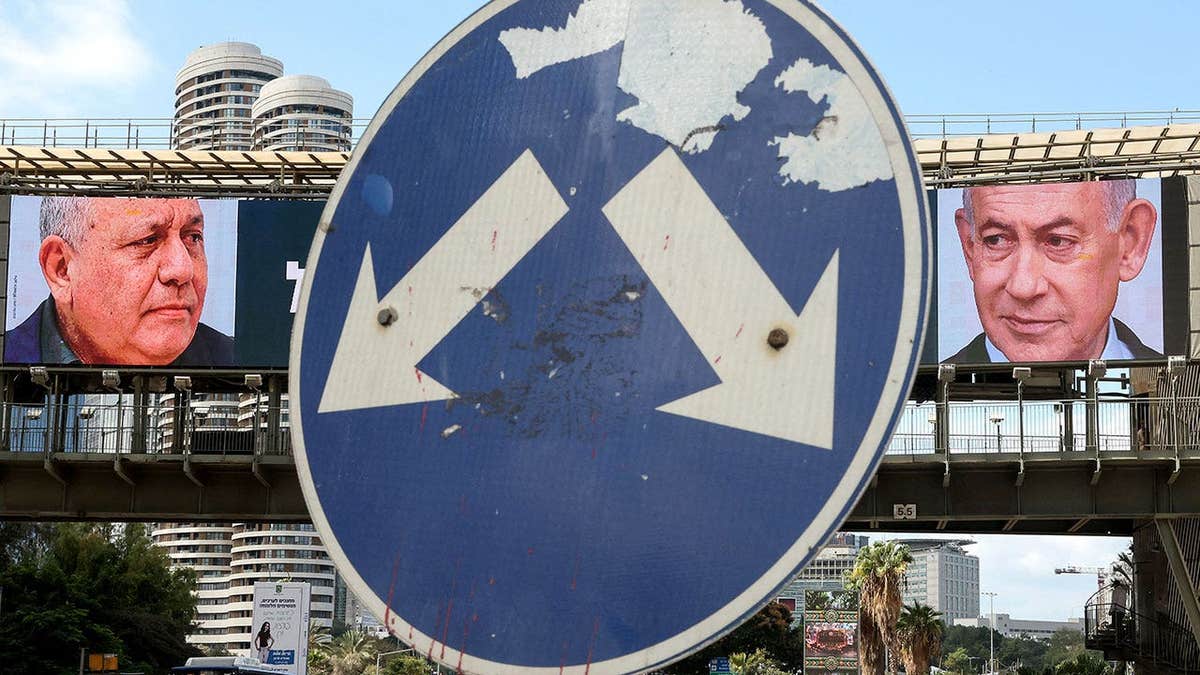
A road sign stands before a large billboard showing Israel’s Prime Minister Benjamin Netanyahu (R) of the Likud party and former military chief and leader of the centrist Yashar party, Gadi Eisenkot, in Ramat Gan on October 20, 2026. Israel is scheduled to vote on October 27 in its first election since the October 7, 2023, Hamas-led attack, in a contest widely viewed as a referendum on the prime minister. (Jack Guez / AFP via Getty Images)
Eisenkot said lawmakers from across the political spectrum would be invited to participate if they accepted those guiding principles.
However, the alliance seeking to oust Netanyahu remains split over the best way to win the parliamentary backing required to govern.
A potentially important shift came Friday from Avigdor Lieberman, leader of the secular nationalist Yisrael Beitenu party. He indicated that he might be willing to compromise on military service for ultra-Orthodox Jews, a long-standing point of conflict that has blocked cooperation with religious parties.
In a post on X, Lieberman said preventing another election and ending Netanyahu’s tenure would demand difficult compromises from the political parties.
He laid out three requirements: bringing the Netanyahu era to an end, avoiding another election and refusing to form a government that relies on the Joint List and Ra’am abstaining from votes.
On other issues, including the divisive military draft legislation, Lieberman said political leaders would need to show flexibility.
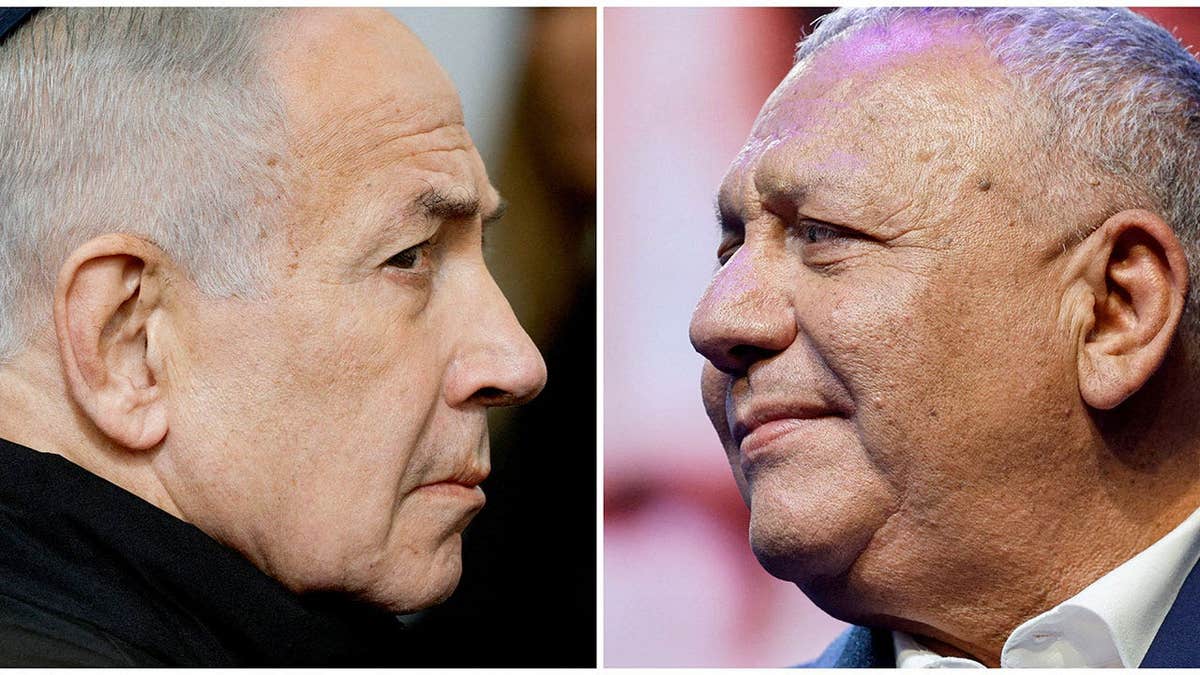
A combination picture shows Israeli Prime Minister Benjamin Netanyahu attending a memorial service for Ran Gvili, an off-duty police officer killed while fighting militants who entered Israel during the deadly October 7, 2023, Hamas attack, and the last hostage recovered from Gaza, in Meitar, Israel, January 28, 2026, alongside Israeli opposition leader and former military chief Gadi Eisenkot launching an election campaign for Yashar, his new political party, near Hod Hasharon, Israel, June 30, 2026. (Amir Cohen/Reuters)
That change could create an opening for talks with United Torah Judaism. The party’s seven lawmakers did not recommend Netanyahu to Herzog, despite the group’s long-running alliance with the prime minister.
United Torah Judaism leader Yaakov Asher said Friday that he appreciated Lieberman’s willingness to compromise. He added, however, that the party had not received a formal proposal and that any deal would need approval from its religious authorities.
Military conscription remains one of the biggest barriers. Ultra-Orthodox parties want legal safeguards for yeshiva students who devote themselves to religious study instead of military service, while Eisenkot and several of his allies campaigned on expanding the service requirement.
Even if United Torah Judaism joined the four-party opposition alliance, Eisenkot would still fall short of the 61 seats required for a governing majority. The religious Shas party, which controls six seats, recommended Netanyahu to Herzog.
Another option would be a minority government supported by abstentions from parties outside the coalition. Eisenkot’s allies have discussed that possibility, but Lieberman has ruled it out if the arrangement depends on Arab factions.
The dispute highlights Eisenkot’s fundamental challenge: while most lawmakers recommended that he receive the first chance to form a government, they have yet to agree on what that government should look like.
Netanyahu, meanwhile, continues to serve as caretaker prime minister while coalition discussions unfold.
The prime minister has also questioned parts of the election outcome amid an investigation into alleged voting irregularities. Israel’s Central Elections Committee said the election’s integrity was not affected, according to Reuters on November 5.
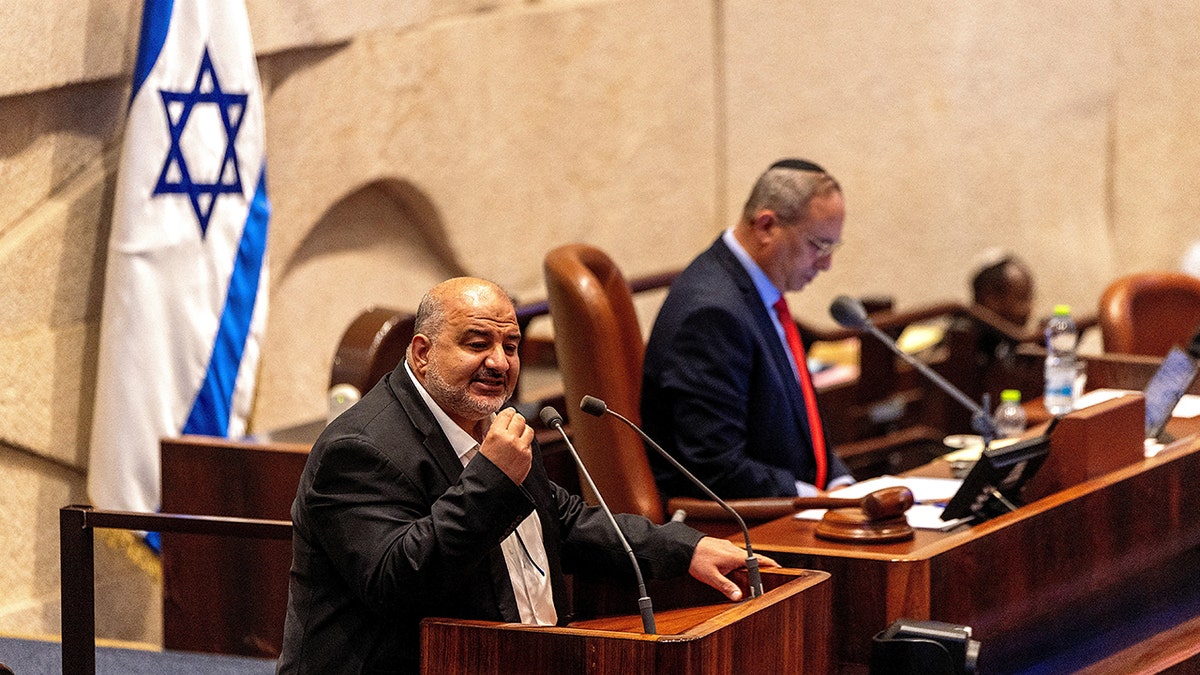
Mansour Abbas, leader of the Ra’am party, addresses the Knesset plenary in Jerusalem, Israel, July 13, 2026 (Ronen Zvulun/Reuters)
For Eisenkot, securing the presidential mandate would be a significant political achievement. Turning that broad endorsement into a functioning government, however, will require agreements among parties divided over some of Israel’s most sensitive domestic questions, especially military service and cooperation with Arab lawmakers.
If those differences cannot be resolved, Israel could remain locked in political paralysis and face the prospect of another election.