
Ed Miliband has called on Argentina to end its “wider economic pressure against the Falkland Islands” after the country failed in a legal bid to halt a major oil project near the territory.
The International Tribunal for the Law of the Sea (ITLOS) rejected Argentina’s request for an interim order suspending the British-Israeli venture, as Buenos Aires continues to dispute the islands’ sovereignty.
The Sea Lion development, led by Britain’s Rockhopper and Israel’s Navitas, could generate an estimated £4billion in corporation tax and royalties for the Falkland Islands over 35 years, potentially transforming the local economy.
The projected returns could amount to around £1million for each Falkland Islander. The oilfields are estimated to be six times larger than the Rosebank field near the Shetland Islands.
The Foreign Secretary and Attorney General Ellie Reeves described the UN-backed tribunal’s ruling as a “vindication of the UK’s robust legal defence and strategy”.
They also urged Argentina to respect the Falkland Islanders’ right to decide their own future.
“Argentina sought to stop the Falkland Islanders making their own sovereign decisions and failed in this attempt,” they said in a joint statement.
“The UK has no doubt of our sovereignty of the Falkland Islands, our sovereignty and sovereign rights over the surrounding maritime areas, and the right of self-determination of the Falkland Islanders.
“We now call on Argentina to respect the right of the Falkland Islanders to determine their own future and urge Argentina to end its wider economic pressure against the Falkland Islands.”

Ed Miliband has urged Argentina to end its “wider economic pressure against the Falkland Islands” after the country lost a legal bid to block a major oil project near the territory

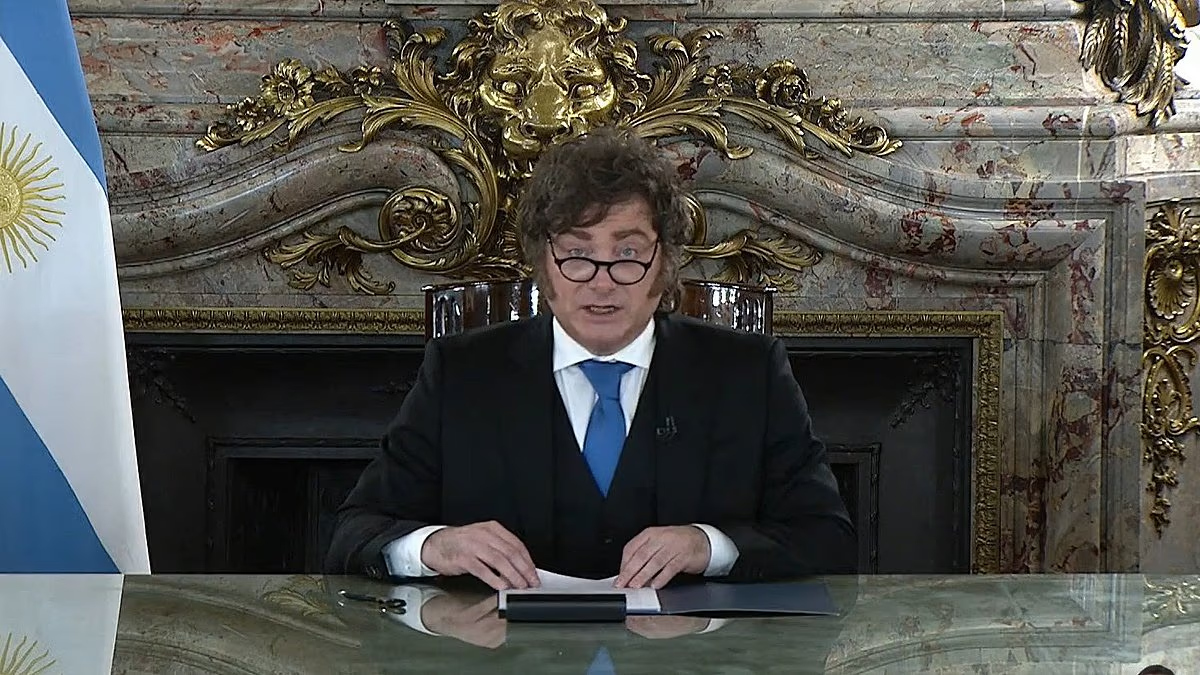
Argentine president Javier Milei has vowed to “act swiftly” to “recover” the Falkland Islands, which he claims belong to Argentina under law and historical precedent
In September, Argentina’s government began arbitration proceedings over the Sea Lion project while the sovereignty dispute surrounding the Falkland Islands remained unresolved.
During a hearing earlier this month, Buenos Aires asked the tribunal to impose a temporary injunction until a full arbitration hearing could take place. President Javier Milei described the project as “unlawful”.
However, Ms Reeves argued that such an order would have “devastating consequences” for Falkland Islanders and would prevent them from developing their natural resources, as they are entitled to do under their fundamental right to self-determination.
The Hamburg-based tribunal has now cleared the way for exploration of reserves beneath the Atlantic, which could contain more than 1.7 billion barrels of oil.
Production at the field, located 130 miles from the Falkland Islands, could begin as early as 2028.
In a decision read by ITLOS President Maurice Kamga, the tribunal rejected Argentina’s arguments.
He said there appeared to be no basis for concluding that Argentina had jurisdiction in the case, adding that ITLOS was not the appropriate court to determine questions of sovereignty.
The judges voted decisively against a drilling ban, rejecting it by 18 votes to three.
Since oil was discovered in the Falkland Islands’ exclusive economic zone in 2010, Argentina’s president has repeatedly revived the country’s historic claim to the territory, which Buenos Aires calls “Las Malvinas”.
Mr Milei has insisted that he will “act swiftly” to “recover” the islands, which Argentina was expelled from in 1982 by British forces after its invasion.
DON’T MISS: Nvidia’s Most Powerful AI Chips Discovered at Chinese Facility
The 74-day conflict claimed the lives of 255 British servicemen, three islanders and 649 Argentinians.
Argentina has continued to assert its claim to the islands, with the intensity of the rhetoric varying according to the political climate.
The discovery of the Sea Lion field, 150 miles north of the islands’ capital, Port Stanley, renewed Buenos Aires’s determination to challenge British sovereignty.
Former Argentine president Cristina Fernandez de Kirchner branded the British “robbers” and introduced legislation threatening criminal charges against Argentine companies involved in the project.
She described the development as the “extraction of Argentine resources”, declared the country’s claim to the islands “inalienable” and took steps aimed at placing economic pressure on the Falkland Islands.
Recent comments by Mr Milei have pushed tensions between Argentina and the British territory to their highest level since the war.
In September, he restated Argentina’s claim in a national television address and during a speech to the UN General Assembly.
Describing the islands as being “under British occupation”, he said the “winds of change” were supporting Argentina’s position.
He also warned that Argentina would “take matters into its own hands” rather than wait for the UN, imposing sanctions on more than 60 people and companies linked to the Sea Lion project and giving the venture two weeks to be abandoned.

Judges have ruled against blocking the Sea Lion project from proceeding off the coast of the Falkland Islands
The sanctions targeted Israeli oil company Navitas Petroleum, which holds a 65 per cent stake in the project, and British exploration firm Rockhopper, which owns the remaining 35 per cent.
Mr Milei’s position received a boost days later when US President Donald Trump indicated that Washington would not necessarily support the UK in any future conflict with Argentina.
When asked about Britain’s defence spending, Mr Trump said the US position on the islands was “one of many” matters under review.
His comments were understood at the time to have been aimed at encouraging the UK to increase its defence spending.
Mr Milei also appealed to the international tribunal to intervene formally to stop oil drilling and called on the UK to resume talks on sovereignty.
In response, Prime Minister Andy Burnham said the UK would “stand firm in the face of any threats” and defend the Falkland Islanders’ right to self-determination and to remain British.
In the most recent referendum, held in 2013, islanders voted overwhelmingly to remain a British overseas territory, with 99.8 per cent supporting that position. Mr Milei has said he does not recognise the result.
The Falkland Islands government, which approved oil exploration in 2024, is set to receive 9 per cent of oil revenues as well as 26 per cent corporation tax on profits.
The islands’ gross domestic product is expected to triple as drilling gets under way, while hundreds of jobs are forecast to be created. Twenty-three wells are planned, with workers flown by helicopter to the rigs and a major hotel also due to be built.
The development is expected to make the islands energy self-sufficient. Authorities have also pledged to use part of the windfall to help cover security costs, potentially reducing the £500million Britain spends each year protecting the territory.
Jack Ford, chairman of the islands’ legislative assembly, previously said the Sea Lion project “presents enormous economic opportunities”. He added: “We’re already seeing the benefit across parts of the UK in the creation of jobs, but the great benefit is to help provide economic security for the Falklands for generations to come.”


