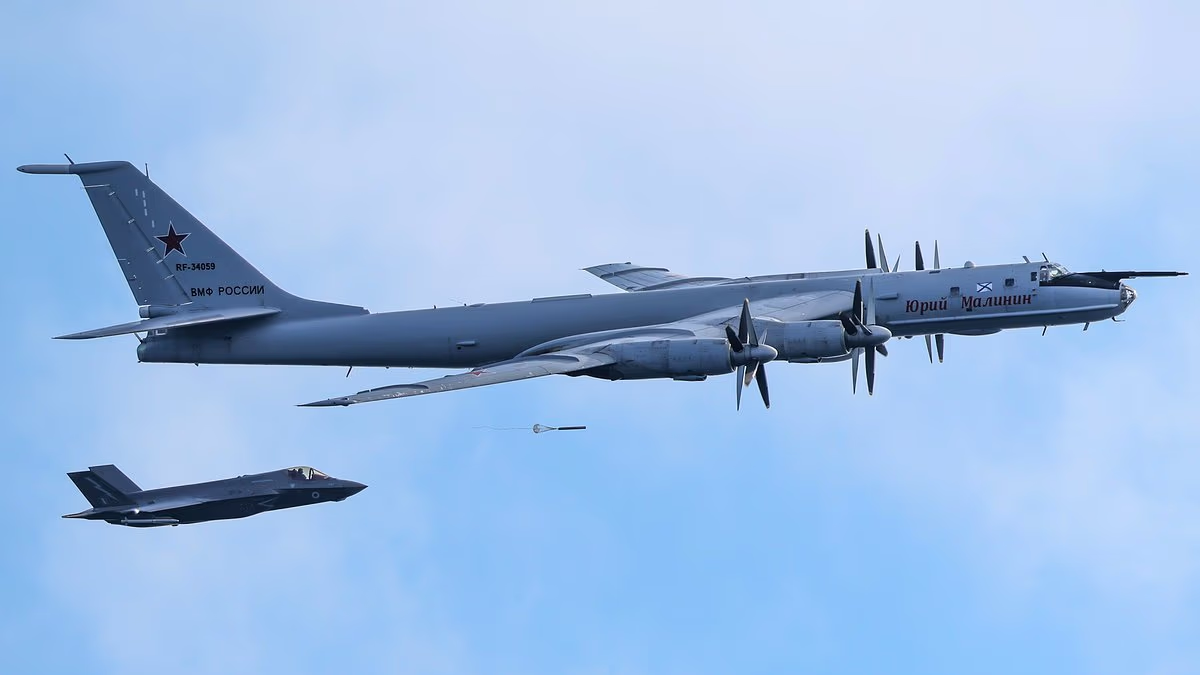

British F-35 fighter jets intercepted two Russian military aircraft over the Norwegian Sea after they carried out what officials described as an “unsafe and unprofessional” low-altitude pass near HMS Prince of Wales.
According to the Ministry of Defence (MoD), two Russian Bear-F maritime patrol planes approached the Royal Navy aircraft carrier on July 2 before releasing “tens of sonobuoys” into the water.
Two F-35 jets were launched from HMS Prince of Wales in response, intercepting the Russian aircraft and escorting them away from the carrier group.
A sonobuoy is a small, disposable floating sensor deployed from an aircraft or vessel to help detect and monitor submarines beneath the surface.
It is understood the Russian crews failed to respond when operators tried to make contact and determine their intentions.
The encounter comes as the UK assumes command of NATO’s forward rapid-response force, often referred to as the alliance’s “spearhead”, which is designed to send troops to crisis zones around the world within days.
HMS Prince of Wales has been operating as the flagship for Operation Firecrest since departing Portsmouth in April, with the carrier strike group’s command headquarters stationed onboard.
The 1,500-strong British-led strike group is currently positioned off Iceland under NATO command in the High North, supporting efforts to strengthen security across the North Atlantic.

The Russian planes were intercepted and escorted away from the carrier vessel by two UK F-35 jets from HMS Prince of Wales (pictured)

The Ministry of Defence (MoD) said two ‘Bear-F’ maritime patrol aircraft (pictured left) dropped numerous sonobuoys not far from the UK’s Carrier Strike Group on July 2

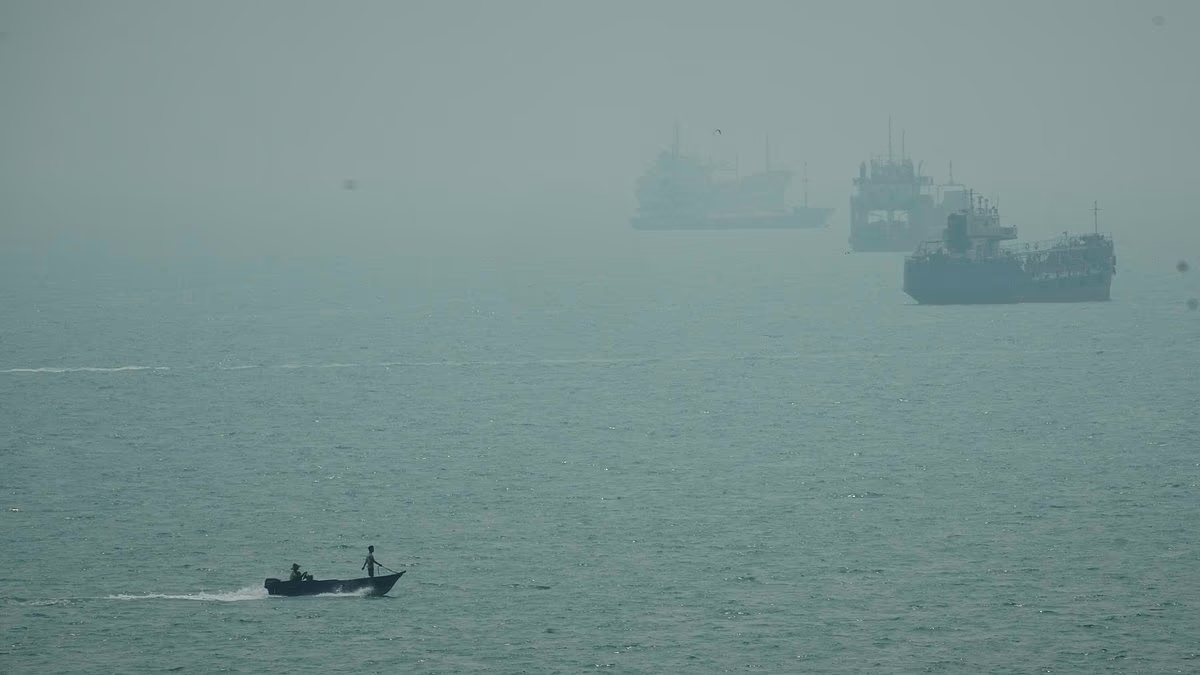
The tense moment (pictured) comes just weeks after Royal Marines seized the Russian-linked tanker Smyrtos in the English Channel
A MoD spokesperson said: ‘While operating in the Norwegian Sea on Operation FIRECREST, the UK’s Carrier Strike Group was repeatedly approached by a Russian ‘Bear-F’ maritime patrol aircraft.
‘The Bear-F passed at low altitude and unnecessarily close to HMS Prince of Wales and dropped a large number of sonobuoys in close proximity to the carrier.
‘This activity was unsafe and unprofessional. The Russian aircraft was intercepted and escorted by two UK F-35 jets from HMS Prince of Wales until it left the area.’
The Conservatives said the encounter ‘underlines once again that the threat from Russia is real’.
James Cartlidge, the shadow defence secretary, urged the Government to hike defence spending, and added: ‘Only by prioritising defence spending over a bigger welfare state can the Government hope to deliver the funding our forces need.
RELATED: Disturbing DC Train Photo Shows Black Woman Surrounded by White Supremacist Group
‘That’s why we’ve repeatedly offered to support the Government, and work together in the national interest, to take the tough decisions necessary to cut welfare and back our armed forces with the resources needed to keep us safe,’ he said.
The latest encounter comes less than a month after Royal Marines seized the Russian-linked tanker Smyrtos in the English Channel.
Commandos boarded the sanctioned oil tanker from a helicopter during a six-hour operation targeting Moscow’s ‘shadow fleet’.
The tanker was part of Russia’s fleet of 700 ships currently acting as its ‘lifeline’ by transporting 75 per cent of its oil and helping fund the war against Ukraine.
Moscow’s shadow fleet is reported to comprise more than 1,000 ageing tankers that illicitly ship oil and other goods out of Russia by flying the flags of other countries, with the aim of evading sanctions imposed by the West.
Closing off British waters to the shadow fleet is aimed at forcing the Russian vessels into taking longer, more costly sea routes, or risk being intercepted by the UK.

Helicopters intercepted the Smyrtos in the first operation of its kind (pictured)

The MoD said the CMR Smyrtos (pictured) has been sailing under a false Cameroonian flag
British forces have already been involved in tracking shadow fleet vessels for several years, and have supported operations by other countries to seize the ships.
In May, Russian jets brazenly imperilled a Royal Air Force spy plane as Vladimir Putin’s pilots flew reckless passes at more than 500mph over the Black Sea.
One of the fighters flew within 20ft of the nose of the RAF Rivet Joint, ignoring every internationally recognised guideline designed to prevent tragedy in the skies.
The slightest error would have cost the lives of everyone involved on both sides.
The Russian fighter pilots, in what is known as a ‘Crazy Ivan’ manoeuvre that is designed to unsettle the enemy, conducted six harrowingly close passes, causing the RAF’s autopilot system to disengage and trigger emergency procedures.
The term ‘Crazy Ivan’ originated in the Cold War and initially referred to submarines whose captains turned unexpectedly to see if they were being followed.
Its usage has expanded over the years to cover any reckless behaviour at sea or in the air by the Russian military.
Elsewhere, the UK Government has sanctioned the scientists and institutions responsible for developing the Novichok nerve agent used in the 2018 Salisbury assassination plot.
Dawn Sturgess died after coming into contact with the poison, which was used in an attempted assassination of former spy Sergei Skripal and his daughter Yulia.
The sanctions announced by the Foreign Office also targeted the Russians involved in the development of the Epibatidine toxin used against Alexei Navalny, a prominent opposition leader and critic of Vladimir Putin.