Gov. Gavin Newsom is significantly increasing California’s investment in public schools as the number of students requiring specialized support continues to rise sharply.
The governor’s recently signed state budget includes $2.4 billion for special education, a 43% jump from last year’s allocation. Advocates said during a Thursday news conference in Davis that the funding is expected to help districts cover literacy specialists, behavioral health support and other targeted services for students with disabilities.
“I think we did fine with some earlier investments, but there was this gnawing understanding that we were, you know, failing more efficiently,” Newsom said at the event.
The $2.4 billion commitment amounts to $1,340 per student, a record level that factors in cost-of-living adjustments and the growing population of students with special needs.
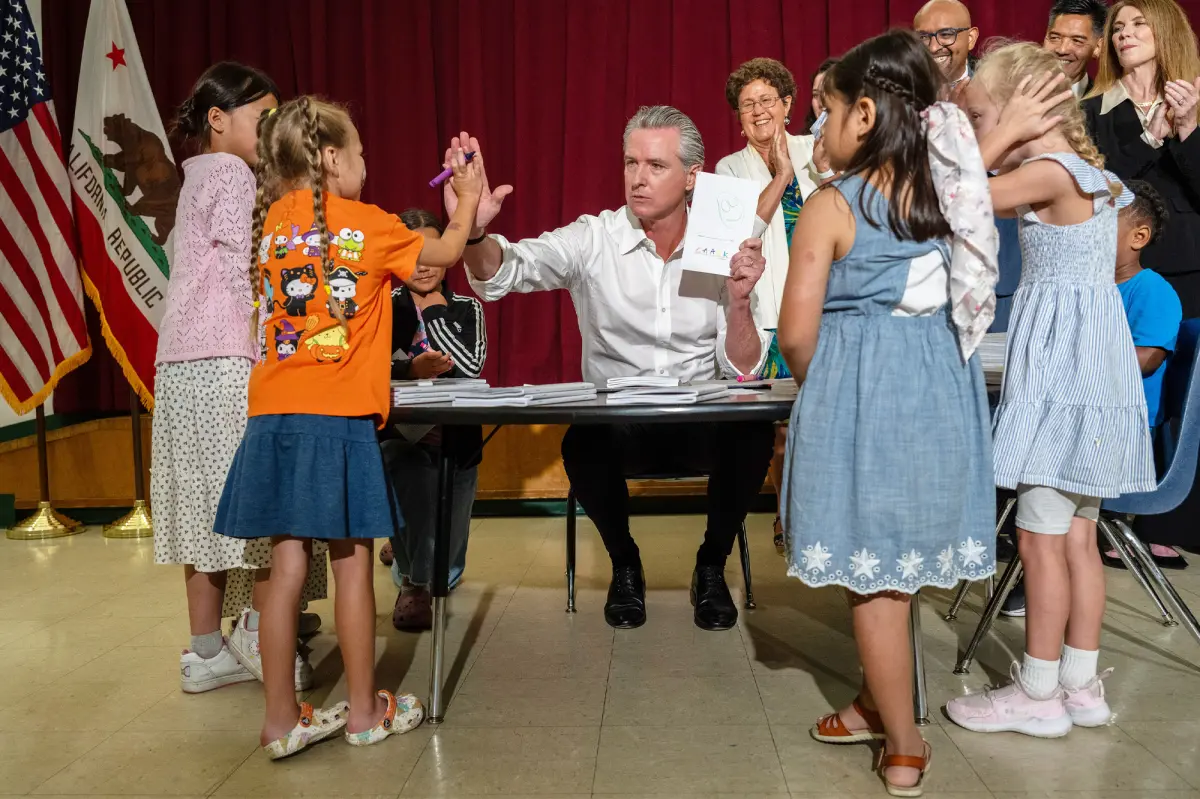
Newsom was joined by schoolchildren for a mock signing of the budget trailer bill containing the education funding, Assembly Bill 126.
The budget also sets aside $80 million to reimburse school districts for specialized student services; an additional $30 million for the Supporting Inclusive Practices Project, which is designed to broaden disability access in schools; $25 million to expand opportunities for students with intellectual and developmental disabilities; and $10 million to support “alternative pathways” to a high school diploma for students with disabilities.
“These investments mean more reading specialists, more behavioral health aides, and more one-on-one support that will directly improve student outcomes,” said Assemblymember David Alvarez, D-Chula Vista, who also spoke at Thursday’s event.
The announcement comes as California sees a notable increase in the proportion of students with documented disabilities.
The share of students who qualified for special education services climbed to 15% in 2024-25, compared to 13% in 2018-2019, according to EdSource — even as total public school enrollment declined in California.
In the early 2000s, the share of special education students was 10%, according to the state Legislative Analyst.
Most students with disabilities have relatively mild conditions, such as speech impediments or learning disorders such as dyslexia, the analyst noted. But the number of students with more serious conditions such as certain forms of autism has doubled over the past 25 years, according to the report.
The education bill isn’t the only move by Newsom to shake up the state’s struggling education system during his final year in office.
Testing results from last year show that just 49% of students met or exceeded state standards in English Language Arts, compared to an abysmal 37% in math and 33% in science.
In a budget agreement with the Legislature, Newsom stripped the duties of the state superintendent of schools, giving the executive branch more control of the Department of Education through an appointed commissioner.
The move reportedly blindsided current Superintendent Tony Thurmond, who called it “undemocratic” to the Sacramento Bee.
“He and I have a fundamental disagreement, and I couldn’t be more proud that the legislature and the people of the state demanded a new approach,” Newsom said.
“You know, change has its enemies. I’m for change,” he added.