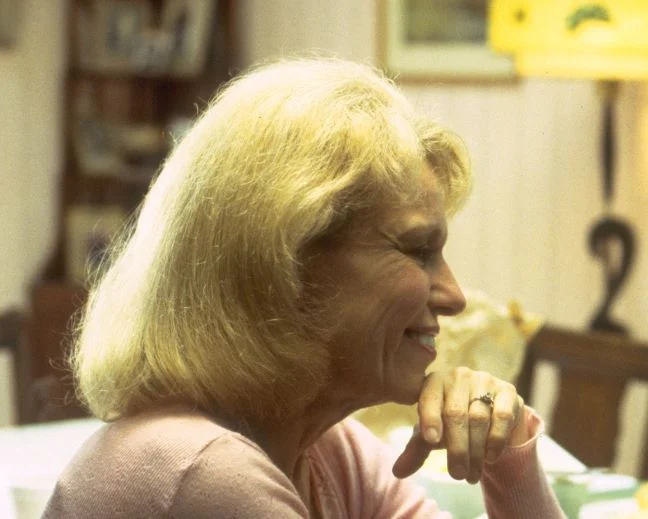

What was Louise Lasser’s Net Worth?
Louise Lasser, the American actress, television writer, acting teacher and director best known for her unforgettable turn in “Mary Hartman, Mary Hartman,” had a net worth of $1.5 million at the time of her death. Lasser became a cult TV figure as the title character in Norman Lear’s syndicated satirical soap opera, which aired five nights a week from 1976 to 1977. With her pigtails, puffed sleeves, blank Midwestern gaze and an ever-present air of quiet alarm, she transformed Mary Hartman into a sharp portrait of suburban unease, consumer culture, emotional burnout and absurd modern life.
Long before “Mary Hartman” made her a television phenomenon, Lasser appeared in several of Woody Allen’s early films, among them “Take the Money and Run,” “Bananas” and “Everything You Always Wanted to Know About Sex (But Were Afraid to Ask).” Her screen career later included roles in “Just Me and You,” “It’s a Living,” “Happiness,” “Requiem for a Dream” and “Girls.” Lasser died July 6, 2026, at her home in Manhattan. She was 87.
Early Life
Louise Lasser was born April 11, 1939, in Manhattan, New York. The only child of Sol Jay Lasser, a tax accountant and author, and Paula Eisenreich Lasser, a designer, she was raised in the Bronx. She attended the Fieldston School before going on to Brandeis University, where she studied political science and appeared in student theater productions.
Lasser left Brandeis before earning her degree and returned to New York, where she trained with renowned acting teacher Sanford Meisner. She began building her career through stage work, cabaret performances, commercials and small television parts. In her early years, she appeared in advertisements for brands including NyQuil and Excedrin, and she became the first actress to receive a Clio Award.
Early Career and Woody Allen Films
Her first major Broadway opportunity came in 1962, when she served as Barbra Streisand’s understudy in the musical “I Can Get It for You Wholesale.” After Streisand departed the production, Lasser briefly stepped into the role of Miss Marmelstein.
During that era, Lasser met Woody Allen. The two married in 1966 and divorced in 1970, though their professional partnership continued through several of Allen’s formative film projects. She appeared uncredited in “What’s New Pussycat?,” contributed voice work to “What’s Up, Tiger Lily?” and later had roles in “Take the Money and Run,” “Bananas” and “Everything You Always Wanted to Know About Sex (But Were Afraid to Ask).”
Those performances helped define Lasser’s distinctive comic style. She was not a traditional comic presence; her humor often came from pauses, awkwardness, disarming honesty and the feeling that her characters were simply trying to navigate a world that had already tilted slightly off course.
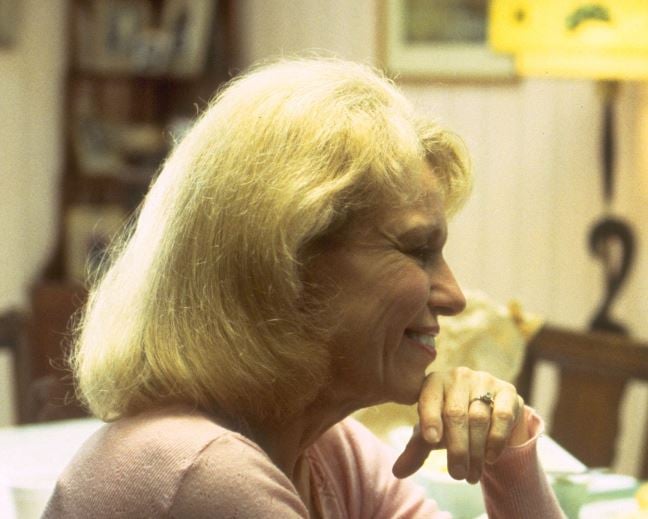
Getty
“Mary Hartman, Mary Hartman”
Lasser’s signature role arrived in 1976 with “Mary Hartman, Mary Hartman.” Created by Norman Lear’s production company, the show parodied soap operas while also becoming something stranger, darker, and more original. It followed Mary Hartman, an Ohio housewife overwhelmed by marriage, neighbors, murder, consumer products, local scandal, television news, and her own unraveling emotions.
The show aired in first-run syndication, usually late at night, and quickly became a phenomenon. Lasser appeared on magazine covers and became identified with Mary’s pigtails, gingham dresses, blank expressions, and anxious voice. The series ran for only about a year and a half, but because it aired five nights a week, Lasser appeared in hundreds of episodes in a compressed period.
“Mary Hartman, Mary Hartman” was both funny and unsettling. Lasser made the character sympathetic without smoothing out her oddness. Mary could seem naive, trapped, absurd, fragile, and painfully aware all at once. Her performance helped make the show one of the defining cult comedies of the 1970s.
“Saturday Night Live” and Public Attention
At the height of her fame, Lasser hosted “Saturday Night Live” in July 1976. The appearance became famous partly because viewers were unsure where scripted comedy ended and real discomfort began. The episode played off Lasser’s public persona, the pressure surrounding “Mary Hartman,” and the highly publicized cocaine possession case she had faced earlier that year.
The incident added to the sense that Lasser and Mary Hartman were blending in the public imagination. Lasser later continued to discuss the role with humor and distance, but she also made clear that the intensity of the show and its fame had been difficult.
Later Career
After “Mary Hartman,” Lasser wrote and starred opposite Charles Grodin in the 1978 television movie “Just Me and You.” She also appeared for one season on the sitcom “It’s a Living” and continued working in film and television.
Her later credits included “Stardust Memories,” “Crimewave,” “Surrender,” “Rude Awakening,” “Frankenhooker,” “Happiness,” and “Requiem for a Dream.” In Todd Solondz’s “Happiness,” she was part of an ensemble that won recognition from the National Board of Review. In Darren Aronofsky’s “Requiem for a Dream,” she appeared in one of the bleakest and most memorable films of 2000.
Lasser also taught acting in New York and remained connected to theater and performance. In the 2010s, she appeared on HBO’s “Girls” as Beadie, an older artist whose life intersects with Hannah Horvath’s circle.
Personal Life
Louise Lasser was married to Woody Allen from 1966 to 1970. She later had a longtime relationship with Michael Citriniti, who survived her. Lasser generally kept her private life out of the spotlight, especially in her later years, but she continued to give occasional interviews about acting, comedy, “Mary Hartman,” and the strange afterlife of her most famous character.
Death
Louise Lasser died on July 6, 2026, at her home in Manhattan. She was 87. Her death brought renewed attention to “Mary Hartman, Mary Hartman” and to a career that never fit neatly into the usual categories of sitcom star, film actress, character performer, or cult figure.
Legacy
Louise Lasser’s legacy rests on one of the most unusual performances in 1970s television. As Mary Hartman, she turned a soap-opera parody into a nervous, funny, sad, and deeply original portrait of American domestic life. The show lasted only a short time, but its influence endured because it anticipated later television that mixed comedy, psychological collapse, satire, and social critique.
Lasser also left behind a body of work that connected Broadway, early Woody Allen comedies, Norman Lear television, independent film, and prestige cable. She was never a conventional star. That was the point. Her best performances made discomfort funny, made absurdity feel human, and made silence as expressive as a punchline.
All net worths are calculated using data drawn from public sources. When provided, we also incorporate private tips and feedback received from the celebrities or their representatives. While we work diligently to ensure that our numbers are as accurate as possible, unless otherwise indicated they are only estimates. We welcome all corrections and feedback using the button below.
(function() {
var _fbq = window._fbq || (window._fbq = []);
if (!_fbq.loaded) {
var fbds = document.createElement(‘script’);
fbds.async = true;
fbds.src = ”
var s = document.getElementsByTagName(‘script’)[0];
s.parentNode.insertBefore(fbds, s);
_fbq.loaded = true;
}
_fbq.push([‘addPixelId’, ‘1471602713096627’]);
})();
window._fbq = window._fbq || [];
window._fbq.push([‘track’, ‘PixelInitialized’, {}]);