
Emergency radio communications reviewed by INC News shed light on the response to Sen. Lindsey Graham’s Washington, D.C., residence Saturday night, showing that crews were initially sent to the home for a reported cardiac arrest before his office confirmed Sunday morning that he had died.
According to District of Columbia Fire and EMS radio traffic, the first call went out shortly after 8 p.m. local time, directing emergency personnel to Graham’s home for the cardiac arrest report.
While units were en route, dispatchers advised that the caller said the front door was unlocked. Once on scene, however, responders found the door locked and received no answer from inside, prompting a request for Metropolitan Police Department officers to assist with forced entry.
About 20 to 25 minutes after the initial dispatch, radio transmissions indicated that CPR was underway as emergency crews worked inside the residence. The audio does not mention Graham by name or provide details about the patient’s condition.
In later radio traffic, officials were heard saying the response would be treated as a “Capitol Police matter only.” The last relevant transmission was recorded shortly after 9:30 p.m.

Sen. Lindsey Graham, R-S.C., died on Saturday, July 11, 2026. He was 71. (Tom Williams/CQ-Roll Call, Inc via Getty Images)
The dispatch audio offers limited insight into what emergency personnel found inside the home or what treatment, if any, was administered before Graham’s death.
Graham’s office later said the 71-year-old senator died Saturday evening after a “brief and sudden” illness.
“On the evening of Saturday, July 11, U.S. Senator Lindsey Graham passed away from a brief and sudden illness,” his office wrote in a statement.
“Senator Graham’s family appreciates prayers at this time and asks for privacy during this incredibly difficult period,” the statement continued.
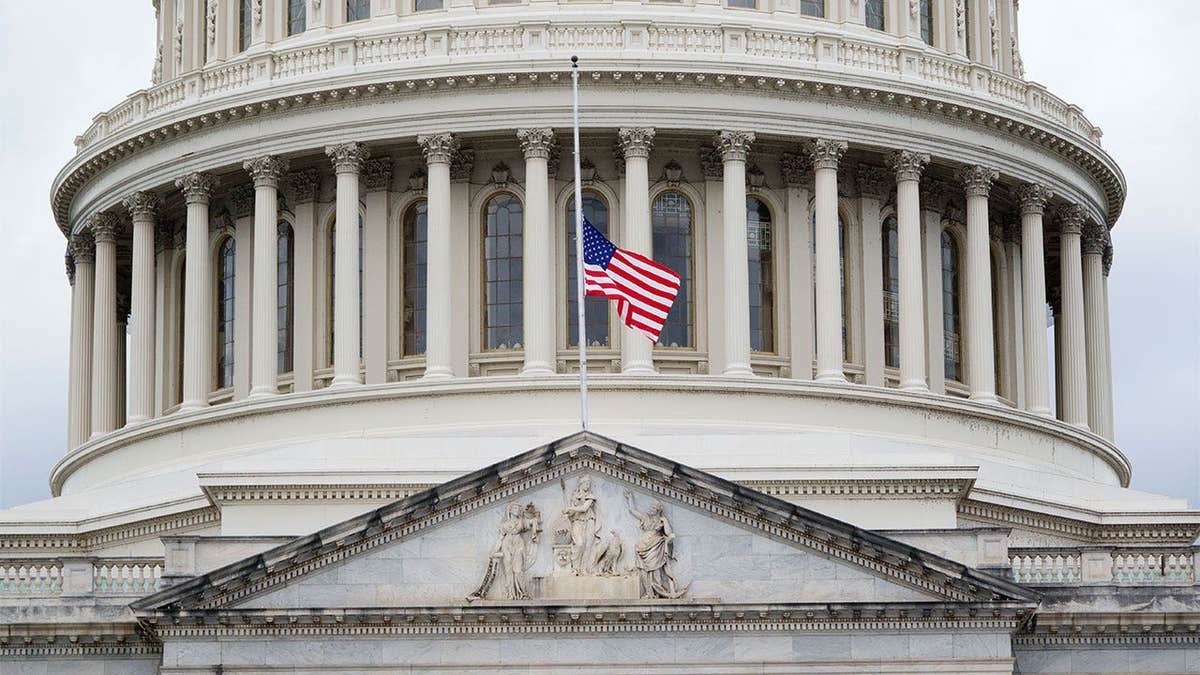
Emergency dispatch audio reviewed by INC News documents the emergency response before Graham’s office announced his death. (Kevin Carter/Getty Images)
The Office of the Chief Medical Examiner for the District of Columbia released preliminary findings on Sunday suggesting Graham died from an aortic dissection due to arteriosclerotic cardiovascular disease.
“The preliminary examination findings were: Aortic Dissection due to Arteriosclerotic Cardiovascular Disease,” according to the medical examiner’s office.
Officials added Graham’s death certificate will remain pending until toxicology and microscopic testing are complete.
“The death certificate will be PENDING until all the toxicological and microscopic testing are finalized and at that point the death certificate will be updated to reflect the cause of death and appropriately classify the manner of death,” the medical examiner’s office said.
INC News has reached out to DC Fire and EMS and the U.S. Capitol Police for additional information about the emergency response.

President Donald Trump called Graham a “true American Patriot” in a Truth Social post honoring him. (Jim Watson/AFP via Getty Images)
President Donald Trump paid tribute to Graham in a Truth Social post Saturday night, calling the longtime South Carolina lawmaker “a true American Patriot.”
“Senator Lindsey Graham, one of the greatest people and Senators I have ever known, is dead!” Trump wrote. “He was always working, and was a true American Patriot. Lindsey will be greatly missed!!! DETAILS AND ARRANGEMENTS TO FOLLOW. So sad!”
Graham was elected to the U.S. Senate in 2002 and took office in 2003 after serving four terms in the U.S. House of Representatives. He won re-election three times and was seeking a fifth Senate term after winning the Republican primary last month.
He served as chairman of the Senate Budget Committee and sat on the Appropriations, Judiciary, and Environment and Public Works committees.
The longtime lawmaker had just met with Ukrainian President Volodymyr Zelenskyy in Kyiv on Friday and was scheduled to appear on NBC’s “Meet the Press” Sunday morning.
Beyond Congress, Graham served for 33 years in the U.S. Air Force, Air National Guard and Air Force Reserve, retiring as a colonel in 2015.
An Air Force lawyer, he served in Germany during the Cold War, was called to active duty during the Gulf War and later completed multiple Reserve deployments to Iraq and Afghanistan during congressional recesses.