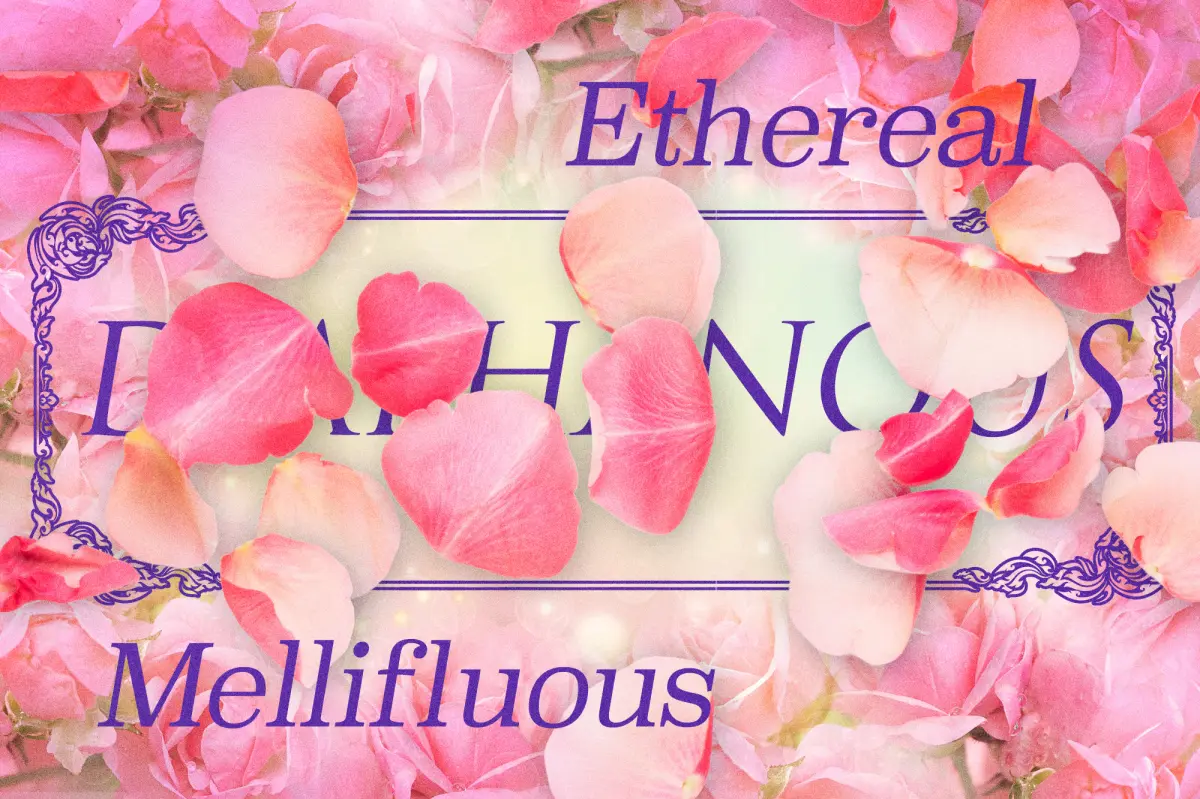

It is, by any measure, an elegant pick.
More than 1,000 scholars and writers connected with the Poetry Society of America have selected what they consider the most beautiful word in the English language: “diaphanous.”
Merriam-Webster defines “diaphanous” as having a texture so fine that light can pass through it — in other words, translucent — or as possessing an “extreme delicacy of form.”
To reach its verdict, the Poetry Society of America put a range of words to a vote. “Diaphanous” emerged as the favorite, drawing 17% of the total.
“Ethereal,” meaning otherworldly, placed second with 12%, while “mellifluous” — used to describe something sweet, smooth or pleasing to hear — came in third at 10%.
The appeal of beautiful words often falls under “phonaesthetics,” a field at the crossroads of linguistics and psychology that explores why certain words sound pleasing, or unpleasant, to the ear.
Words featuring soft, flowing letters such as L, M and S proved especially popular. Several entries borrowed from Latin-based languages also appeared on the list, including “luminous,” “amour,” “corazón” — Spanish for “heart” — “saudade,” the Portuguese term for a kind of melancholy nostalgia, as well as “mélange” and “désolée,” according to the Times.
“One of the paradoxes of language is that it is easier to hear the distinctive music of a language you don’t know than one you do,” said Matt Brogan, executive director of the Poetry Society of America.

“Unless,” he added, “you are a poet. Poets are keenly attuned to the sound effects of language — the ways in which consonants and vowels combine, repeat, clash and echo to give a word or phrase its soundtrack.”
Some words may phonetically seem beautiful but delineate from delicate connotations, such as “diarrhea” or “euthanasia,” which are also on the list, and were perhaps sardonically chosen.
The meaning of beautiful words change over time, a concept known as semantic shift, a component of linguistic evolution driven by cultural and technological changes.
Ultimately, while “diaphanous” captures the delicate beauty of language, not all modern coinages possess such grace.
The current obsession with “looksmaxxing,” for instance, remains a costly irony: chasing an “ethereal” aesthetic through clinical optimization often reveals little more than a profound deficit of personality.