
King Charles is facing complaints from residents over an alleged vermin problem in the gardens of rental homes on his vast Sandringham estate in Norfolk.
The issue was raised at a recent Sandringham parish council meeting, where a local resident complained about vermin affecting the gardens of the estate’s roughly 300 rental properties.
Rob Timmins, the Sandringham estate manager, was present at the meeting and told attendees that pest control is the responsibility of the “occupier, not the property owner.”
The concerns follow reports earlier this year that Marsh Farm in Wolferton, Andrew Mountbatten Windsor’s new home on the estate, had been overrun by moles, with dozens of molehills appearing across the front lawn.
Residents, however, believe the problem extends beyond moles, with rats and mice said to be drawn to the area by nearby crops and other food sources.
Tenants living in King Charles’ Sandringham properties are not allowed to keep cats, a rule some residents say has made mice, rats and other vermin more common locally.
The ban was introduced under Queen Elizabeth II as a measure to protect wildlife, but one tenant claimed it effectively gives rats “a free pass.”
“There are always rodents in an agricultural area like this,” one tenant told the Daily Mail anonymously, “but most people can keep the numbers under control by having a cat.

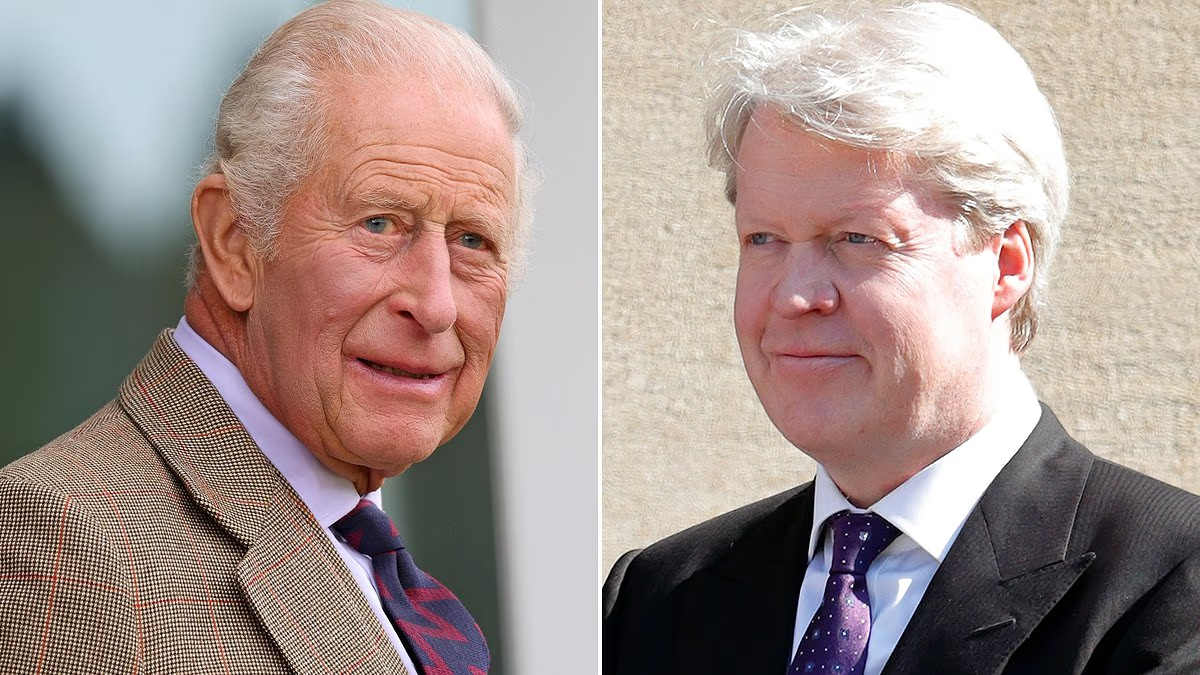
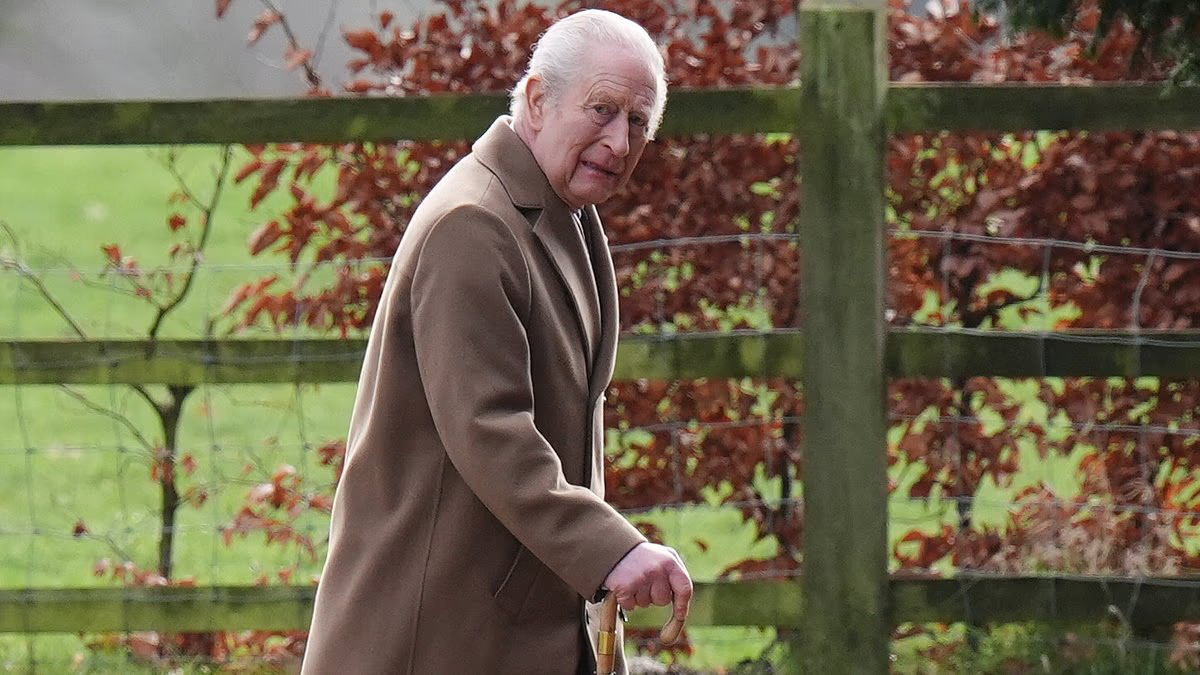
King Charles has a ‘vermin infestation’ in gardens on his sprawling Sandringham estate in Norfolk, local residents have complained. Pictured: The King attending church in Sandringham earlier this year

At a recent Sandringham parish council meeting one resident raised the issue of vermin in the gardens of the 300 or so rental properties. Pictured: File photo of the Sandringham estate

It comes after Andrew Mountbatten Windsor’s new home on the estate, Marsh Farm in Wolferton, was invaded by moles earlier this year. Pictured: Andrew driving around the Sandringham estate in April
‘Here that’s not permissible, so it means that they are free to multiply. Traps can only be used indoors and on their own aren’t really effective, and poison bait stations can’t be used outside because they are potentially dangerous to other wildlife such as hedgehogs, so we’re a bit stuck.’
It is understood that there have been no complaints about vermin from tenants to the Sandringham Estate.
Country Life reported in 2014 that the late Queen was allergic to cats, but other reports have suggested that the main reason behind the cat ban was to protect young game birds such as pheasants and partridges.
In 2020, Prince William faced calls to address hunting and wildlife management at Sandringham – shortly after he had become patron of the British Trust for Ornithology.
The row came after a protected bird, a little owl, was killed in a trap set by gamekeepers on the 20,000 acre estate.
The bird was found in a Fenn trap used to kill vermin such as rats, which eat the eggs of pheasants and partridges.
In 2023, The Guardian claimed to identify 18 cases in the previous 20 years involving suspected wildlife offences or the alleged misuse of poisons linked to the Royal estate and neighbouring farmland owned by King Charles.
READ MORE: Connor Murphy Bodybuilder Wiki: Suicide Rumors, Cause of Death Claims, Girlfriend, Height & Career
The cases included the alleged poisoning, shooting and disappearance of some of the UK’s rarest birds of prey.
One involved the mysterious loss of eastern England’s last breeding female montagu’s harrier, a critically endangered species.
Many of the cases were detailed by official regulators in internal documents released under freedom of information legislation.
The dossier revealed that police and enforcement officials regularly investigated the Windsors’ private estate.
The documents also revealed how the estate appeared on occasion to have hindered official investigations.

Recently, a Command Pest Control van, which has a Royal Warrant and works across the East of England, was seen driving out of Andrew’s five-bedroom Marsh Farm (pictured)

The company deals with removing moles, as well as unwanted rats, mice, squirrels and wasp nests. Pictured: The van leaving Marsh Farm
In 2016, Natural England, the conservation regulator, recorded that it was unable to investigate the suspicious deaths of up to 40 wood pigeons on the estate as it appeared the area had been ‘cleaned up’ early one morning.
In another incident, staff burned the body of a goshawk, a legally protected raptor, which made it impossible to investigate the cause of its death.
Questions were also raised over whether the estate has been treated leniently by official agencies, a suggestion rejected by the estate.
A spokesperson for Sandringham said at the time that it ‘fully supports and cooperates with any investigation into alleged wildlife or pesticide incidents’.
They said the vast majority of allegations outlined by the Guardian ‘were either investigated with no further action taken, or are assertions based on little or no substantive evidence’.
Only one of the incidents led to a prosecution. In 2006 a Sandringham gamekeeper was fined £500 and £470 in costs after he admitted maiming a legally protected tawny owl in a trap. Three other charges were dropped; one of those involved the incorrect use of rat poisons.
Recently, a Command Pest Control van, which has a Royal Warrant and works across the East of England, was seen driving out of Andrew Mountbatten-Windsor’s five-bedroom Marsh Farm.
The company deals with removing moles, as well as unwanted rats, mice, squirrels and wasp nests.
Their website promises ‘swift and humane’ removal of the creatures, which are known to wreck garden lawns.
It states: ‘Moles can wreak havoc on your property by digging holes and tunnels across your lawn, gardens, and root systems.
‘Moles are extremely sensitive to vibrations which make them hard to control within a domestic setting.’
The Daily Mail contacted Sandringham Estate and Buckingham Palace.