
Dear Dr Scurr,
A friend of mine has a cancerous growth on his neck and has received one session of radiotherapy. He has since been told that no further treatment can be offered, but he has not been given a clear reason.
A retired NHS nurse has suggested this may be because, at 90, he is considered a low priority. Could that be true?
Steve Allsup, Cheltenham.
I can see why that possibility would worry you — and I would not dismiss anyone’s concerns about age influencing care without thought — but in this case there is a more plausible medical explanation.
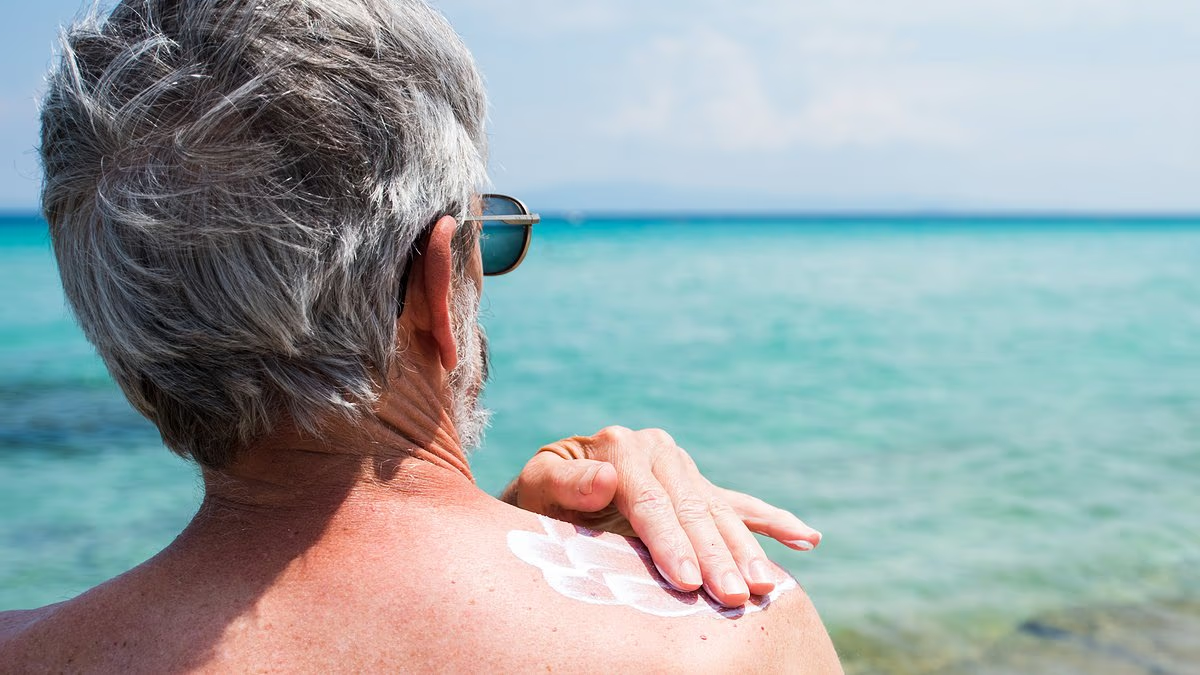
From your description, my suspicion is that the growth on your friend’s neck may be a basal cell carcinoma, a form of skin cancer strongly linked to long-term sun exposure.
Basal cell carcinoma is the most common type of skin cancer. It can enlarge and damage nearby tissue, but it only very rarely spreads to other parts of the body.
Surgery is often the standard treatment, although alternatives include chemotherapy applied as a cream and photodynamic therapy, in which a light-sensitive drug is placed on the affected area and then activated with a lamp or laser to destroy cancer cells. Radiotherapy is also an established option, especially for older patients, as it can avoid an operation and the need for a later appointment to remove stitches.

Basal cell carcinoma, a skin cancer caused by years of sun exposure, is the most common type
This can be delivered as a single, high dose, rather than a course spread over several visits which can suit people with other health conditions or shorter life expectancy because it’s less invasive and draining.
Furthermore, a single dose can be highly effective in the short to medium term (longer term, over many years, its success rate may be lower than a full course of treatment spread over time).
For a 90-year-old man, such as your friend, this would make a lot of sense.
As long as his GP was kept informed and could monitor the area to check the treatment worked, it would be a perfectly reasonable way to manage his case. Your friend might consult his GP to check this and put his mind at rest.
Overnight, the usual amount of sugar I add to tea or coffee suddenly became unbearably sweet. I halved my usual small teaspoon and it’s still too sweet. My doctor said the problem lies with my tongue, and gave me drops to use four times a day for a week. They made no difference. What are your thoughts on this?
Kevan Derbyshire, Manchester.
This is a recognised, if unusual, problem – a type of taste distortion, sometimes called sweet hypergeusia.
I agree with your GP that the problem lies with your tongue – particularly the nerves of your taste buds, which are found largely on the tongue.

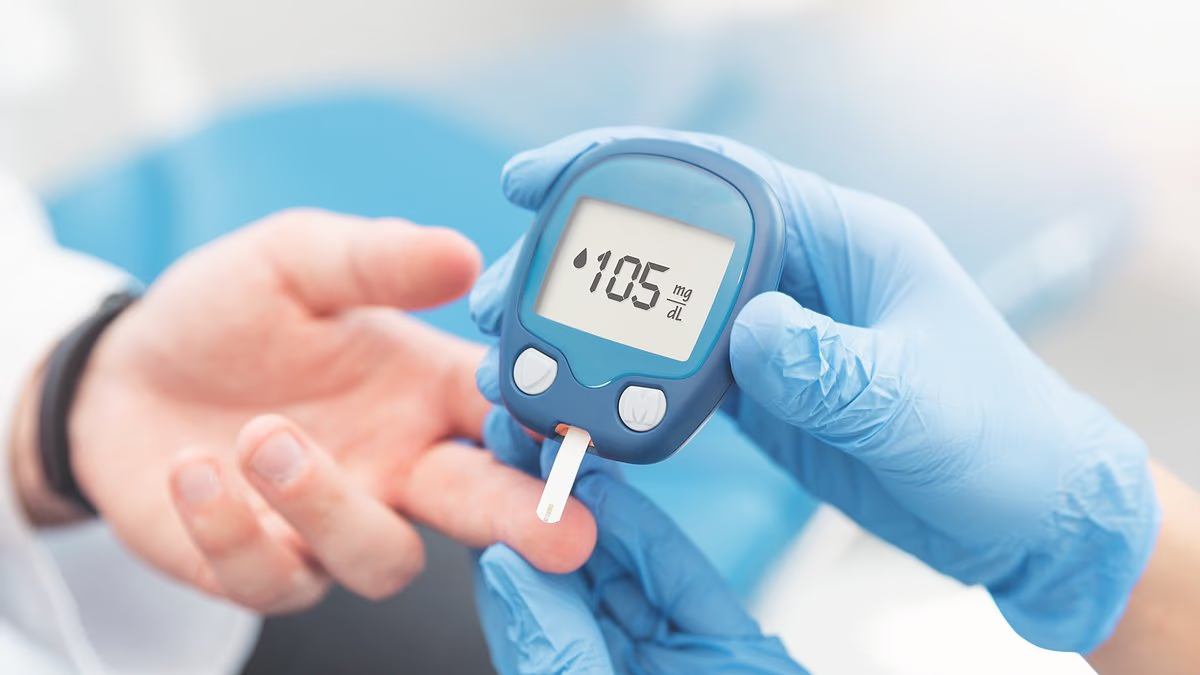
A change in taste can signify diabetes or an infection, says Dr Scurr
This could be down to type 2 diabetes or to potential imbalances in the body salts (i.e. electrolytes) such as sodium, potassium and particularly zinc; or iron – which could trigger some kind of change in body chemistry, affecting the nerves that transmit taste from your taste receptors. Another potential trigger is an infection – any kind of respiratory infections (and Covid-19 in particular) can alter taste, although they more commonly cause loss of taste or an unpleasant taste rather than making things seem sweeter.
Certain medications can also alter taste – notably ACE inhibitors (such as captopril, prescribed to treat high blood pressure); and some antibiotics, including clarithromycin and metronidazole.
Again, this may be down to neurological function altered by some kind of chemical effect.
I suspect the drops you were given contained nystatin, an antifungal used here for treating oral thrush – possibly your GP thought that a fungal infection might be the cause.
I’d suggest asking your doctor for a blood test for iron (ferritin) as well as electrolytes.