
Labour was plunged into an increasingly bitter internal battle over immigration and economic policy on Saturday night, casting a shadow over Andy Burnham’s first party conference as Prime Minister.
Tensions erupted among Cabinet ministers over proposed restrictions on migrant visas, while a senior Labour figure accused the government of prioritising union demands over the urgent need to drive economic growth.
The unusually public disputes risk derailing the triumphant conference Mr Burnham had hoped to stage when Labour gathers in Liverpool on Sunday.
The turmoil intensified after Angela Rayner repeated her opposition to Home Secretary Shabana Mahmood’s proposal to make it more difficult for migrants to secure permanent residency in Britain. Ms Rayner had previously described the approach as “un-British”.
One Labour MP likened the former deputy prime minister’s intervention to a “drive-by shooting”, while a senior party source told The Mail on Sunday: “It’s quite mad she’s chosen this moment to attack.”
The dispute escalated further when Culture Secretary Lisa Nandy publicly rebuked Ms Rayner and threw her support behind Ms Mahmood’s immigration plans.
Another Labour MP went even further, suggesting that Mr Burnham should “remind [Rayner] of the benefits of keeping her mouth closed”.
A second dispute opened up over the economy, with former business secretary Peter Kyle accusing the Prime Minister of failing to move quickly enough to stimulate growth.

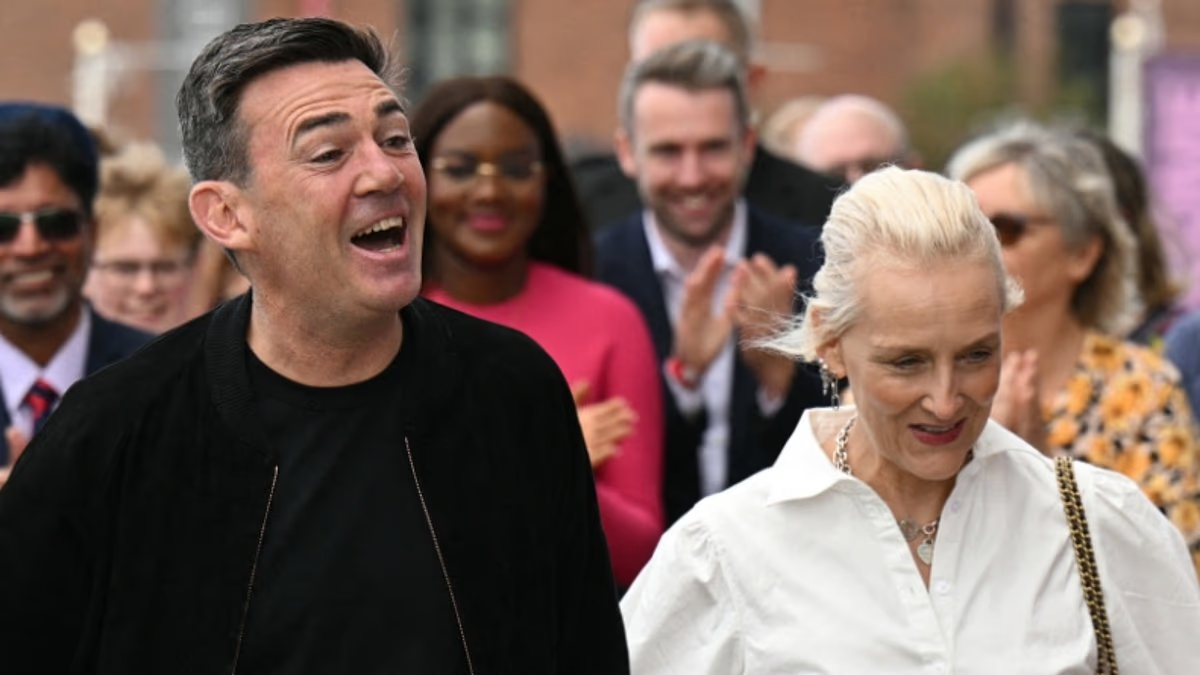
Andy Burnham pictured with his wife Marie-France van Heel in Liverpool, as Labour was rocked by public clashes over immigration and the economy on Saturday night

Angela Rayner, pictured in Liverpool on Saturday, criticised Home Secretary Shabana Mahmood’s proposal to tighten the route to permanent residency for migrants
Mr Kyle said Mr Burnham needed to show “more urgency” and consider postponing further expansions of workers’ rights sought by Labour’s trade union backers, warning that the measures could burden businesses with additional red tape.
The former minister, a close ally of Sir Keir Starmer, compared the UK economy to a car travelling in the right direction on a motorway but moving at only 30mph. “Why wouldn’t we put our foot down and get there quicker?” he asked.
The growing divisions emerged as:
Ms Rayner, who serves as Housing Secretary, made the opening move in the latest Labour confrontation by arguing that the proposed visa restrictions would “change the goalposts” for migrants already settled in Britain, particularly those employed in social care.
A senior Labour source claimed Ms Rayner’s intervention was intended to rebuild support among the party’s grassroots members, amid suggestions that her influence had waned since Louise Haigh became de facto deputy prime minister in July.
The well-placed insider said: “She’s unhappy that she doesn’t have as much support as she did in her last stint – obviously because she isn’t DPM and that hasn’t sunk in. Her nose is out of joint with all the influence Lou has.”
Appearing on Radio 4’s Today programme, Ms Nandy backed the Home Secretary’s approach. She said Ms Mahmood was “taking great care” over the policy and had “the support of the Cabinet in doing so”.
RELATED: 1,600 Baby Teeth Found at Suspected Mass Grave Site in Mexico
As Labour’s internal conflict became public, Conservative leader Kemi Badenoch attacked the government, saying: “If Andy Burnham’s Cabinet are already at war with each other over small changes to the immigration system, how can they ever be trusted to stop the boats?”
Labour peer Lord Glasman, who founded the party’s Blue Labour movement, meanwhile urged senior figures to end the infighting.
He said: ‘I would expect all ministers to act within the framework of collective responsibility. It is clear that Shabana Mahmood’s approach is the right one.
‘People are rightfully concerned about illegal migration as well as the scale of legal migration. This government’s fate lies in whether it has the courage to confront that.’
But privately some party insiders expressed doubt that Mr Burnham has the resolve to back Ms Mahmood’s reforms. One said: ‘I’m afraid the Prime Minister strikes me as utterly confused.’
Further exposing divisions in the party, Ms Rayner received public support from Folkestone MP Tony Vaughan. He said she was ‘right’ to object to the changes, which would see new arrivals to the UK have to wait ten, or even 15, years to be granted indefinite leave to remain, up from the current five.
He said: ‘Why should workers on health and social care visas who have come here to look after our loved ones have to wait 15 years for settlement? It is economically and morally wrong and will damage our health and social care system.’
Mr Kyle’s critical comments on Mr Burnham’s economic agenda marked his first public intervention since leaving government.
He said that while Labour had ‘inherited a growth emergency’ from the Tories, he believes ‘that emergency persists’ two years on.
Mr Kyle said the Government must be willing to take decisions that involve ‘short-term’ pain in return for longer-term economic gain – including delaying the planned expansion of workers’ rights championed by Ms Rayner.
He argued: ‘We might need to look and have honest conversations with unions about how we sequence some of the rights… to make sure that we get growth into the economy in the shorter term.’
One of Labour’s big plans for an economic boost hit a major setback on Saturday night as it was announced that Heathrow’s third runway is likely to be delayed until 2039, four years later than first planned.

Privately some party insiders expressed doubt that Mr Burnham has the resolve to back Ms Mahmood’s reforms (Pictured: Ms Mahmood on September 15)
Mr Burnham hoped to get his first conference as Labour leader back on track on Saturday night, with a new pledge to help people on to the property ladder.
The Prime Minister said October’s Budget will introduce a new equity loan scheme for first-time buyers, which mean they will require just a 2.5 per cent deposit.
The plan, akin to the Tories’ Help to Buy scheme, will provide a 20 per cent equity loan on new-build homes, with an initial interest-free period. The funding, Labour say, will come from ‘reprioritising existing government budgets’.
On an average first-time home costing £230,000, a buyer could put down a deposit of £5,750 and access a loan of up to £46,000.