
To be clear, I am not claiming to be a music-industry insider, nor am I pretending to have tracked every rising pop act from the beginning. But from my vantage point, Gracie Abrams seemed to arrive almost overnight — and when she did, she was already positioned near the very top of the entertainment world.
The first time I distinctly remember hearing Gracie Abrams’ name was while watching the FireAid benefit concert in January 2025. She was not tucked away in some early, low-profile slot. She was among the event’s major performers. Billie Eilish opened the show. Earth, Wind & Fire followed. Then came Gracie Abrams.
That meant Gracie was appearing on the same lineup as Alanis Morissette, Green Day, John Mayer, Stevie Wonder, the Red Hot Chili Peppers, Lady Gaga, No Doubt, and the surviving members of Nirvana.
These are not casual names on a concert poster. They are artists with generations of fans, decades of touring history, hundreds of millions of albums sold, stacks of major awards, and a long list of Billboard-dominating songs.
And right there with them was Gracie.
For the record, I think her music is perfectly fine. Plenty of listeners obviously connect with it far more deeply than I do. She has sold out arenas, received Grammy nominations, opened for Taylor Swift, and landed major hits. This is not an argument that she lacks talent as a singer or songwriter.
Still, especially on CelebrityNetWorth.com, it is impossible to discuss Gracie Abrams without also acknowledging her famous father.
Gracie Abrams is the daughter of J.J. Abrams, the hugely successful television and film producer, writer, and director whose credits include “Lost,” “Alias,” “Star Trek,” “Mission: Impossible III,” “Super 8,” “Star Wars: The Force Awakens,” and “Star Wars: The Rise of Skywalker.” J.J. Abrams has a net worth of $300 million.
Gracie’s mother, Katie McGrath, is also a powerful entertainment executive and the co-CEO of the Abrams family’s production company, Bad Robot.
For all these reasons, Gracie has become one of the primary faces, lightning rods, and occasional punching bags for the concept of being a “nepo baby.”
And to be fair, Gracie has not exactly denied the advantage.
She has acknowledged that she grew up with a financial safety net and had access to opportunities that most aspiring musicians could only dream about. She did not have to choose between making music and paying rent. Her parents understood the entertainment business. They knew powerful people. They knew how deals were made, how careers were built, and how artists were promoted.
With all that in mind…
If having a father who’s worth $300 million makes Gracie Abrams the international face and punching bag of “nepo babyism,” what does that mean for country music’s newest rising star, Stella Lefty? Because, to Stella Lefty’s father, $300 million is the fractional amount his net worth changes every day based on basic stock market movements…

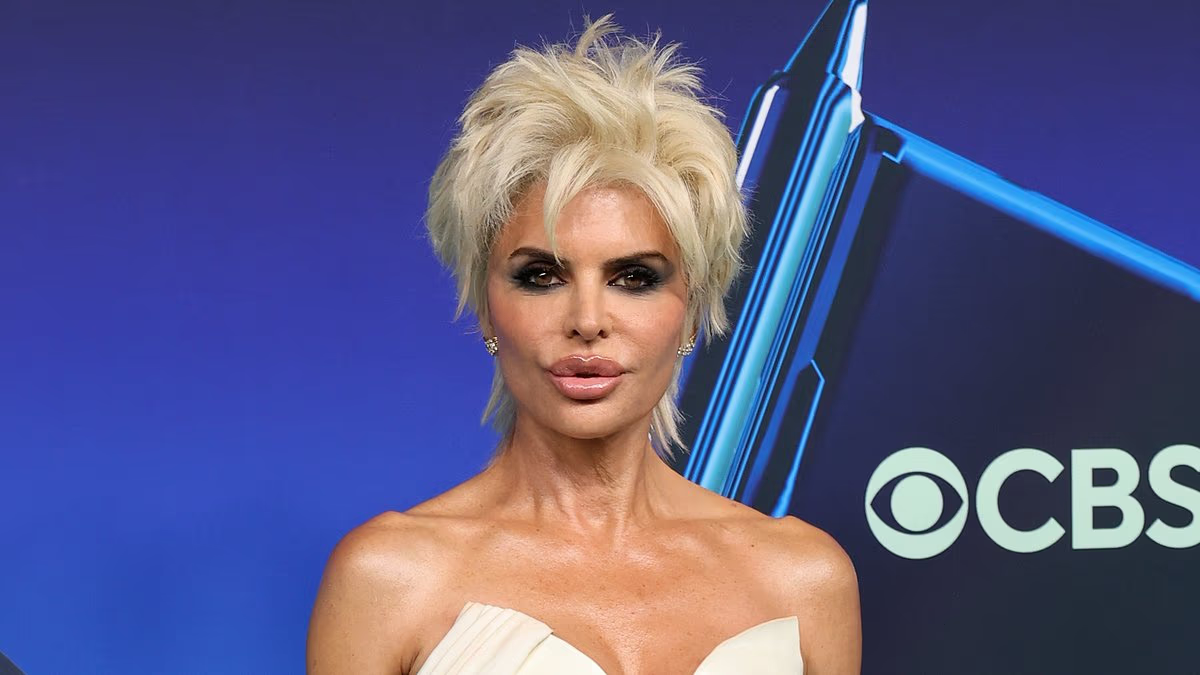
(Photo by Axelle/Bauer-Griffin/FilmMagic)
Meet Stella Lefty
Stella Lefty is the stage name of Stella Lefkofsky, a singer-songwriter from the Chicago area who has recently emerged as one of the fastest-rising performers in country-pop.
She began writing songs as a child and attended Tulane University, where she studied public health. She started posting her music online and became more serious about songwriting while studying abroad in Amsterdam.
After graduating, she attempted to establish herself in Nashville. A potential songwriting deal fell apart.
For most aspiring musicians, that might have been the end of the adventure. They would return home, find a job with health insurance, and tell stories about the time they almost made it in Nashville.
Stella instead received a message from Jacob Hindlin, better known as J Kash, a producer and songwriter who has worked with artists including Lady Gaga, Katy Perry, Kesha, and Maroon 5.
She signed with Disruptor Records and moved to Los Angeles. She continued writing, recording, posting songs online, and building an audience.
In February 2026, she released the song “Boston.” It eventually climbed all the way to #6 on the Billboard Hot 100.
As I type this article, “Boston” has already generated more than 120 million streams on Spotify and has been used in more than 1.6 million TikTok posts. Stella’s TikTok following has surged past 670,000, and her rise has been accelerated by radio airplay, festival appearances, and opening slots for established performers.
She has performed at Stagecoach and opened for singers including Jessie Murph and Cameron Whitcomb.
If you listen to “Boston,” you might think it sounds a bit like Noah Kahan’s song “Stick Season.” Stella has said she did not intentionally copy the melody. She wrote the chorus, posted it online, and then began receiving comments pointing out the resemblance. Kahan’s team contacted her, the two sides had a conversation, and Stella agreed to give him a songwriting credit (a la Olivia Rodrigo and Hayley Williams).
Who Is Stella Lefty’s Father?
Stella Lefkofsky was born on August 13, 2002, in Winnetka, Illinois, and grew up nearby in the affluent Chicago suburb of Glencoe.
Her father is billionaire technology entrepreneur Eric Lefkofsky. Her mother, Elizabeth “Liz” Lefkofsky, is a philanthropist who co-founded the Lefkofsky Family Foundation with her husband. Stella has two brothers.
Long before his daughter became a musician, Eric had established himself as one of Chicago’s most prolific technology entrepreneurs.
After graduating from the University of Michigan Law School in 1993, Eric and his longtime business partner, Brad Keywell, borrowed money from relatives to buy a Wisconsin clothing company called Brandon Apparel. The business initially grew rapidly, but it was loaded with debt and eventually collapsed.
Their next venture was significantly more successful.
In 1999, Eric and Brad founded Starbelly, an internet company that sold promotional merchandise such as branded coffee mugs, pens, and T-shirts. Less than a year later, Starbelly was acquired by Ha-Lo Industries in a deal valued at approximately $240 million.
The acquisition turned into a disaster for Ha-Lo, which filed for bankruptcy the following year, but Eric had successfully launched and sold his first major internet company.
In 2001, he co-founded InnerWorkings, a technology-based print procurement company. InnerWorkings went public in 2006, creating another valuable ownership position for Eric.
In 2005, Erik co-founded a company called Echo Global Logistics. He took the company public in 2009, and in late 2021, it was acquired for $1.3 billion in cash by a private equity firm.
In 2007, Erik took a meeting with a developer who had recently worked at InnerWorkings named Andrew Mason. Andrew had a unique idea for a new kind of website, which he called “The Point.”
The concept was that people could organize around a shared goal, but no one would be required to act until a large enough group had committed to the cause.
For example, users might pledge money to fight hunger, improve their neighborhood, support a political campaign, or help a charitable organization. The campaign would only activate after reaching a predetermined number of participants.
Eric liked the idea enough to invest $1 million.
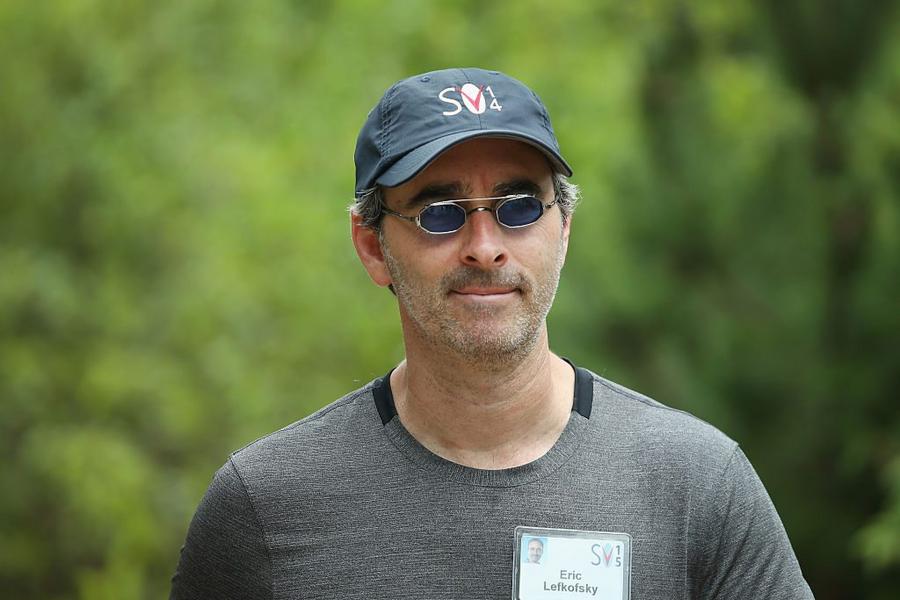
Eric Lefkofsky (Scott Olson/Getty Images)
Unfortunately, The Point struggled to attract a large mainstream audience. The social causes were admirable, but the concept was somewhat abstract and difficult to monetize.
Eventually, Mason and Lefkofsky discovered one cause that people were extremely eager to rally around: Saving money.
The company began organizing groups of consumers who agreed to purchase deeply discounted meals, spa treatments, products, and services from local businesses. If enough people committed to the offer, the deal became active.
It was sort of like a group coupon. A “Groupon,” if you will.
And Groupon exploded.
Within a few years, the company had expanded from a small Chicago startup into an international operation with thousands of employees. At its peak, Groupon was frequently described as the fastest-growing company in business history.
In 2010, Google offered approximately $6 billion to acquire the company.
Groupon turned the offer down.
That decision is now remembered as one of the most infamous rejected acquisition offers in technology history. Groupon’s founders and investors believed an IPO would produce an even larger valuation.
For a brief period, they appeared to be correct.
The Groupon Cash-Out
Before Groupon became a public company, it raised approximately $950 million from private investors.
Normally, when a startup raises money, most of the cash remains inside the company to hire employees, develop products, expand operations, or acquire competitors.
That is not what happened here.
Approximately $810 million of Groupon’s $950 million financing round was used to purchase shares from founders, executives, employees, and early investors.
Eric Lefkofsky and entities controlled by his family received $398 million.
Groupon completed its IPO in November 2011. Within a few months after the IPO, Groupon’s market cap was $13 billion, making their Google rejection temporarily look brilliant. At that level, Eric’s remaining shares were worth more than $3 billion.
Unfortunately, Groupon’s share price eventually collapsed. Consumer enthusiasm for daily deals faded, participating businesses complained that the promotions were unprofitable, and the company struggled with accounting problems, bloated expenses, and slowing growth.
Groupon is still a publicly traded company. Its market cap today is around $1 billion.
He subsequently co-founded the Chicago investment firm Lightbank and continued backing technology startups. Lightbank has generated at least $1 billion in venture capital returns through investments in companies like Spourt Social, Udemy and Snapsheet.
Then a deeply personal experience inspired what would become the largest and most important company of his career.
Tempus AI
In 2015, Stella’s mother, Liz, was diagnosed with breast cancer.
As Eric watched his wife undergo treatment, he became frustrated by how little clinical and genomic data appeared to be influencing her care.
Doctors, hospitals, researchers, and pharmaceutical companies had accumulated enormous amounts of medical information. The human genome had been mapped. Thousands of cancer studies were being published. Hospitals had decades of patient records.
Yet much of that information remained scattered across incompatible systems and was difficult for an individual physician to use when treating a specific patient.
Eric created Tempus to help solve that problem.
Tempus AI collects and analyzes clinical, molecular, and genomic data. Its technology is designed to help physicians understand how previous patients with similar characteristics responded to different treatments, allowing doctors to make more personalized decisions.
The company initially focused on cancer before expanding into other medical specialties.
Eric personally invested at least $100 million into Tempus during its early years.
Tempus AI went public on the Nasdaq in June 2024. Eric remained its CEO, largest individual shareholder, and controlling voter.
Today, Eric beneficially owns approximately 24% of Tempus AI. With the company currently sporting a market capitalization of $7.7 billion, that stake has a paper value of approximately $1.85 billion.
And remember, that is just his current Tempus stake.
It does not include the nearly $400 million Eric and his family extracted from Groupon before its IPO, the value of shares he subsequently sold, his proceeds and stakes from other companies, his Lightbank investments, real estate, cash, or other assets.
As I type this article, Eric Lefkofsky has a net worth of $5 BILLION.
And Groupon was far from his only cash-out. Over the past two decades, Eric co-founded and sold freight giant Echo Global Logistics (acquired in 2021 for $1.3 billion in cash) and advertising technology platform Mediaocean (re-valued at over $5 billion in 2021). Add in his venture fund, Lightbank—which backed hits like Sprout Social and Udemy—and Eric had accumulated over a billion dollars in liquid cash long before Tempus ever went public.
When it’s all said and done, Erik could buy and sell J.J. Abram’s entire $300 million fortune 17 times over. J.J.’s net worth is how much Erik’s fortune fluctuates day to day.
(function() {
var _fbq = window._fbq || (window._fbq = []);
if (!_fbq.loaded) {
var fbds = document.createElement(‘script’);
fbds.async = true;
fbds.src = ”
var s = document.getElementsByTagName(‘script’)[0];
s.parentNode.insertBefore(fbds, s);
_fbq.loaded = true;
}
_fbq.push([‘addPixelId’, ‘1471602713096627’]);
})();
window._fbq = window._fbq || [];
window._fbq.push([‘track’, ‘PixelInitialized’, {}]);