
For almost six years, American conservationist Morad Tahbaz says he endured conditions inside Iran’s prison system that felt like “hell.” The most punishing stretch, he said, came during four months of total isolation in a cramped cell where a harsh light stayed on around the clock.
Tahbaz was detained in Ward 2A of Tehran’s notorious Evin Prison, a high-security wing he described as being run by the intelligence arm of Iran’s Islamic Revolutionary Guard Corps.
Speaking to INC News, Tahbaz said he was permitted to leave his cell only twice a day for roughly 10 minutes at a time. Each time, he said, he was made to wear a blindfold. His only weekly phone call with his wife lasted just a few minutes and was monitored so tightly that an official cut in whenever he tried to speak English.
“This is probably the harshest and toughest imprisonment that any prisoner will go through,” Tahbaz, who was released in September 2023, told INC News while describing the Islamic Revolutionary Guard Corps intelligence detention facility inside Evin Prison.

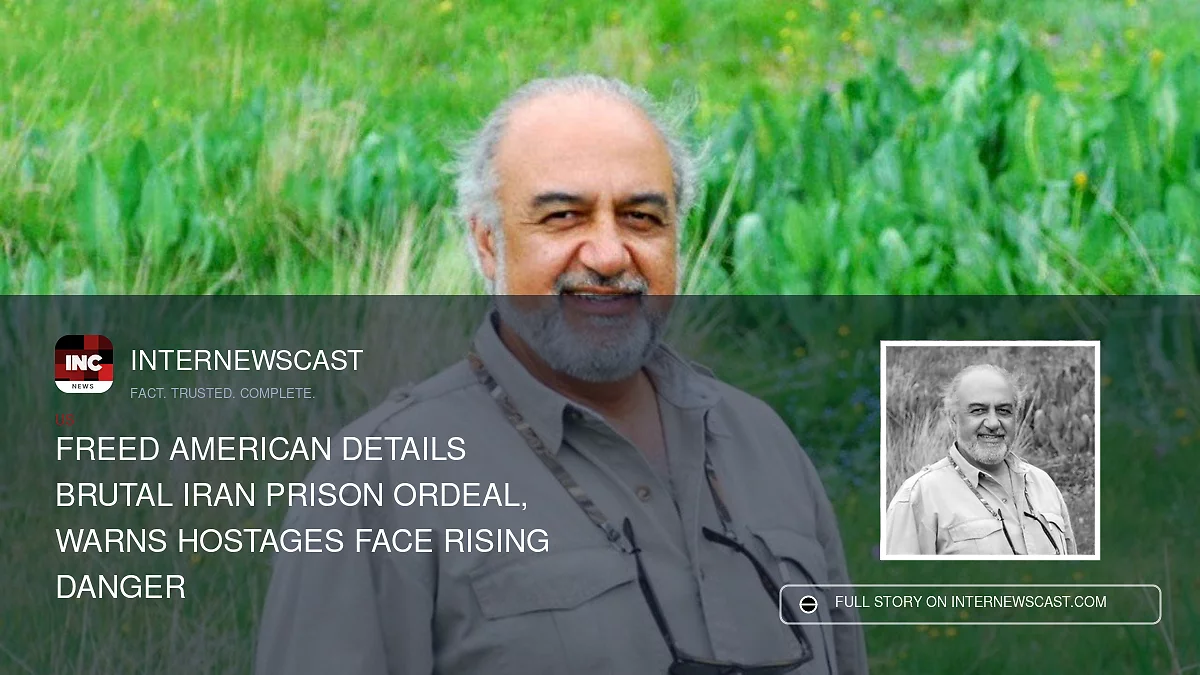
Morad Tahbaz, an Iranian American conservationist, in Golestan National Park, Iran. Tahbaz spent nearly six years in Iran’s Evin Prison before being released with four other Americans in September 2023. (Morad Tahbaz)
Tahbaz had been living and working in Iran as a conservationist when he and several colleagues were arrested in January 2018. He was a co-founder of the Persian Wildlife Heritage Foundation, an organization focused on protecting endangered wildlife such as the Asiatic cheetah and the Persian leopard.
Among the allegations brought against him, Tahbaz said, was the claim that he had trained lizards to gather intelligence on Iranian military sites for Israel.
“You can’t make this stuff up,” Tahbaz said during a Zoom interview with INC News. “It just gives you an idea of the kind of narrative that this regime comes up with. They’ll come up with anything.”
What began with interrogations in January 2018 turned into nearly six years of imprisonment for the Iranian American conservationist.
Now free and back in his home in the U.S., Tahbaz fears the war between the United States and Iran could make the Americans still held by Iran both more vulnerable and more valuable as negotiating assets.
“I do think the strikes in Iran will have an impact on the hostages’ situation and their circumstances,” he said.
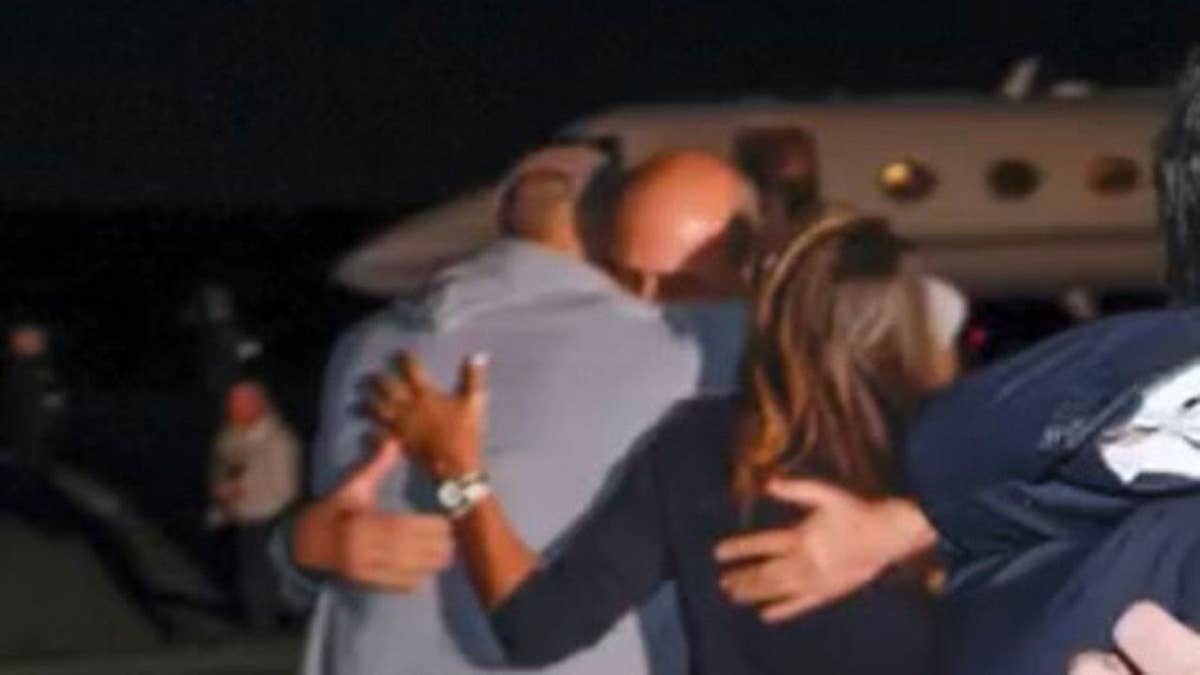
Morad Tahbaz reunites with his family following his release from Iran in September 2023. (Morad Tahnaz)
Tahbaz said he spent his first two years inside the Islamic Revolutionary Guard Corps intelligence facility at Evin.
After his conviction, Tahbaz was transferred into the general prison population. He said his cellmates ranged from suspected ISIS members to former Iranian government ministers.
The isolation and physical conditions were accompanied by constant uncertainty.
“The uncertainty when you are a hostage is not like you think at the end of your sentence they’ll necessarily let you go,” Tahbaz said. “They’ll just come up with another charge to keep you there for as long as you’re of value to them.”
Tahbaz was released Sept. 18, 2023, with four other Americans in a Qatar-mediated agreement between Washington and Iran. The exchange also involved five Iranians held by the United States and the transfer of $6 billion in previously frozen Iranian funds into a restricted account for humanitarian transactions.
The negotiation brought Tahbaz home, but he believes Western governments have failed to establish consequences strong enough to stop Iran from detaining more foreign and dual nationals.
“This business of hostage-taking has been going on essentially since the beginning of the revolution,” he said.
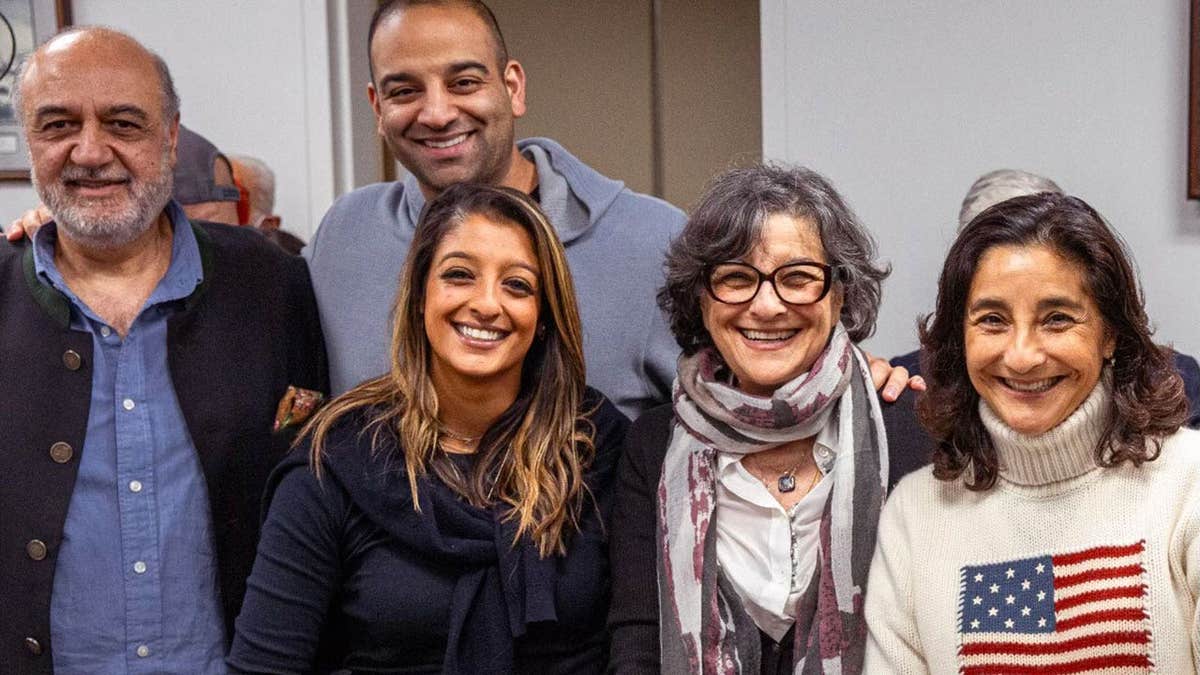
Freed hostage Morad Tahbaz surrounded by his family just after landing in the U.S., September 2023. (Morad Tahbaz)
“It will continue, in my opinion, as long as there is no deterrence,” Tahbaz added. “None of the Western governments, in reality, have done anything significant about stopping this practice.”
The issue returned to the forefront in July with the release of Dena Karari, a 53-year-old Iranian American from California.
Karari had been unable to leave Iran since December 2024 after authorities confiscated her passports. Her attorney said she faced allegations of espionage and collaboration with a hostile state. President Donald Trump announced in July that she had been allowed to leave and called the decision a “gesture of goodwill.”
Karari was not continuously imprisoned, according to reporting about her case, but she remained under an exit ban and was repeatedly interrogated.
Her release offered relief during a widening conflict, but Tahbaz said dual nationals remain particularly vulnerable because Iran does not recognize their foreign citizenship.
“Iran doesn’t recognize any other nationality other than the Iranian,” he said.
Authorities can develop a national-security case, secure a sentence and then preserve the prisoner for use in future negotiations, Tahbaz said.
“You’re condemned and they pass sentence and you’re in the system, and now you are a bargaining chip,” he said.
The precise number of Americans currently imprisoned or prevented from leaving Iran remains unclear.
Reuters reported in March that at least six U.S. citizens or permanent residents were detained in Iran, including journalist Reza Valizadeh, businessman Kamran Hekmati and U.S. permanent resident Shahab Dalili.
Valizadeh, a former Radio Farda journalist, was sentenced to 10 years for allegedly collaborating with a hostile government. Hekmati was sentenced to two years for having visited Israel more than a decade earlier, according to his family. Dalili, who was arrested after traveling to Iran for his father’s funeral, was sentenced to 10 years for allegedly cooperating with a hostile government.
Advocates warned that escalating strikes could increase the risk that detainees would be harmed or used as leverage.
The State Department formally designated Hekmati, who has bladder cancer, as wrongfully detained in March.
Tahbaz said he believes three Americans remain in custody, although that number could not be independently confirmed. Some cases are deliberately kept private because families fear publicity could increase the danger to detainees.
His concerns about the current war are rooted in how Iranian interrogators responded to tensions with Washington during his own imprisonment.
“When I was taken in in January of 2018, and it was right at the beginning of the first Trump administration, the amount of frustration and anger at the rollback of the JCPOA at that time, I mean, it was thrown into my face just about every day of my interrogation in some way, shape or form,” Tahbaz said, referring to a 2015 nuclear deal, the Joint Comprehensive Plan of Action.
The United States formally withdrew from the 2015 nuclear agreement, known as the Joint Comprehensive Plan of Action, in May 2018, several months after Tahbaz’s arrest.
Tahbaz believes the current conflict could similarly be transferred onto prisoners who have no control over decisions made in Washington.
“It definitely will worsen the case of prisoners in custody and those who may be just under surveillance or potential hostages,” he said.
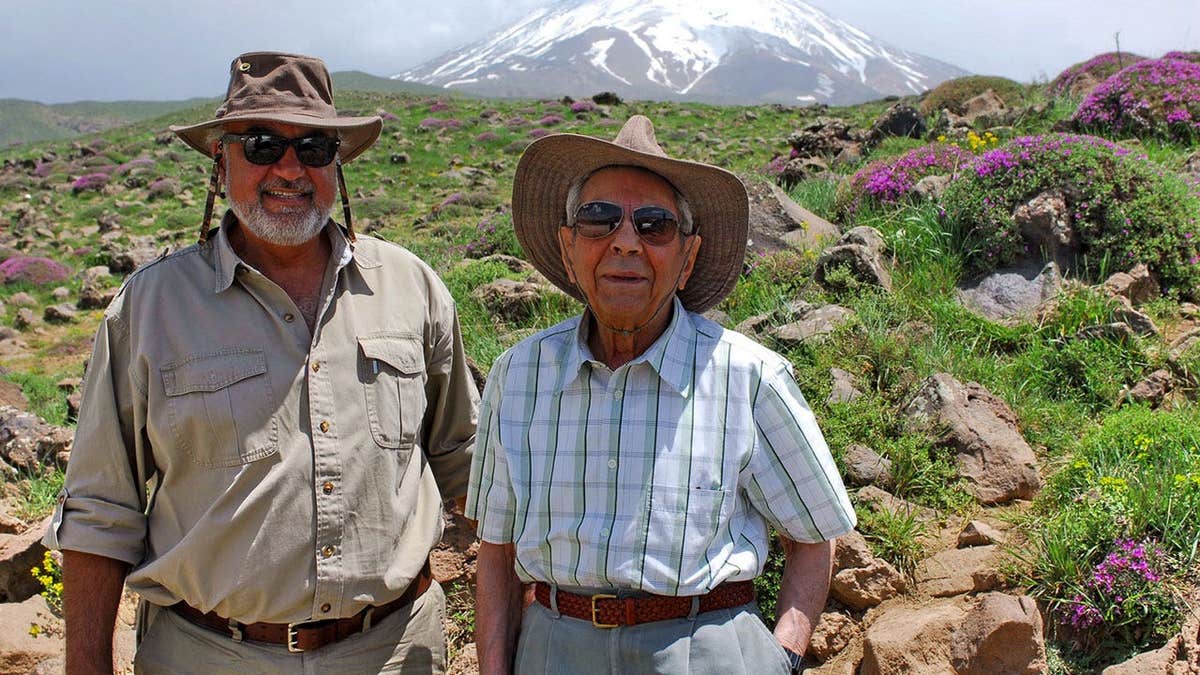
Morad Tahbaz with Eskandar Firouz, the founding head of Iran’s Department of the Environment, at Lar National Park in Iran. Firouz, who was imprisoned for six years following the 1979 revolution, died several years after the photo was taken. (Morad Tahbaz)
He described prisoners as one more source of leverage in Iran’s broader confrontation with the United States.
“You’re seeing that playing out even with the war, this tit for tat, you do this, we’ll do that,” he said.
“The hostages are, you know, just a commodity from Iran’s perspective, to be used at the right time.”
Tahbaz’s experience with the Islamic Revolutionary Guard Corps also shapes his analysis of the struggle unfolding inside Iran.
He stressed that he is not a political analyst and described his conclusions as personal assessments based on his experience and conversations with contacts familiar with the country.
Tahbaz said he believes competing interests within the Revolutionary Guard are fighting to preserve their political and economic power.
He pointed specifically to Khatam al-Anbiya, the Islamic Revolutionary Guard Corps’ engineering and construction conglomerate. Tahbaz argued that sanctions have benefited powerful IRGC-linked entities by forcing oil sales, imports and money transfers into opaque black and gray markets.
“They have created a huge franchise for themselves because of these sanctions,” he said.
“They don’t want to see the sanctions go away, because they will lose their franchise, if you will. They will lose their power, their control over the money and everything that goes along with it.”
He said ordinary Iranians have suffered most from the resulting economic isolation and wartime conditions.
“The people who are hurt most by all of this are the people of Iran,” Tahbaz said. “They’re unfortunately taking the brunt of all of these in their daily lives.”
Tahbaz predicted Iranians would eventually return to the streets, but said many had lost confidence that Western governments would intervene to help remove the regime.
“I’m sure they’ll be back on the streets,” he said. “But I think this notion that the Western states are going to step in and help them overthrow this regime, that went out the window.”
Tahbaz said many Iranians had previously been strongly sympathetic toward the United States and initially hoped the conflict might end the Islamic Republic. That characterization reflects his assessment and conversations and could not be independently quantified.
He believes any future political movement will have to develop primarily inside Iran rather than being directed by opposition groups abroad.
“There’s a lot of hatred and anger just boiling there,” Tahbaz said. “So it will boil up and over again without a doubt. The question is when, how, but it will happen again.”
Tahbaz is recounting his imprisonment in his new book, “Green Parrots: A Memoir of Survival in Iran’s Evin Prison,” scheduled for publication Sept. 29. The publisher says the book describes how he relied on skills developed while tracking endangered wildlife to survive nearly six years in Evin, including solitary confinement.
His release illustrates the contradiction confronting governments trying to recover their citizens: negotiations can bring individual prisoners home, but Tahbaz believes the broader practice will continue unless Iran faces meaningful deterrence for taking them.
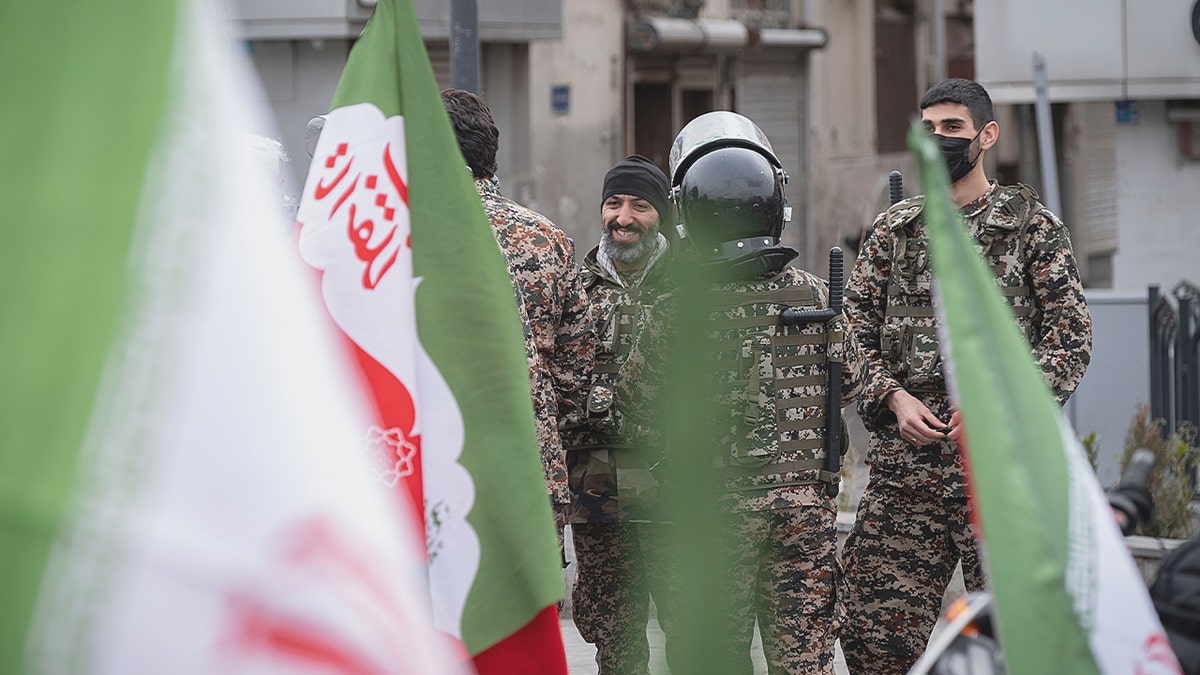
Military members of the Islamic Revolutionary Guard Corps (IRGC) in western Tehran, Iran (Morteza Nikoubazl/NurPhoto via Getty Images)
He survived because governments ultimately negotiated for his freedom.
His warning is that as the war intensifies, the Americans still held in Iran could become more valuable to Tehran at precisely the moment their circumstances become more dangerous.