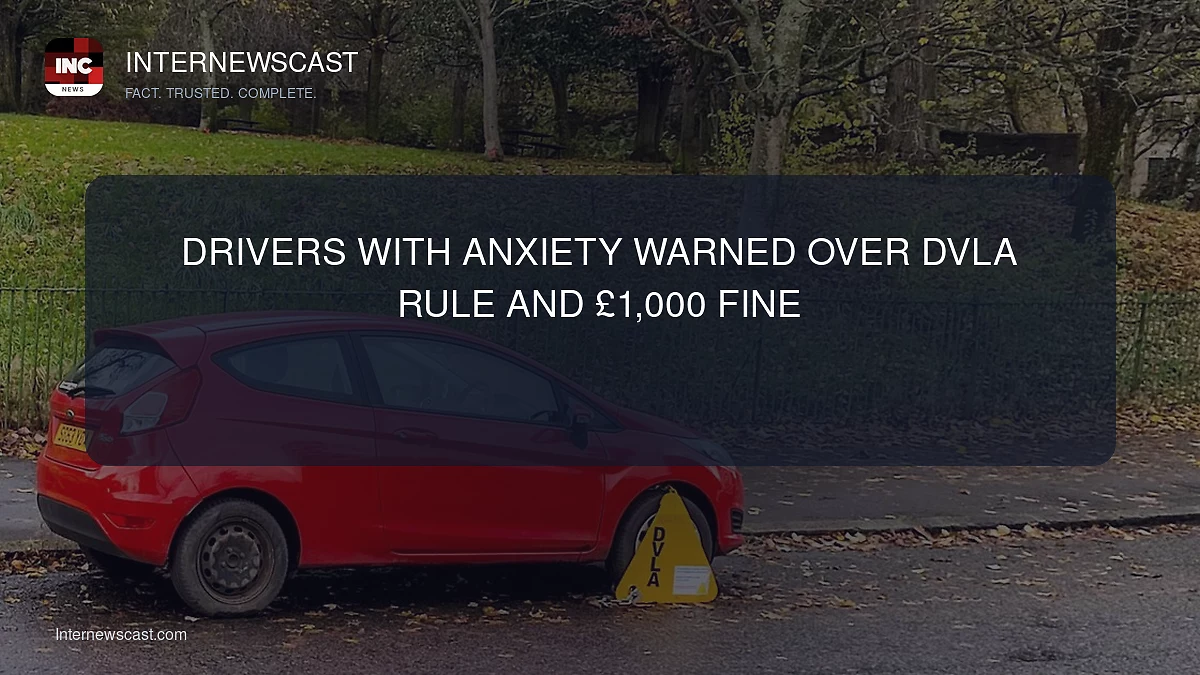

Motorists are being urged to check whether any health condition they have must be declared to the Driver and Vehicle Licensing Agency (DVLA), particularly if it could make driving unsafe. Some mental health conditions fall into this category, and failing to report one when required can lead to a serious fine.
DVLA guidance states: “You must tell DVLA if you’re diagnosed with anxiety and it affects your ability to drive safely. If your driving is not affected by anxiety, you do not need to tell DVLA. Ask your doctor if you’re unsure.”
Drivers whose anxiety affects their ability to drive safely could be fined up to £1,000 if they fail to notify the DVLA. If the condition contributes to an accident, they could also face prosecution.
The same reporting requirement and potential fine apply to motorists with depression. The DVLA explains: “You only need to tell DVLA if your depression affects your ability to drive safely.”
It also warns: “You may be prosecuted if you’re involved in an accident as a result. Ask your doctor if you’re not sure if your depression will affect your driving.”
Anxiety and depression are not the only conditions that can trigger a duty to inform the DVLA. The agency maintains a broader list of “notifiable” medical conditions that may affect safe driving, including sleep apnoea, fainting or syncope, heart conditions such as atrial fibrillation, having a pacemaker, epilepsy and strokes.
DVLA medical conditions – full list
Medical conditions drivers may need to tell the DVLA about:
Tell the DVLA
Drivers should remember they can be fined up to £1,000 if they fail to tell the DVLA about a medical condition that affects their driving. Some motorists may also decide to voluntarily surrender their licence, depending on their circumstances, for example:
- Their doctor tells you to stop driving for 3 months or more
- Their medical condition affects their ability to drive safely and lasts for 3 months or more
- They do not meet the required standards for driving because of their medical condition
The DVLA concludes: “You’ll need to tell DVLA and send them your licence. If you have a medical condition that affects your driving and do not voluntarily give up your licence, you must inform DVLA. They will decide if you can continue holding a driving licence.”