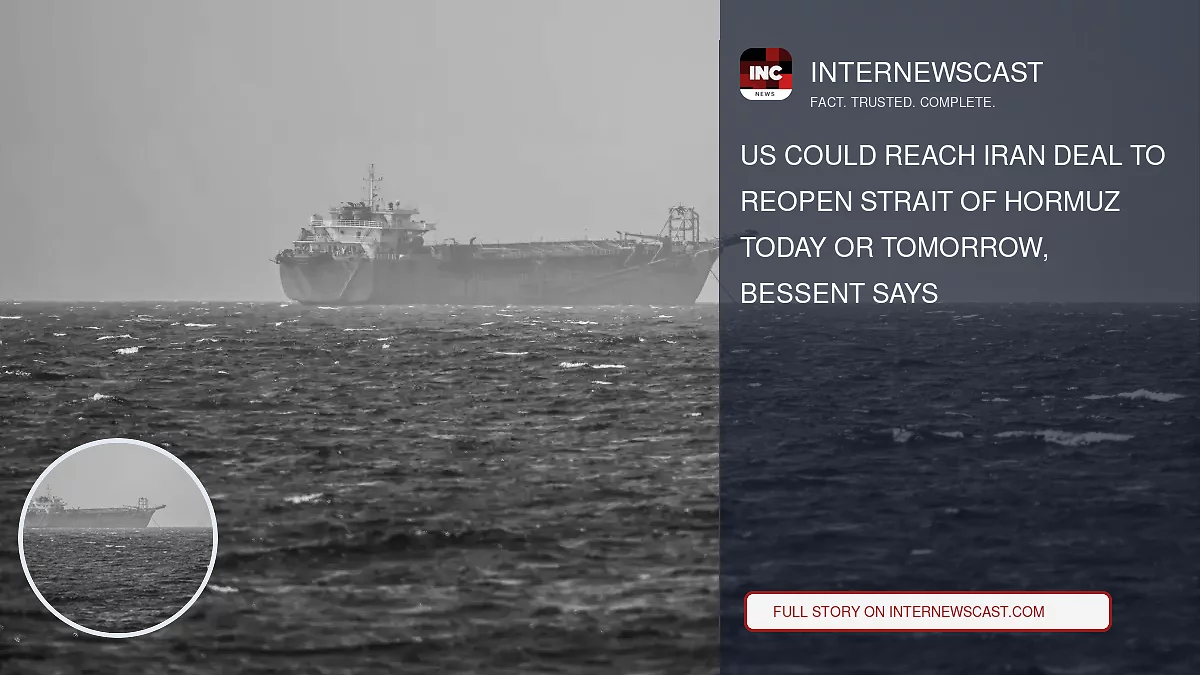

WASHINGTON — The United States may be close to reaching an agreement tied to reopening the Strait of Hormuz and restoring normal commercial shipping through one of the world’s most critical maritime corridors, Treasury Secretary Scott Bessent said Tuesday.
Speaking on CNBC’s “Squawk Box,” Bessent said Washington was engaged in discussions with Iran and suggested a breakthrough could come quickly. “There is a chance we may have a deal today or tomorrow to open the strait and move towards a more normalized position in this conflict,” he said.
Bessent said any arrangement would be aimed at bringing back “freedom of movement” for vessels crossing the strategic shipping lane, while emphasizing that Iran would not be permitted to impose tolls, charges or other fees on ships passing through.
The remarks appeared to calm energy markets almost immediately, pushing oil prices lower as investors reacted to the possibility that the vital waterway could soon resume operations. Crude prices slipped beneath $77 a barrel following his comments.
Bessent also suggested that energy prices could face additional downward pressure if the backlog of hundreds of vessels stranded in the Persian Gulf for months begins to clear.
He noted that the impact would extend beyond oil and gas. “It’s not just energy. It’s fertilizer, it’s refined products, it is the various industrial gasses,” Bessent said, adding that markets could see a significant “relief trade” as prices ease across several key commodities.
Iran, however, pushed back Monday on claims that it was negotiating directly with the United States over the Strait of Hormuz, repeatedly saying that its talks were instead taking place with neighboring Oman.
Iranian Foreign Ministry spokesman Esmail Baghaei sought to clarify Tehran’s position, saying, “To avoid any misunderstanding, it is important to clarify what the current negotiations are about and who they are with. We are not negotiating with the United States at this time.”
RELATED: Young Attendee Steals Spotlight at Fauci Hearing, Goes Viral
Baghaei added that Iran’s discussions with Oman were centered on finding a framework “that will ensure the safe passage of shipping through the Strait of Hormuz.”
Even if a deal is reached, Iran says, it would only be temporary unless what it calls US “aggression” ends.

“As long as the US mischief continues, as long as the Iranian sea siege continues, as long as the US military aggression against Iran and its allies continues, there will be no [permanent] change in … Hormuz,” added Baghaei.
The potential breakthrough comes after President Trump said over the weekend he had called off a major strike on Iran to give diplomacy one last shot.
About one-fifth of the world’s oil passes through the Strait of Hormuz, and weeks of fighting have snarled shipping and rattled global markets.
The US and Iran signed a memorandum of understanding on June 17 that would have reopened the strait, but the tentative deal quickly fell apart over where ships would sail.
Iran wanted vessels to pass through its own waters, while the US insisted on open access throughout the international shipping route.
After the talks collapsed, Iran attacked tankers sailing near Oman’s coast under US protection. The US answered with 13 consecutive days of airstrikes and reinstituted its naval blockade of Iran’s ports.


