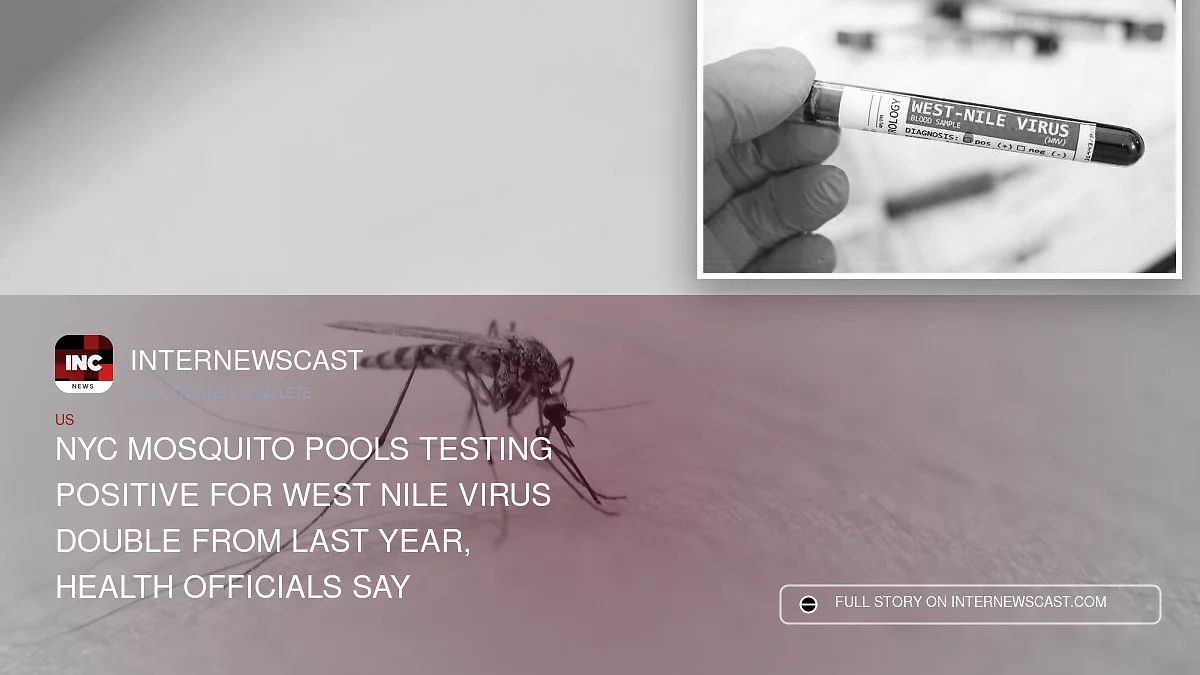

Call it a biting warning sign.
West Nile virus has been found in nearly twice as many New York City mosquito samples this summer as it had by the same point last year, city health officials said — though no New Yorkers have tested positive for the virus so far this season.
As of July 25, 612 mosquito pools out of more than 2,000 groups collected across the five boroughs tested positive for West Nile virus, according to the NYC Health Department. That figure is close to double the number reported at this time last summer.
In response, the city has intensified mosquito surveillance in affected neighborhoods, adding more traps and expanding mosquito control efforts, officials said.
Since July, the Health Department has carried out four targeted mosquito control operations, cutting adult mosquito populations by about 70% and reducing West Nile virus-positive mosquito pools by more than 85%.
“The detection of West Nile virus in mosquitoes demonstrates that New York City’s mosquito surveillance system is working exactly as intended,” NYC Health Commissioner Dr. Alister F. Martin said in a press release Thursday.
Positive mosquito samples have been detected in all five boroughs, but Staten Island and Queens appear to be seeing the heaviest activity, according to the city’s positive mosquito tracker.
While no human West Nile virus cases have been reported in New York City during the warm-weather season, health officials noted that infections typically begin to rise from mid-July through early fall.
Officials are now warning Big Apple residents to “take simple precautions to protect themselves from mosquito bites,” as mosquitoes carrying the West Nile virus are usually most active during August and September.
“Now is the time for every New Yorker, especially older adults and people with weakened immune systems, to take simple precautions to prevent mosquito bites,” Martin stressed.
The West Nile virus is the only mosquito borne disease known to spread to humans in New York City and has been plaguing Gothamites for over 25 years.
Luckily, most people infected by the disease never experience symptoms — but approximately one in five may develop a mild illness that can include fever, headache, body ache, nausea and vomiting.
However, in the most severe cases, the virus can cause severe neurologic illness including encephalitis or meningitis.
To protect yourself from the nasty disease, officials recommend limiting outdoor activities during dawn and dusk, when the West Nile positive mosquitoes are usually most active, using an EPA-registered insect repellent and wearing long-sleeved shirts and pants while spending time in high-mosquito areas.


