
The Coalition is preparing to announce a migration and housing policy package aimed at cutting net overseas migration to below 180,000 people a year, while also pledging to strip back regulation in the construction sector.
Shadow housing minister Andrew Bragg is expected to outline the proposal in an address to the National Press Club on Wednesday.
‘A (net overseas migration) reduction on this scale is manageable and in line with reductions we have managed in recent history,’ Bragg is due to say.
‘For example, (this happened) in 2009-2010 when the NOM declined from 300,000 to 175,000 in around 18 months.
‘This will be achieved through a higher share of skilled migrant workers linked to jobs that meet Australian industry needs.
‘This includes more reductions in other streams like family, international students and other temporary migrants.’
Bragg is also set to argue that a Coalition government would overhaul the National Construction Code, reducing the 2,000-page rulebook to an 80-page basic standard. He is expected to claim the current system has made it ‘illegal to build a cheap, safe house’.

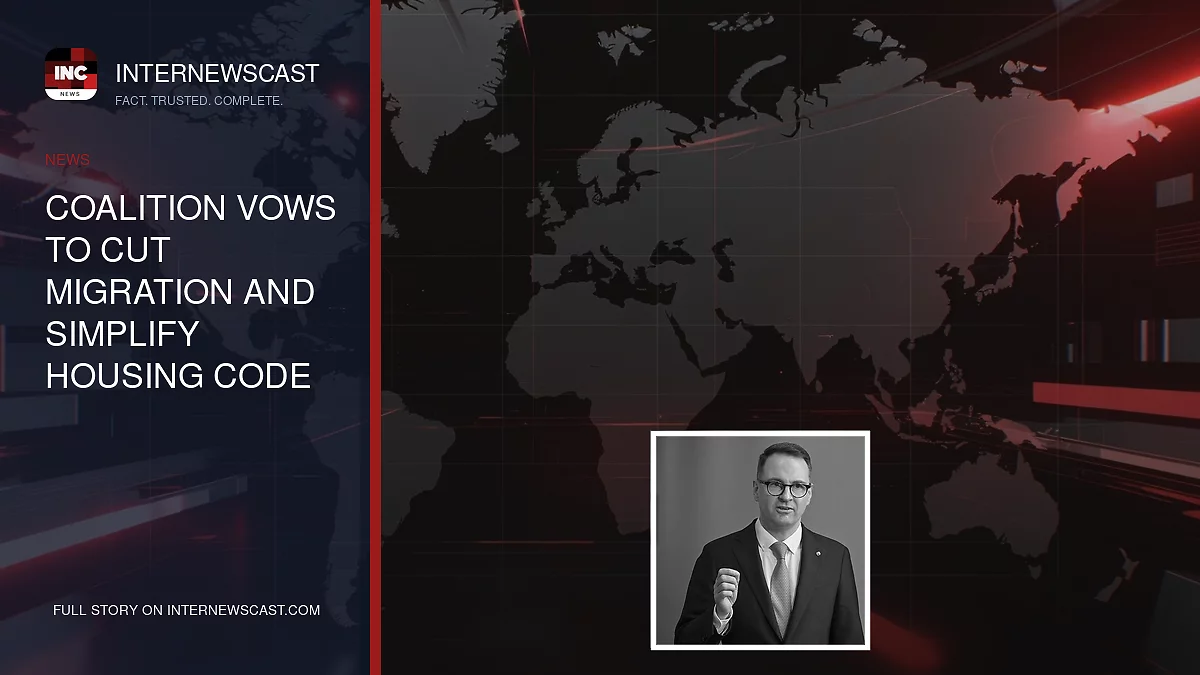
Shadow housing minister Andrew Bragg (pictured) is expected to announce a Coalition plan to cut migration
Australia’s population has surged by around 1.8 million since Labor took office in 2022, with net overseas migration accounting for about 1.5 million of that increase, Coalition analysis shows.
During the same period, around 550,000 new dwellings were added to the housing market. Based on the Census average of 2.6 people per home, this new construction is enough to accommodate roughly 1.5 million people.
The Coalition claims the gap between population growth and new housing has left the country with a shortfall of about 130,000 homes, enough to house more than 350,000 people.
While noting such figures rely on modelling assumptions, the Coalition argues it would implement annual reports on the relationship between migration and housing supply, so policy decisions are better linked to new home completions.
Latest Australian Bureau of Statistics figures show net overseas migration remains above 300,000 per year.
Federal budget forecasts expect migration to fall from 295,000 in 2025-26 to 225,000 by 2029-30.
On current projections, the Coalition says Australia could close the accumulated housing gap since 2022 over the forward estimates period, but only if net overseas migration averages below 180,000 a year.
The Albanese Government is expected to retain its forecast for net overseas migration to fall to 225,000 annually, despite shelving a planned migration policy announcement that was expected to outline a suite of visa and border reforms.

Tony Burke (pictured) cancelled his speech overhauling migration rules last week
Home Affairs Minister Tony Burke was expected to deliver a speech announcing major reforms to reduce migration and tighten visa rules, but the address was cancelled and no new measures were unveiled.
Before the planned speech, reports indicated the government was weighing sweeping changes to family migration.
Proposed reforms would have forced spouses, children and parents of Australian citizens and permanent residents to stay overseas while their visa applications were considered, scrapping the current system that lets many apply onshore while visiting and then move onto bridging visas.
These changes would have stopped many applicants from staying in Australia with work rights and Medicare access while their permanent visa cases were decided.
The government was also said to be looking at stricter rules for asylum seekers, including restricting work rights during protection claim assessments and limiting appeal options for those refused, in an effort to clamp down on non-genuine claims.
Working holiday makers were reportedly set to face tougher rules too, with ministers examining measures to limit the number of backpackers able to extend their stays into a second or third year.


