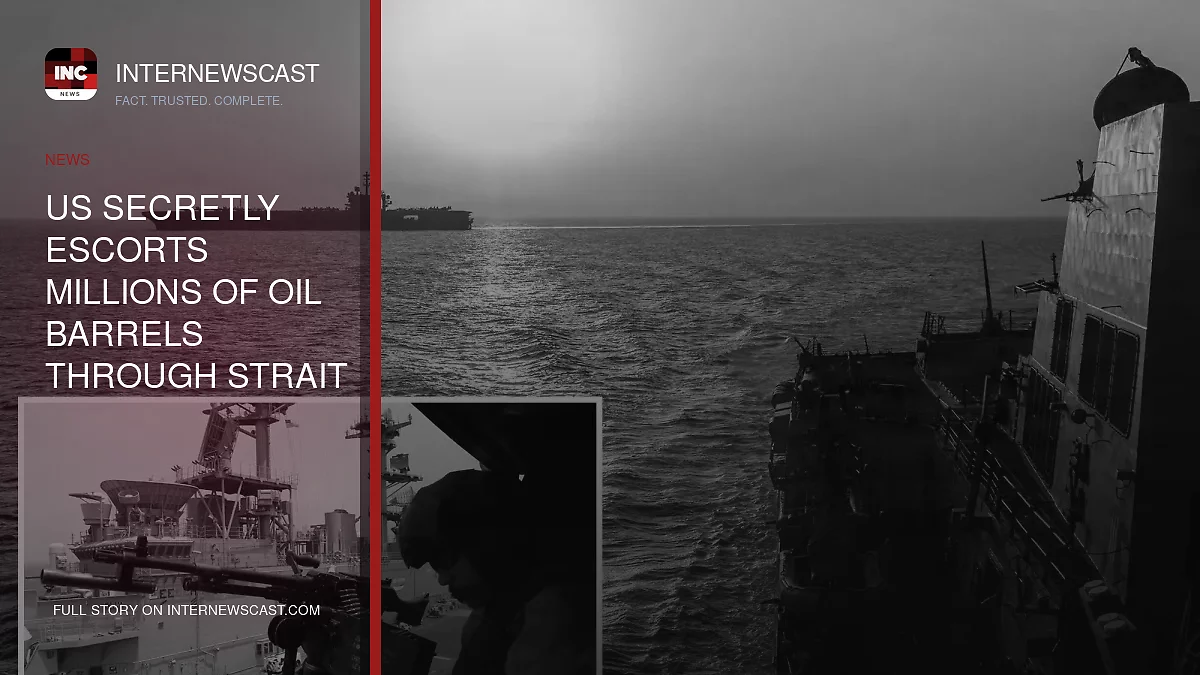

The US has quietly helped move millions of barrels of oil each day through the Strait of Hormuz, a critical effort that analysts say has helped shield global energy markets from a fresh price shock.
Throughout July, US forces protected tankers carrying roughly 5 million barrels of oil a day, running covert operations near the coast of Oman, according to a New York Times report.
“They have been extraordinarily effective in keeping that southern corridor operating, despite the attacks,” Windward shipping analyst Michelle Wiese Bockmann told the outlet.
The missions began in May, when about 70 ships made the crossing during the first three weeks. Many reportedly relied on so-called shadow fleet tactics, including switching off their radars to avoid detection.
Even as Iran — which says it controls the strait — launched repeated attacks, vessels continued moving through the waterway in June and July. Analysts say that steady flow likely helped keep oil prices from surging into triple digits, as they did in the early months of the war.
US Energy Secretary Chris Wright suggested the volume may have been even higher, estimating that 9 million barrels of oil were passing through the Strait of Hormuz each day.
Follow The Post’s coverage of the war in Iran:
US Central Command, which is overseeing the effort, estimates it has assisted more than 1,000 ships in crossing the strait since the war began.
The operation has come at a steep cost, requiring the US to deploy ships, helicopters and aircraft to counter and intercept attacks from Iran.
The cost of intercepting the strikes is notably higher than what it costs Iran to attack using its cheaper suicide drones.
The interceptions are also not foolproof, with at least 15 ships taking damage from Iranian fire since June, according to the United Nations’ International Maritime Organization.
The attacks have also resulted in the death of three seafarers and left another 16 injured, with the latest deadly attack taking place on Tuesday, according to the UK Maritime Trade Operations.
The deadly attacks have left many ships still unwilling to cross the Strait of Hormuz, with about two-thirds of the pre-war oil flow still trapped by Iran’s constant attacks.
While oil prices are still lower than from the height of the war, the breakdown in negotiations between the US and Iran led the Brent crude benchmark to spike to $93 per barrel on Wednesday.