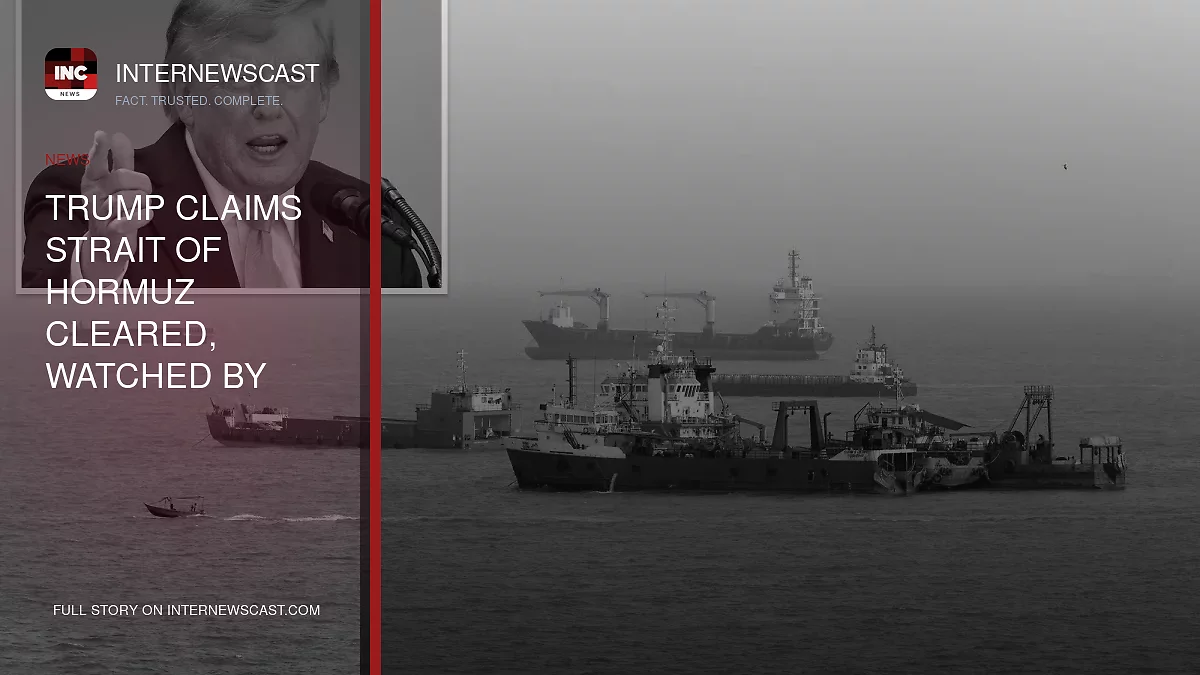
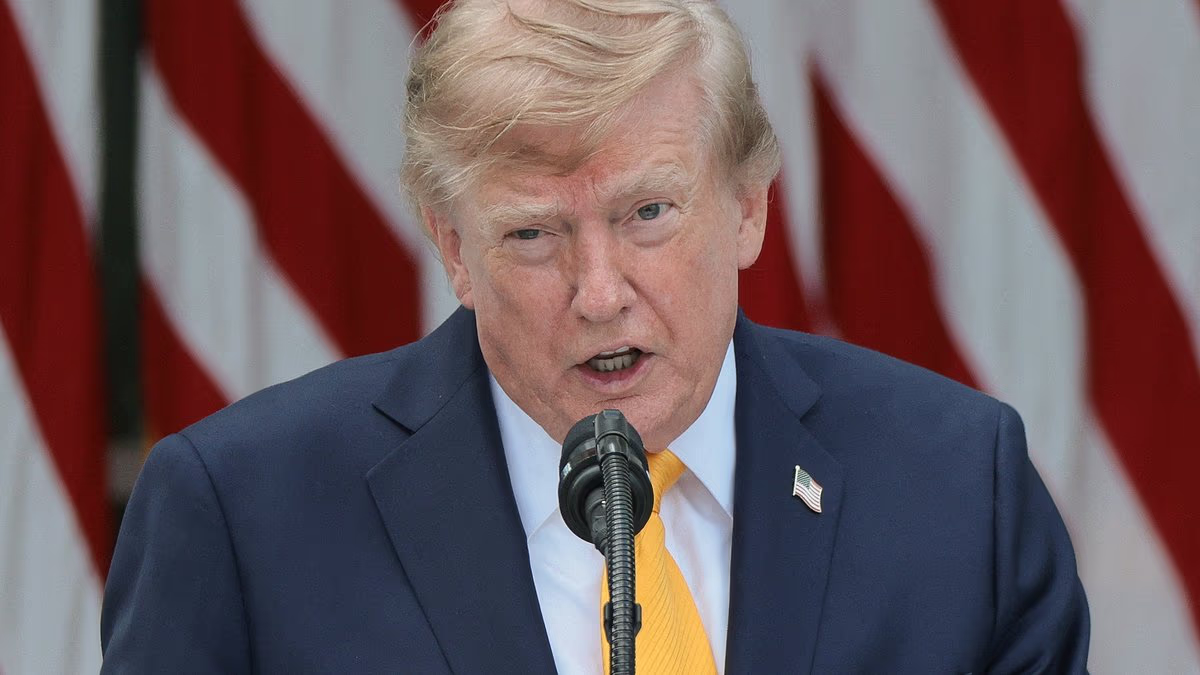
WASHINGTON — President Trump said Tuesday that the “International Waters of the Strait of Hormuz” have been fully cleared of mines, declaring that “every square inch” of the key shipping corridor is now under surveillance by the US Space Force for any signs of newly placed explosives.
In a post on Truth Social, Trump said the US Navy had completed a sweep of the strait, either destroying or removing the mines discovered there. He added that any additional mines detected by Space Force monitoring would also be neutralized.
“Iran has been notified that any ship or boat placing new mines will be immediately and systematically destroyed,” the president wrote. “Through Space Force, we are watching every square inch of the Strait, as we are, also, with Pickaxe Mountain and the already destroyed three other Nuclear sites.”
Trump also emphasized that a “Zero Tolerance” approach to mine placement is now in effect. A source told The Post that details about the number of mines, their specific types and their exact locations remain highly classified.
US officials told Axios that Trump was referring specifically to the strait’s central shipping lane, known as the Traffic Separation Scheme, or TSS. According to those officials, the Navy recovered more than 100 objects believed to be possible mines in that area.
The same officials said the Department of War also brought in private contractors to support the de-mining effort in the median lane of the strategically vital waterway.
CENTCOM declined to provide further details about the operation. The White House did not answer requests for comment.
Trump and members of his administration have repeatedly said that exports continue to move through the Strait of Hormuz, one of the world’s most important oil chokepoints.
Energy Secretary Chris Wright claimed Friday that the “7-day average of oil leaving the Strait is over 8 million barrels a day.” Very Large Crude Carriers house around 2 million barrels of oil per vessel, according to the US Energy Information Administration.
In the past 24 hours, at least 16 vessels have transited the strait, according to ship tracking data, amid a US naval blockade against Iranian ships exiting the channel.
The southern lane that hugs the coast of Oman has been used by US military ships to escort tankers in and out of the Gulf.
Oman foreign affairs minister Sayyid Badr bin Hamad bin Hamoud Al-Busaidi said on X an hour later that the Gulf nation was working with Iran on “a temporary joint navigation corridor through the Strait of Hormuz and an agreement to implement a joint project to clear the Strait of mines.”
The two nations met for discussions in Tehran, with Iranian foreign minister Seyyed Abbas Araghchi agreeing with the Omani official about plans for “a permanent navigation corridor and future arrangements for managing the Strait, alongside establishing a mechanism for exchanging information, managing navigation traffic, and providing related navigational and security services.”


