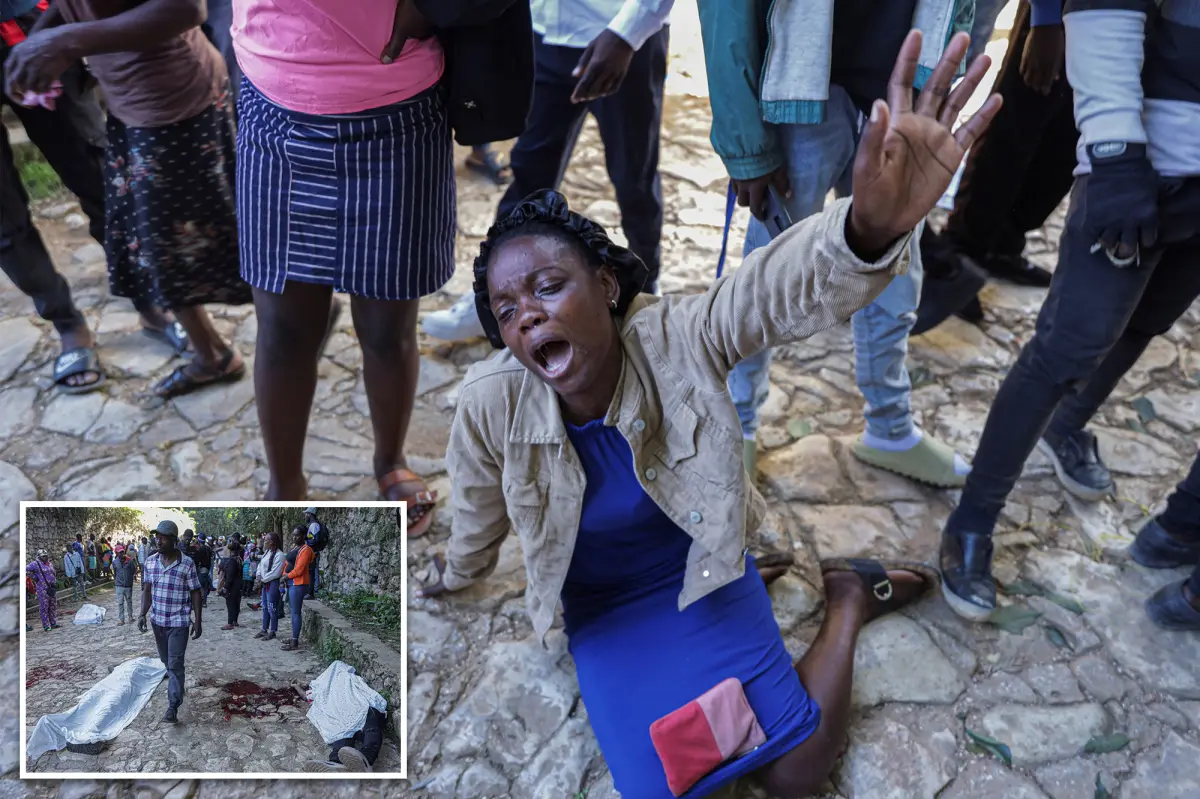

A Haitian gang has released 13 hostages — six children and seven women — after a deadly assault on a formerly peaceful farming community outside Port-au-Prince that killed 47 people and led to the abduction of more than 50 others.
UNICEF confirmed that the group freed late Friday from Kenscoff included three toddlers younger than 2, a 7-year-old child and two teenage girls.
Yannig Dussart, UNICEF’s deputy representative in Haiti, called the release a “rare moment of hope,” but said the kidnapping underscored the “scale and frequency of attacks on children across the country.”
UNICEF said it worked with community leaders to help secure the release of the seven women and six children.
The condition of those freed was not immediately clear, including whether any required urgent medical care, and the fate of the remaining hostages is still unknown.
The mass kidnapping has deepened the turmoil in Haiti, a country already pushed toward collapse following the 2021 assassination of President Jovenel Moise.
Kidnappings have become a grim reality across Haiti, but the size of this attack stands out, with outcomes that remain dangerously unpredictable.
In some cases, victims are released without ransom; in others, captives are killed even after payments are made.

Adding to the volatility, a notorious gang leader known as “Izo 2” threatened to execute the remaining captives if police attempted to reclaim Kenscoff.
The ultimatum drew swift condemnation and horror from diplomats in the United States, Panama, and Colombia.
Luis Ruiz Massieu, the U.N. special envoy to Haiti, noted that the massacre has sparked a “new wave of public indignation” both locally and internationally.
In response, Haitian authorities have deployed a joint gang-suppression force of national police and military personnel to reinforce security in both the capital and the embattled hills of Kenscoff.
With Post wires