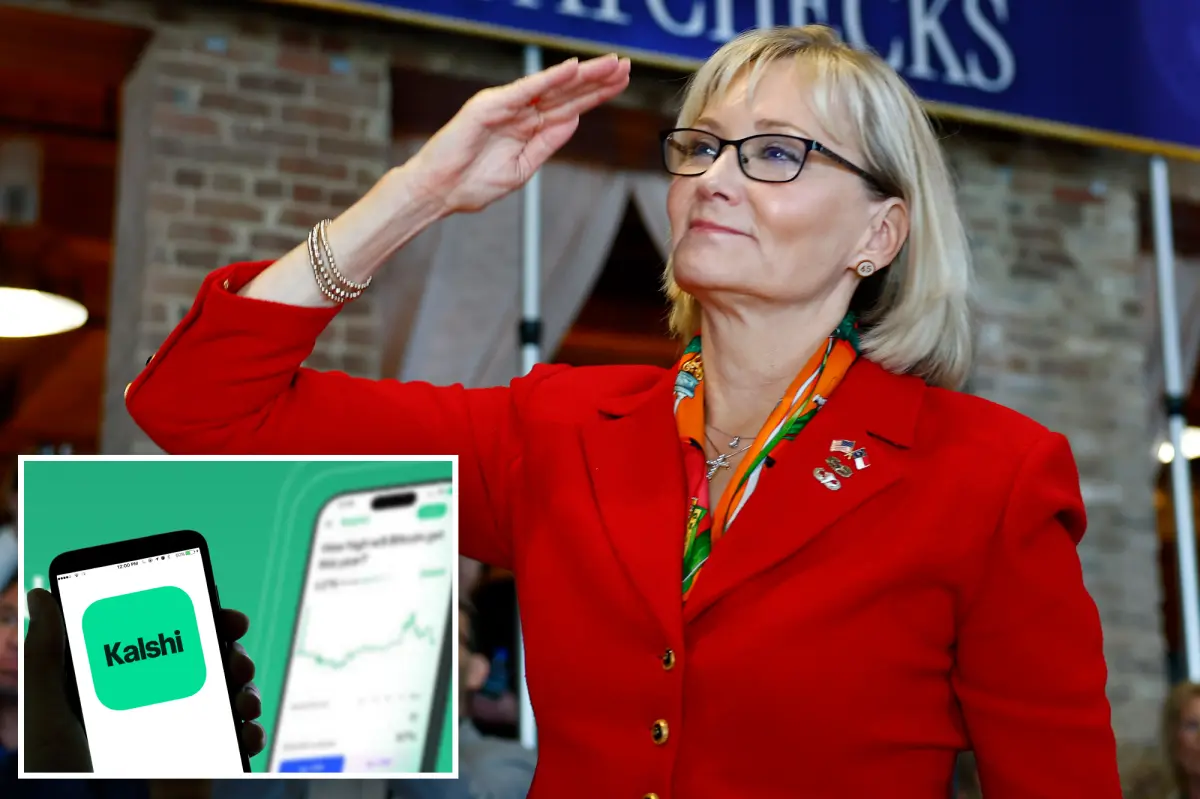

WASHINGTON — Betting on your own political future may sound like confidence, but on Kalshi, it can come at a cost.
Laurie Buckhout, a Republican candidate for Congress in North Carolina, learned that lesson Monday after the prediction market platform fined her $2,500 and barred her from trading for three years over a wager tied to her own campaign.
Buckhout, a former Pentagon official who handled cyber policy during the Trump administration, acknowledged the episode to The Post by saying she had, quite literally, placed a bet on herself.
She described the move as a poor judgment call and said she acted to address the matter once she realized it raised concerns. Buckhout also joked that her time as a Kalshi trader ended almost as quickly as it began.

In its statement, Kalshi said Buckhout cooperated with the review of the trading activity and agreed to settle the issue by accepting the platform’s findings, paying the penalty and accepting a trading restriction on the exchange.
Key details remain unclear, including whether Buckhout wagered on winning her Republican primary or on the outcome of the general election. The size of the bet and the timing of the trade have also not been disclosed.
The Post contacted both Buckhout’s campaign and Kalshi seeking additional information about the wager and the platform’s enforcement action.
Buckhout is running against Democratic incumbent Rep. Don Davis in North Carolina’s 1st Congressional District, a largely rural seat in the northeastern part of the state that was redrawn by Republican lawmakers to be more favorable to the GOP.
The Cook Political Report currently rates the race as “lean Republican.”
The November general election is a rematch of 2024, when Davis defeated Buckhout by 1.7 percentage points. Buckhout was renominated by district voters in the GOP primary earlier this year, defeating Carteret County Sheriff Asa Buck.
Numerous political insiders have been caught trying to make money off prediction markets like Kalshi and Polymarket. Despite their limited availability in the US, many Americans use VPNs to get around access restrictions.
On Monday, Kalshi announced that it had permanently banned lying former Long Island Rep. George Santos (R-NY) from the platform after he placed a bet on whether or not he would attend the State of the Union this year.
Earlier this year, Army soldier Gannon Ken Van Dyke was charged with using classified information to place a $400,000 bet about a military operation in Venezuela.
Last week, the Ninth Circuit Court of Appeals ruled that Nevada can regulate Kalshi via state gambling laws despite the platform having a federal Designated Contract Market license to oversee the trade of swaps, futures, and other options.
Many experts expect the case to get Supreme Court attention in the future because of its implications for the multi-billion-dollar industry.