
Lawyers are set to deliver their final arguments Tuesday before the judge issues his ruling.
PROVO, Utah — A Utah judge is expected to decide Tuesday whether prosecutors have presented enough evidence to send the man accused of killing Charlie Kirk to trial on an aggravated murder charge, a count that could make him eligible for the death penalty.
The state court hearing follows five days of testimony and evidence in July, when prosecutors argued they had laid out an “overwhelming” case that Tyler Robinson killed the conservative activist as Kirk spoke at an outdoor event on a college campus.
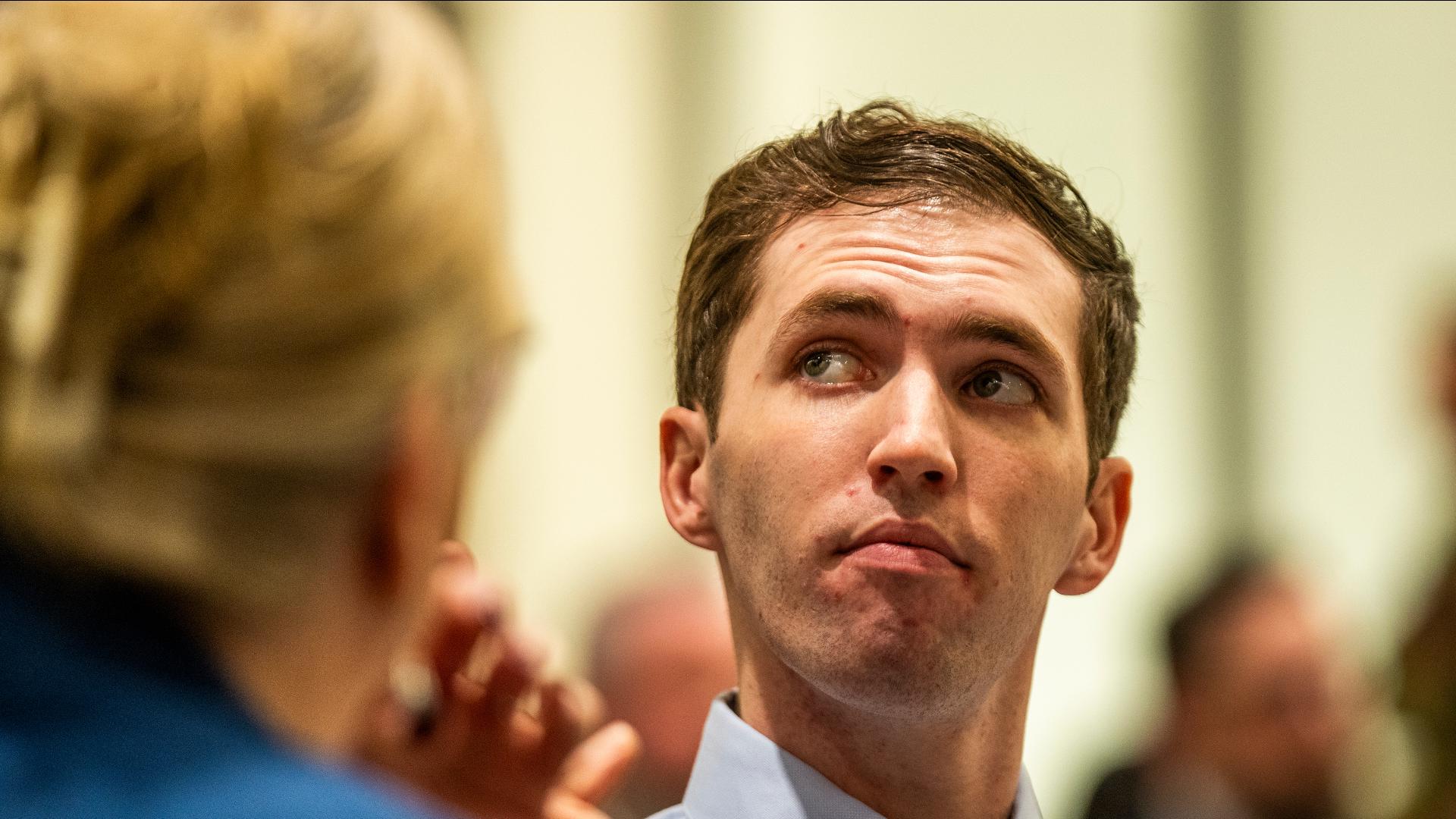
Robinson, 23, surrendered to authorities one day after the shooting at Utah Valley University last September. He has not entered a plea. His defense team has not put forward an alternative explanation for Kirk’s death, focusing instead on efforts to stop the case from advancing to trial and to remove the death penalty as a possible punishment.
District Judge Tony Graf could order Robinson to stand trial on a lesser murder charge, which carries a minimum sentence of 15 years in prison and a maximum of life behind bars, according to Steve Burton, director of the Utah Defense Attorney Association. Graf also has the authority to dismiss the charges, though prosecutors would be able to file them again.
One central issue in determining whether the case qualifies as aggravated murder is whether the shooting put other people in danger.
Attorneys will return Tuesday for closing arguments, bringing an unusually lengthy preliminary hearing to an end. Graf plans to announce his decision from the bench, state courts spokesperson Tania Mashburn said.
Kirk’s widow, Erika Kirk, along with his parents, Robert and Kathryn Kirk, were expected to be back in the Provo courtroom after attending proceedings in July.
Arguments will likely focus on whether Utah County prosecutors have enough evidence to support the heightened charge of aggravated murder.
In recent court filings, defense attorneys argued that the shooter “hit the intended target” and did not endanger others. But prosecutors said numerous people were within a “zone of danger” around Kirk when he was shot from a rooftop more than 400 feet away.
Robinson also faces potential sentencing enhancements if prosecutors can show he targeted Kirk for his political beliefs.
Before his death, Kirk and the organization he co-founded, Turning Point USA, galvanized the conservative youth vote to help President Donald Trump win a second term.
Prosecutors have argued that an engraved bullet found in the suspected murder weapon shows that Kirk was targeted for how the defendant perceived his politics. The inscription “Hey Facist! CATCH!” is an “overt political reference,” they argued in court documents.
A handwritten note that prosecutors allege Robinson left for his romantic partner read in part, “I had the opportunity to take out Charlie Kirk, and I took it.” They also allege Robinson wrote in a text message about Kirk: “I had enough of his hatred. Some hate can’t be negotiated out.”
Robinson’s attorneys have argued that prosecutors do not have strong enough evidence to prove a political motivation.
In July, investigators presented DNA analyses that they said linked Robinson to the suspected murder weapon — a bolt-action rifle with one spent round — and a tool he allegedly used to engrave the bullet cartridges.
Robinson’s reported romantic partner, Lance Twiggs, told investigators in a recorded interview that Robinson said the day after Kirk was killed that “he wishes he hadn’t done it.” Later that same day — and only about an hour before turning himself in — Robinson posted “it was me at UVU yesterday” in an online chat room, according to investigators.
Defense attorneys challenged the reliability of DNA tests and unsuccessfully fought against the public release of the Twiggs interview, warning prosecutors would characterize it as a confession. Twiggs said in the interview that he never heard Robinson talk about Kirk before the shooting.
Copyright 2025 Associated Press. All rights reserved. This material may not be published, broadcast, rewritten, or redistributed.