A US appeals court on Wednesday threw out a federal labor board decision that found Starbucks had violated labor law by stopping employees at a high-profile Manhattan location, known for its “steampunk hipster vibe,” from wearing union-supporting T-shirts or several pro-union pins while on the job.
The 2nd US Circuit Court of Appeals, based in New York, said the National Labor Relations Board did not adequately weigh Starbucks’ interest in maintaining a carefully curated customer-facing brand image against employees’ legal right to promote union organizing.
Starbucks did not immediately respond to a request for comment, and a spokesperson for the labor board also did not provide an immediate response.
The decision marks another setback for the NLRB in a series of federal appeals court rulings finding that the agency overreached when it concluded that workplace dress and appearance policies unlawfully restricted employees’ ability to push for improved working conditions or union representation.
Last year, a St. Louis-based appeals court ruled that Home Depot could prevent workers from writing “Black Lives Matter” on the company’s signature orange aprons. In 2023, another federal appeals court found that Tesla was permitted to stop factory employees in California from wearing union T-shirts.
In the Tesla-related dispute, the labor board had taken the position that employer rules banning union-related clothing or accessories were unlawful unless a company could show “special circumstances” that justified limiting them.
But a three-judge panel of the 2nd Circuit said Wednesday that the standard would effectively make many routine workplace dress codes illegal. The judges said it did not sufficiently account for legitimate employer concerns, including workplace safety and public presentation, while still recognizing employees’ rights under federal labor law.
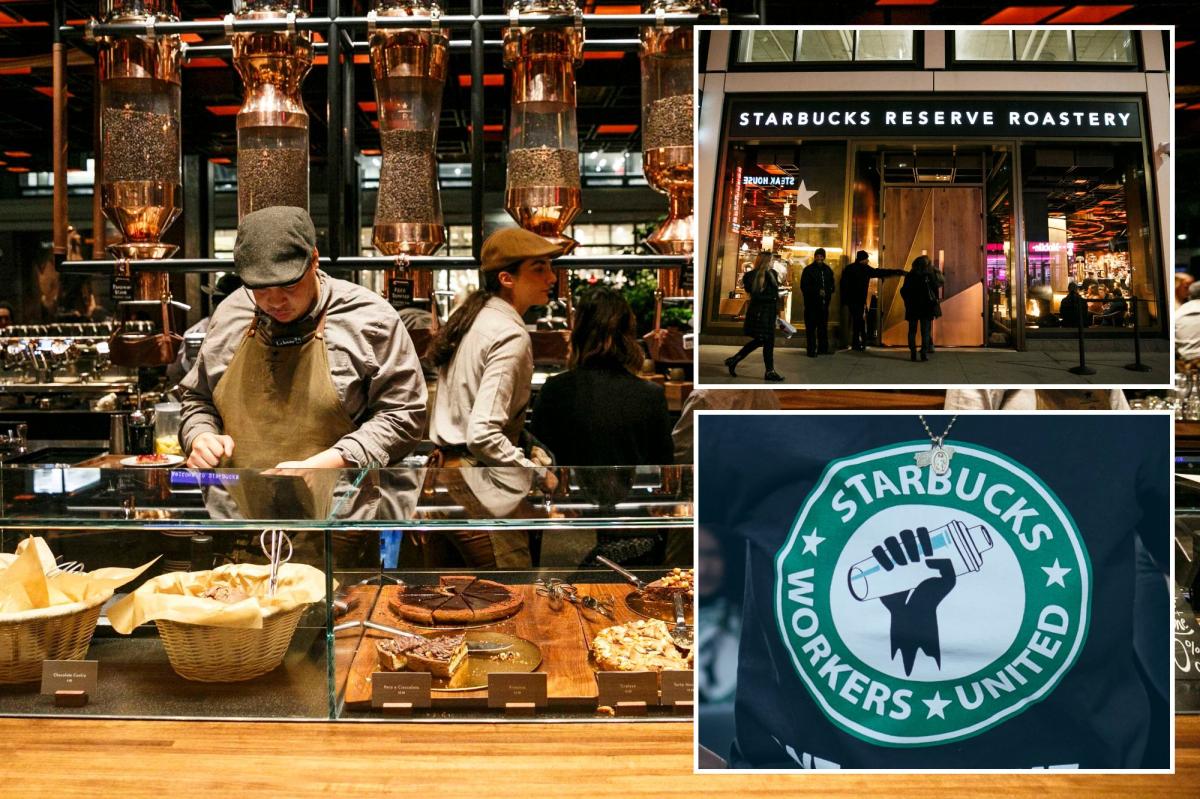
The Starbucks location at the center of the case is a 23,000-square-foot store in Manhattan’s Meatpacking District featuring an on-site roastery, coffee and cocktail bars, a bakery and retail space.
Instead of Starbucks’ standard green aprons and black tops, workers there don brown aprons and collared shirts or turtlenecks in muted colors and can opt to wear a handful of pre-approved shirts and pins.

Those support various causes such as military veterans, Black Lives Matter, Hispanic Heritage Month and World AIDS Day, according to court filings.
The store in 2022 became one of the first Starbucks locations to unionize; workers at 700 other US stores have voted to join unions since then, and in the process have filed hundreds of complaints with the NLRB accusing the company of illegal labor practices.
The board in 2024 ruled that before the Manhattan store unionized, Starbucks interfered with workers’ rights there by prohibiting union shirts and more than one pin, and that the company failed to show any legitimate justification for the policies.
The 2nd Circuit on Wednesday overturned the decision and sent the case back to the labor board “to apply a more evenly measured balancing test.” The five-member board had a Democratic majority when it first decided the case and now has a 3-1 Republican majority appointed by President Trump.