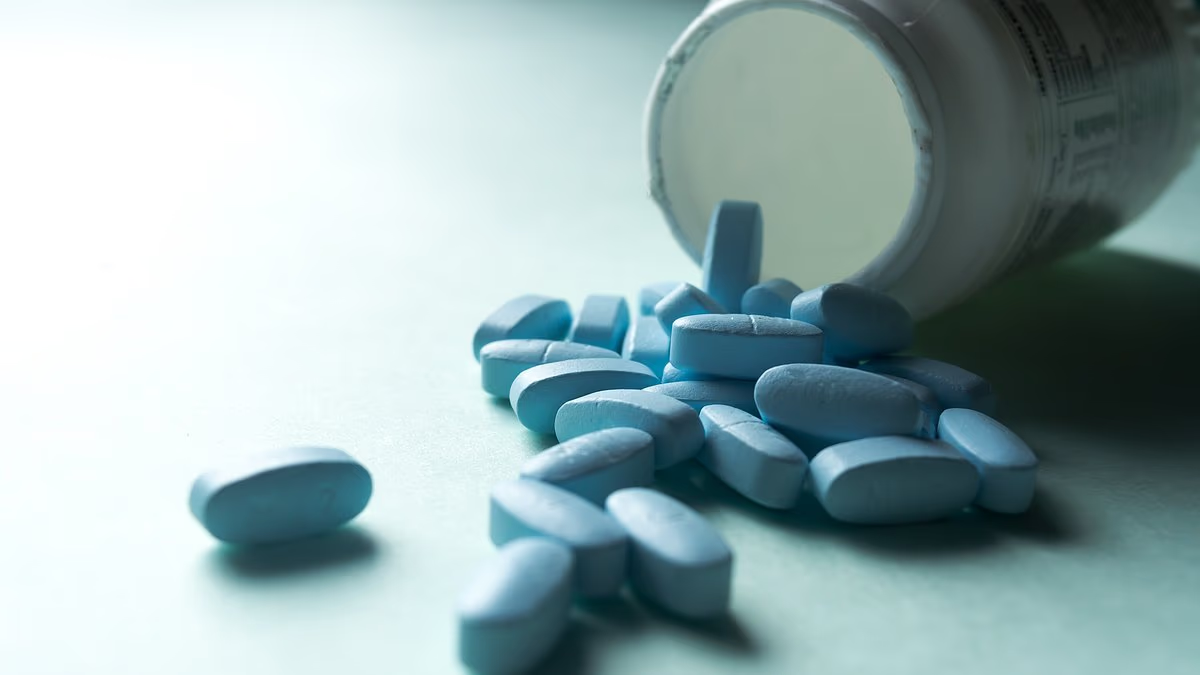

Antidepressants rank among the most commonly prescribed medications in the United States, with roughly one in six American adults taking them.
In recent years, some health researchers and patient advocates have warned that antidepressants may be prescribed too often. They also point to the difficulties many people face when they decide they want to stop taking the drugs.
Health and Human Services Secretary Robert F. Kennedy Jr. has become one of the most prominent figures to raise the issue. In May 2026, he launched an initiative urging doctors to consider alternatives to antidepressants and other psychiatric medications when treating depression is possible without them.
Psychiatrists say antidepressants can offer meaningful benefits, but they also carry drawbacks. While concerns about overprescribing contain some truth, the evidence presents a far more complicated picture than the debate often suggests.
What are antidepressants, and who takes them?
More than half of all antidepressant prescriptions are for selective serotonin reuptake inhibitors, commonly known as SSRIs. Fluoxetine, sold under the brand name Prozac, became the first SSRI approved in 1987. Since then, several other SSRIs and antidepressants that work through different biological pathways have entered use.
Antidepressants may help people with moderate to severe depression. They are generally not considered necessary for mild depression, however, because side effects can outweigh the likely benefits. In those cases, a range of effective non-medication treatments is available.
In practice, though, the line between mild and severe symptoms is not always clear. In everyday conversation, “depression” can refer to anything from a temporary case of the “blahs” to a serious clinical disorder that requires professional treatment.

One in six American adults takes some form of antidepressant medication
Primary care providers routinely screen patients for depression with a widely used questionnaire. The tool can help identify people who may need a more thorough evaluation or treatment, but it can also be misleading when used by itself to make a diagnosis.
For example, someone enduring a difficult week or two might receive a high screening score and be prescribed medication that is not actually needed.
The same screening process can miss people who urgently need help. More than one-third of people who die by suicide had visited a primary care provider during the preceding month. Among adults ages 55 and older, that figure exceeds two-thirds.
Prescribing in general practice
A 2026 analysis found that psychiatrists write only a minority of antidepressant prescriptions in the United States. Some prescriptions come from nurse practitioners or physician assistants with psychiatric training, but most are issued by primary care providers who do not specialize in mental health.
Primary care clinicians often have limited time to assess mental health concerns in depth. They may also have fewer options for treating depression without medication, including access to talk therapy and other forms of psychotherapy.
Primary clinics that have behavioral health providers and consult with psychiatrists tend to help patients more effectively and provide more treatment options. These types of collaborative approaches to care are still rare but are becoming more common.
Today’s primary care providers do receive more training on mental health issues, and they are often more equipped to recommend lifestyle changes that can be especially helpful for people with less severe depression symptoms.
But it’s simply human nature that when given a choice between taking a daily medication and engaging in activities that require commitment and intention, many will choose medication.
The opposing forces of stigma and access
Stigma has been a long-standing barrier in seeking mental healthcare.
Since the COVID-19 pandemic, anxiety and depression have become more prevalent. That’s particularly true among adolescents and young adults – especially young women, who tend to experience less stigma around mental health issues.
New rules during the pandemic also made it significantly easier for people to access mental health treatment – both therapy and medications – remotely, via telehealth. Such access continues to grow.
Before the pandemic, only one percent to two percent of antidepressant medications were prescribed via telehealth. By 2022, it was roughly one-third.
Given these trends, and the fact that clinicians often turn to medication for treating depression regardless of the severity, the uptick in antidepressant prescriptions since 2020 should come as no surprise.
Virtual visits allow people to navigate more easily around stigma and find increased and convenient access to care. And many people feel more comfortable getting such care in a primary care clinic rather than a mental health clinic.
Systemic issues drive prescribing
For all these reasons, one could argue antidepressant medications are likely overused in some cases. Undoubtedly, some people who take them either don’t benefit from them or could address their symptoms in other ways.
On the other hand, expanded access to mental healthcare – including medication – has also enabled people who need treatment to receive it. Even now, many Americans with serious depression receive no or limited treatment.
What’s more, this imbalance reflects systemic problems in the US healthcare system at least as much as physicians’ prescribing habits or patients’ requests.
For example, primary care clinics are a great place to screen for mental health issues, but getting proper treatment may involve more specialized care – which many patients can’t access.
And on the business side, clinicians get little support in helping patients with lifestyle changes and non medication treatments – rather than prescribing drugs.

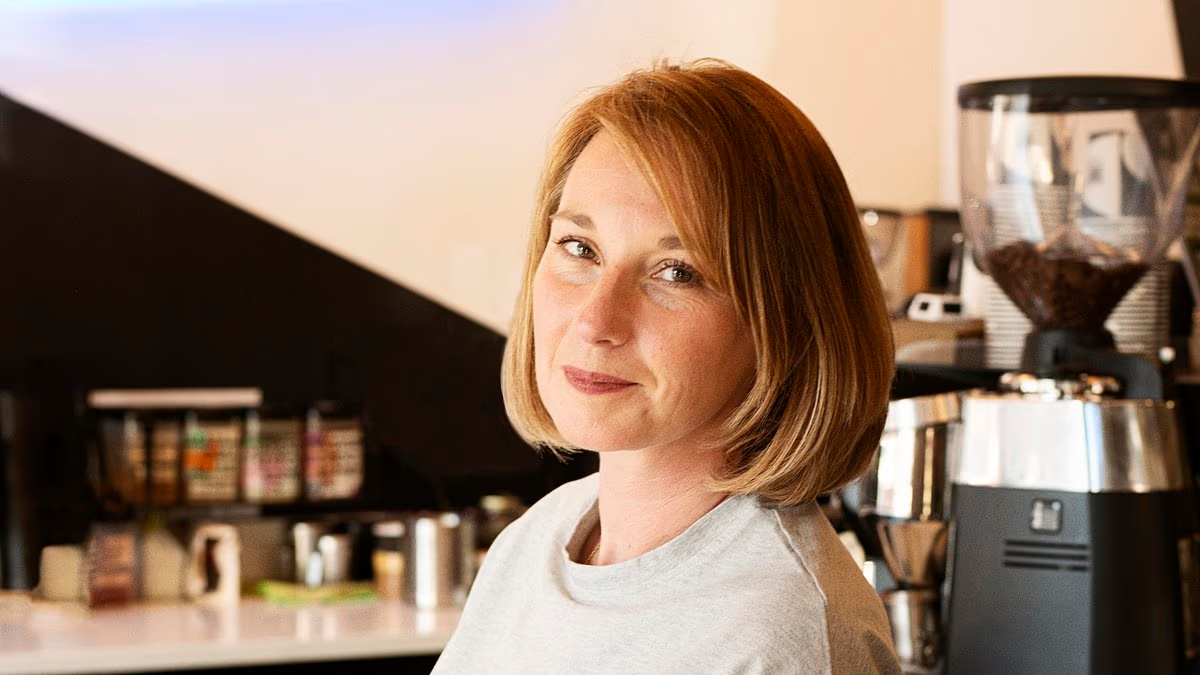
Katie (pictured above) was prescribed the generic version of Prozac but claims she quickly became consumed by an ‘overwhelming’ feeling of panic and agitation. Then came an almost uncontrollable need to move
Difficulties in ditching antidepressants
Kennedy has claimed that for some people, stopping antidepressants can be harder than quitting heroin. Research suggests such extreme effects of discontinuing medication are rare, though not unheard of.
Any time a person is on a medication for a significant period of time, the brain and body adapt to establish a new balance. This happens with other substances, too – as any regular coffee drinker who has tried abruptly quitting knows.
People who want to stop taking antidepressants after being on them for a long time generally do best when they gradually taper their dose over weeks to months, unless they have a specific reason for stopping more quickly.
For antidepressants, clinicians watch for withdrawal symptoms including sleep problems, flu-like symptoms, headaches and an electrical buzzing sensation in the head.
A 2024 review of dozens of rigorous studies that compared the experiences of people taking antidepressants with those taking a sugar pill found that roughly a quarter of people stopping antidepressants experienced some withdrawal symptoms, and for three percent, they were severe.
While certain antidepressants might be more likely to cause withdrawal symptoms, it’s tough to tell who might have the most difficulty. And for some patients, depression is a chronic illness for which they must take medication indefinitely.
However, most people working with an experienced clinician are able to successfully discontinue these drugs. Ultimately, what’s most important is that patients are able to consult with a knowledgeable provider in making that decision.
This article is adapted from The Conversation, a nonprofit news organization dedicated to sharing the knowledge of experts. It was written by Andrew McLean, a clinical professor of Psychiatry and Behavioral Science at the University of North Dakota. It was edited by Alexa Lardieri, the US health editor at Our News Outlet.