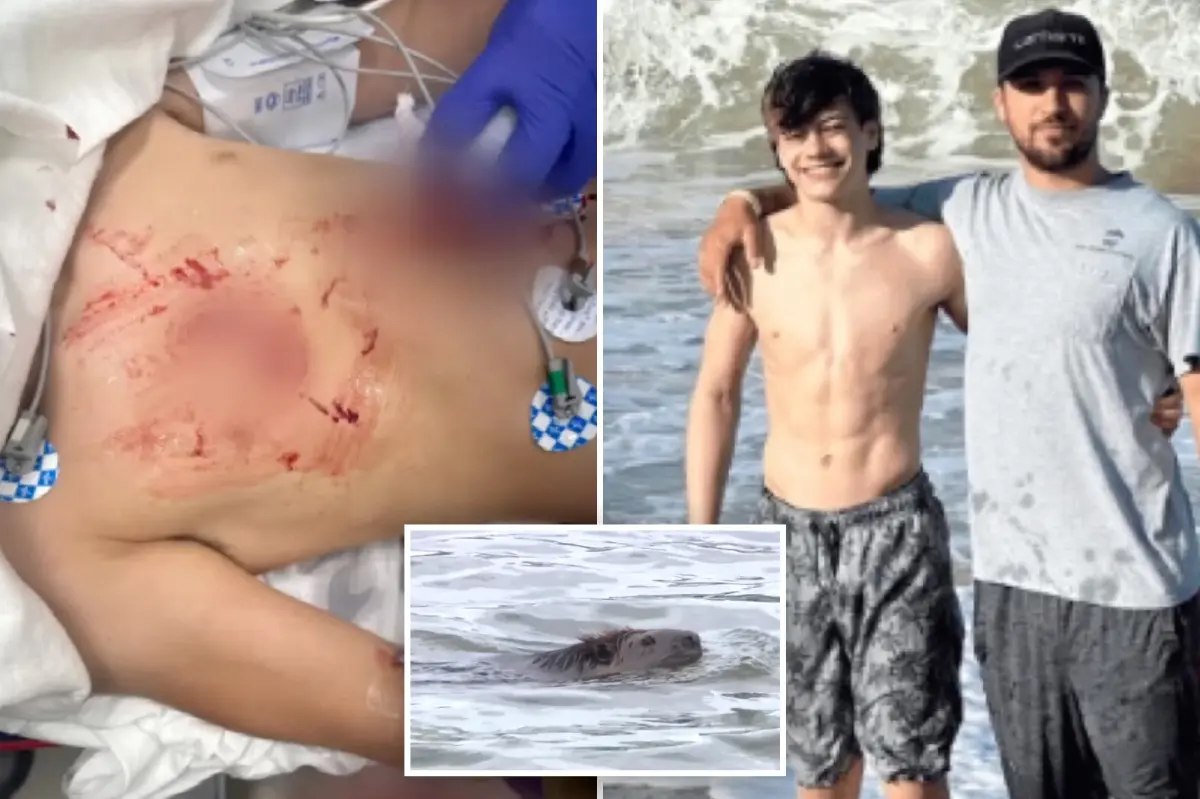

A 13-year-old boy underwent several surgeries after a rabid beaver attacked him during a family visit to Cunningham Falls State Park in Maryland.
Dominick Cebula was swimming and watching fish underwater on July 26 when the beaver clamped onto his chest and would not release him.
“He grabbed its head and a leg, and he tried to get it off of him,” Dominick’s father, Jeff Cebula, told WUSA 9. “At that point, he kind of felt that it was locked onto him. And then it started shaking its head, kind of like a dog would do.”
Dominick eventually broke free from the animal’s bite, but the beaver attacked again as he moved away, lunging at him and biting his right hand.
After driving off the beaver a second time, Dominick was airlifted to Johns Hopkins Hospital, where doctors treated his injuries and began rabies post-exposure treatment.
“It’s not just one shot,” Jeff Cebula said. “It’s multiple shots around each bite site.”
The beaver was later confirmed to have rabies.
Dominick ultimately needed three surgeries for the wounds to his chest and hands, including procedures to repair severe nerve damage caused by the attack.
The incident disrupted what had been a cherished 30-year family tradition of visiting the park each summer. After so many uneventful trips, Jeff Cebula said he was left questioning how the attack could have happened.
“I think that now I’m going to be a lot more aware of my surroundings,” he said.

Dominick remains on the road to recovery, but his frightening summer experience—and the bite marks left behind—quickly became a topic of conversation at school. His father said the teen was “pretty popular on the first day of school” as he recounted the attack to classmates.
The attack was one of three similar incidents involving rabid beavers reported in Maryland within a few weeks. Another occurred at Cunningham Falls State Park just 10 days later, when a fisherman was attacked.
A rabid beaver also attacked a 10-year-old child in a canoe at Seneca Creek State Park, about 40 miles south of Cunningham Falls.
The Centers for Disease Control and Prevention reported that rabies-related inquiries increased by 17% this summer.