

Static Media
Contains spoilers for “Resident Evil” (2026)
Most video game adaptations never make it beyond one movie, yet Hollywood has repeatedly returned to the world of “Resident Evil.” Since the early 2000s, the horror franchise has produced seven feature films, many of them led by Milla Jovovich as Alice. The 2026 release, however, makes it clear from the outset that it is taking a very different route.
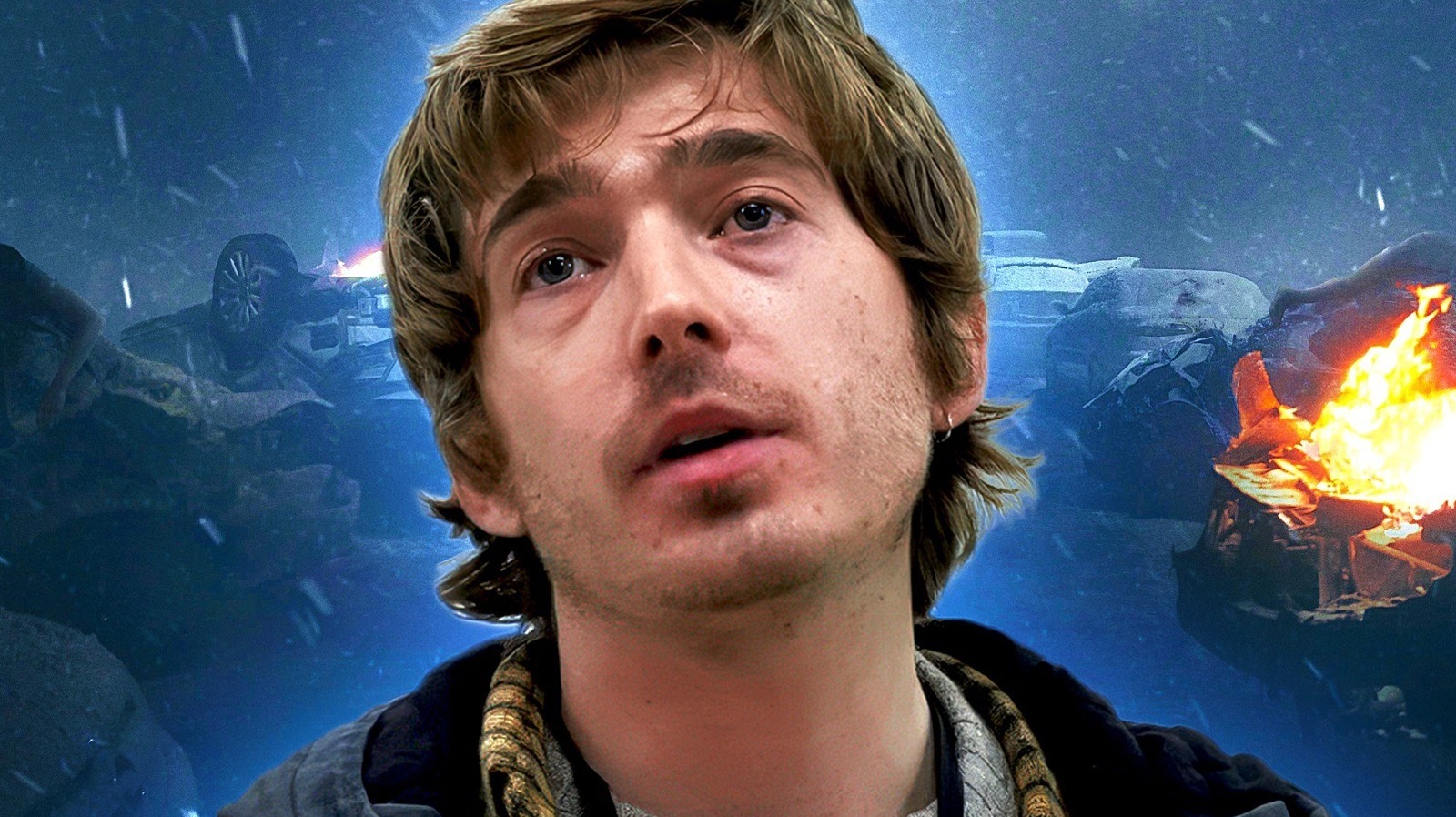
Following the success of 2025’s “Weapons” — which earned Amy Madigan an Oscar for best supporting actress for playing Aunt Gladys — director Zach Cregger puts his own stamp on the long-running series. This story has no Alice, Claire Redfield or Leon Kennedy. Instead, it centers on Bryan (Austin Abrams), a medical courier assigned to deliver a mysterious package to Raccoon City just as the city collapses under an outbreak that transforms people into grotesque creatures.
After years of live-action and animated “Resident Evil” movies, the shift in perspective is a welcome one. Cregger’s film could easily become a favorite when fans debate the best “Resident Evil” movies, but its ending raises a larger question: is this a standalone horror story, or the opening chapter of a new series? Here’s a breakdown of the “Resident Evil” ending and what it could mean for the franchise.
What you need to remember about the plot of Resident Evil
Sony Pictures Releasing
Bryan’s story begins with a tense phone call to his pregnant girlfriend, Michelle. He is uncertain about what becoming a father will mean and promises to discuss everything when he gets home. Before that can happen, he accepts a high-paying delivery to Raccoon City General, despite the destination being outside his normal route. While driving through a fierce snowstorm, Bryan hits a woman who suddenly steps into the road.
A police officer stops Bryan and offers to take the injured woman to the hospital while escorting him there. The plan quickly falls apart when the patrol car overturns — apparently because the woman has become violently infected. Bryan takes shelter in a barn, where he is attacked by a dog with grotesque tendrils emerging from its mouth. He tries reaching Michelle from inside a nearby house, but the homeowner attacks before he can answer her return call. Bryan escapes as the homeowner and the woman from the road fuse into one terrifying mutant.
Forced to continue on foot, Bryan discovers a child hiding in an RV, her leg already covered in tendrils. She bites him before he shoots her, and he presses on as a swarm of rats gathers behind him and forms a massive, nightmarish creature. His escape is interrupted when Umbrella employees Carl (Paul Walter Hauser) and Maxine (Kali Reis) pick him up. They reveal that Bryan’s package contains a compound that may be the final ingredient needed to create a cure for the viral outbreak consuming Raccoon City.
What happened at the end of Resident Evil?
Sony Pictures Releasing
Carl and Maxine are soon killed by the infected, leaving Bryan to flee into the sewers while the enormous rat creature hunts him. He emerges onto a street where monsters hurl themselves from rooftops in an attempt to reach him, only to die on impact. Eventually, Bryan reaches the parking garage at Raccoon City General. With the elevator disabled, he records a message for Michelle, apologizing for how he handled the pregnancy news and telling her that he wants nothing more than to return home.
Dave (Zach Cherry), an Umbrella scientist watching through the hospital’s security system, instructs Bryan to take the stairs and deliver the vial to the 28th floor. Bryan climbs several levels before resorting to an elevator, where he is attacked by an acid-spewing monster and the pursuing rat king. His route then takes him through a maternity ward overrun with monstrous babies — an especially grim reflection of the life-changing decision he has been avoiding. To reach the 28th floor, Bryan must cross a shattered skybridge. When the rat king scales the hospital exterior, Bryan tricks a larger group of creatures into charging across the unstable structure. They plunge to the ground, taking the rat king with them.
Bryan succeeds in delivering the compound, and the scientists quickly use it to produce a vaccine. By then, however, the infection has already begun consuming him. Bryan mutates into a monster and kills the scientists as they struggle to inject him with the cure. The last surviving scientist drops the syringe from the building, sending it tumbling toward the ground just as helicopters arrive and surround the newly transformed Bryan, who answers them with a terrifying roar.
What the end of Resident Evil means
Sony Pictures Releasing
The conclusion of 2026’s “Resident Evil” is ultimately a bleak tragedy. Bryan may have taken the lucrative assignment partly because he needed the money, but it also gave him a reason to postpone confronting Michelle about the pregnancy. After everything he endures — and the people he is forced to kill — he seems to understand that parenthood may not be as frightening as he once believed. Unfortunately, he never gets the opportunity to tell Michelle. His transformation appears to destroy any chance of returning home, while the syringe containing the cure is likely lost.
Zach Cregger told IndieWire that the movie reflects his own fears about possibly becoming a parent. The 45-year-old filmmaker said he often places elements of himself in his protagonists, and Bryan allowed him to explore two equally frightening possibilities. As Cregger explained, the character must decide whether to embrace a terrifying change that could improve his life or resist it in an attempt to preserve a comfortable existence, even though time cannot be stopped.
Change is at the heart of “Resident Evil,” from the shifting dynamics of Bryan’s relationship to the horrifying physical mutations caused by the virus — transformations that recall the body horror of John Carpenter’s “The Thing.” Bryan believes that running from his problems will protect him, only to discover that hesitation and fear can create consequences far worse than the choice he was avoiding.
What the end of Resident Evil could mean for a new franchise
Sony Pictures Releasing
The movie does not appear to have been designed as the beginning of a conventional franchise. Bryan, the central character, becomes a monstrous figure before the credits roll, seemingly bringing his personal story to an end. That does not rule out an anthology approach, with future “Resident Evil” movies introducing new protagonists and potentially incorporating familiar video game characters. For now, however, the franchise’s next move remains uncertain.
Cregger has acknowledged that he is already imagining additional stories set in this world. Speaking to Polygon, he said that completing the film immediately sparked ideas about what could happen next. Any sequel directed by Cregger may still be several years away, though, since he is committed to another project first.
That next movie is “The Flood,” an original science fiction project scheduled for August 11, 2028. Cregger described it to Polygon as “maybe the best thing I ever wrote.” Given his work on “Barbarian,” “Weapons” and now “Resident Evil” — which has earned a strongly positive response from critics — the statement represents significant confidence in the filmmaker’s next chapter.
Sony is likely to remain interested in expanding the “Resident Evil” film series, particularly with the movie projected to earn between $35 million and $50 million during its opening weekend. That would make it the biggest debut in the franchise’s history. The studio could pursue another installment without Cregger, although no plans have been announced. For now, the filmmaker’s growing Hollywood influence gives him room to develop original stories while also putting a fresh spin on one of gaming’s most recognizable horror properties.