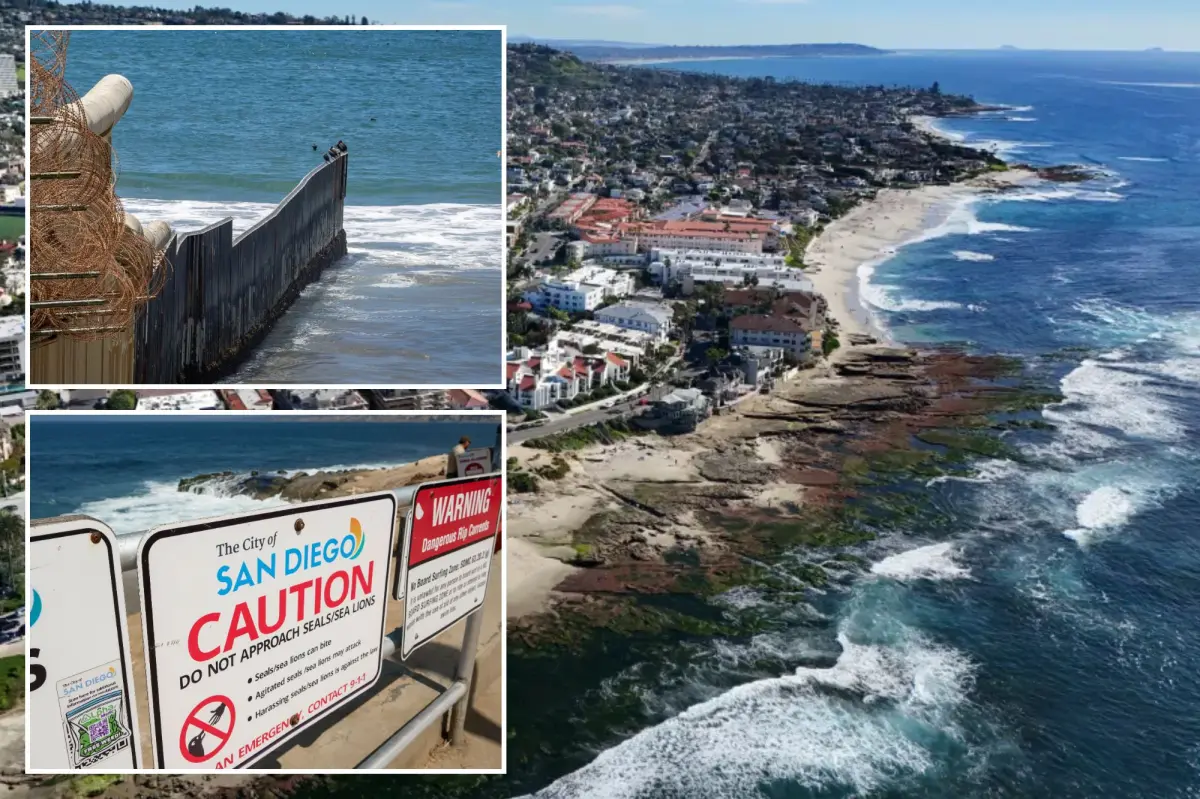

Dozens of iconic sites along the San Diego coastline are preparing for a potentially severe combination of threats as forecasts signal the possibility of a Super El Niño.
Beach erosion, collapsing cliffs and widespread coastal flooding could strike at the same time. Experts caution that the combined impact may permanently reshape San Diego’s shoreline and alter much of Southern California’s coast.
“Powerful waves can accelerate erosion of beaches, sea cliffs, and bluffs, and cause coastal flooding; and strong El Niño conditions can raise sea level on the California coast by 6 to 13 inches,” said Adam Young, a researcher at Scripps Institution of Oceanography at UC San Diego.
“Combined, these factors increase coastal erosion and flooding during El Niño events, which can threaten public parks, beaches, critical infrastructure, highways, and homes,” he added.
Since 2023, the California Coastline Survey has scanned the state’s entire coast six times. The state-funded program is based at Scripps’ Air-Sea Interaction Laboratory. Researchers plan another survey in fall 2026 and spring 2027 to measure erosion linked to the upcoming El Niño.
San Diego City Council adopted its Coastal Resilience Master Plan in September 2025 as sea levels continued to rise. The plan identifies La Jolla Shores, Tourmaline Surf Park, Mission Beach, Ocean Beach and Sunset Cliffs as critical project locations.
City spokesman Peter Kelly told the Times of San Diego that resilience projects at La Jolla Shores and Mission Beach remain at the conceptual-design stage because of funding challenges. Meanwhile, projects at Tourmaline, Ocean Beach and Sunset Cliffs have entered initial engineering design.
The city is also building sand berms along Mission Bay and other beaches to absorb powerful surf and limit shoreline damage.
The vulnerabilities extend from North County to the South Bay. The Times reported that San Onofre State Beach continues to erode, gradually removing the sandstone that supports Interstate 5.
Oceanside has recorded as much as 6.6 feet of beach retreat each year south of its harbor. Addressing the losses has required large Army Corps dredging operations, including the removal of 236,590 cubic yards by CJW Construction after the 2015-2016 storm season.
Powerful waves could also block the inlets of coastal lagoons by pushing sand into estuaries. At the same time, vulnerable bluffs from Carlsbad to Del Mar face greater instability when heavy rain combines with wave action.
“Any homes on the cliffs are going to be in danger this year,” Lisa Chaddock, a physical science professor at San Diego City College, told the Times of San Diego.
Chaddock also warned that heavy rainfall and higher sea levels could intensify the South Bay’s sewage crisis, potentially carrying pollution farther north.