Utah Valley University lacked a comprehensive security strategy and did not consistently follow its own major-event protocols when Charlie Kirk was assassinated on campus, according to an independent investigation released Friday.
The 158-page review examined the September 10, 2025, shooting that killed the Turning Point USA (TPUSA) founder. Investigators concluded that no university employee acted “in bad faith or in willful and wanton disregard for the safety of others.”
Even so, the report pointed to a series of questionable decisions by UVU officials and said they “warrant attention” as the university works to improve security for future campus events.
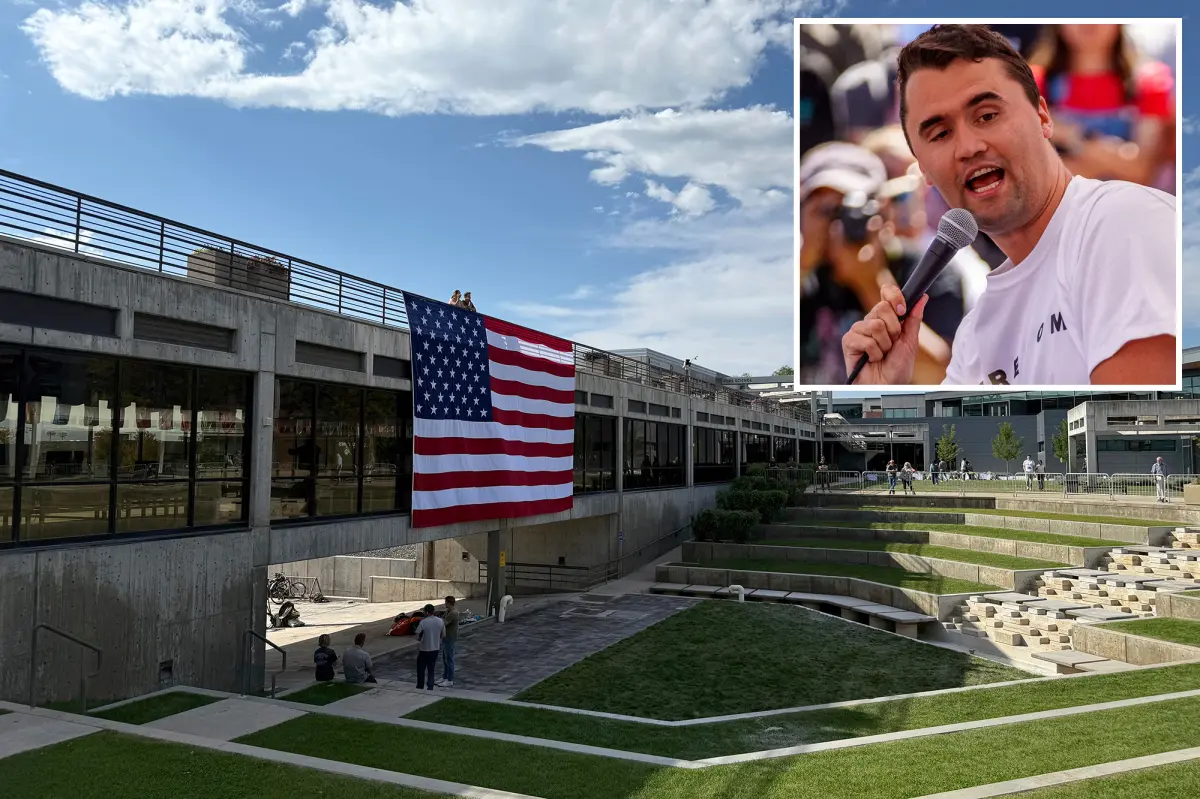
“The September 10 TPUSA event presented several characteristics that warranted a more formal event security planning process,” investigators wrote. They cited Kirk’s prominence, expected protests, uncertainty over attendance and the outdoor setting, which was near “elevated vantage points.”
Although university administrators, the Utah Valley University Police Department, Event Services and TPUSA representatives coordinated to some degree, investigators found that the event lacked a detailed written security assessment or formal action plan.
The report said the event site was “surrounded by buildings, elevated areas, pedestrian routes, and multiple vantage points.” That environment made it especially important to evaluate sightlines and elevated positions, control access to nearby buildings, plan arrivals and departures, manage crowds and protests, and assign officers to fixed security posts.
University personnel identified and addressed some security concerns, but the planning process omitted several key steps. Those included a line-of-sight review, protective-security planning, a pre-event briefing and a coordinated walkthrough involving all major security stakeholders.
Investigators also found no clearly defined coordination system involving Kirk’s private security detail and outside law enforcement agencies.

The initial security plan called for just three university law enforcement officers to protect an event that ultimately drew several thousand attendees.
According to the review, that figure increased to six after the university’s policy chief saw how large the crowd had become.
The investigation further determined that UVU left important decisions—including the event location—to TPUSA personnel.
During an August 2025 meeting, university officials voiced concerns about staging the event outdoors and proposed several alternative venues.
A TPUSA representative nevertheless pushed for Kirk to appear in a campus courtyard, saying he had spoken there before and that the organization already knew the space.
TPUSA also chose to handle ticketing independently instead of using the university’s system. As a result, UVU officials did not have a precise count of how many people would attend.
“In our assessment, those decisions were consequential,” the report stated.
The investigators added that the university’s conduct was “significantly inconsistent” with its established policies for large and high-profile events.
TPUSA and members of Kirk’s security team did not take part in the independent review, according to the report.
Earlier this month, Kirk’s family sent UVU a wrongful-death notice, signaling that it may pursue legal action against the university.
The notice accused the school of making “reckless decisions,” including failing to have emergency medical responders available—an omission the family said may have accelerated Kirk’s death.
“The buck stopped with UVU leadership and law enforcement,” family attorney Brett Parkinson said in a statement obtained by The Associated Press. “Justice for Charlie and his family requires true accountability for UVU’s fatal shortcomings that day.”
Utah Valley President Jon Anderson said in a statement that the school has a responsibility to “learn from the findings of this review, and follow through on its recommendations.”
He added that the university has made “meaningful progress in strengthening campus safety over the past year.”