

A legal mistake has wiped away Max Factor heir Andrew Luster’s original 124-year prison sentence and replaced it with a 50-year term, paving the way for the convicted serial rapist’s eventual release after about two decades in custody, his former lawyer told News Outlet.
J. David Nick, who represented Luster in challenges to the sentence, said in a Tuesday interview that the original judge improperly ordered the prison terms to run consecutively without making findings required under California law.
That error resulted in the initial sentence being vacated in March 2013. Luster was resentenced to 50 years the next month, but his convictions were left unchanged.
Court records reviewed by News Outlet show that Ventura County Superior Court Judge Ken W. Riley imposed the original sentence on Feb. 18, 2003.
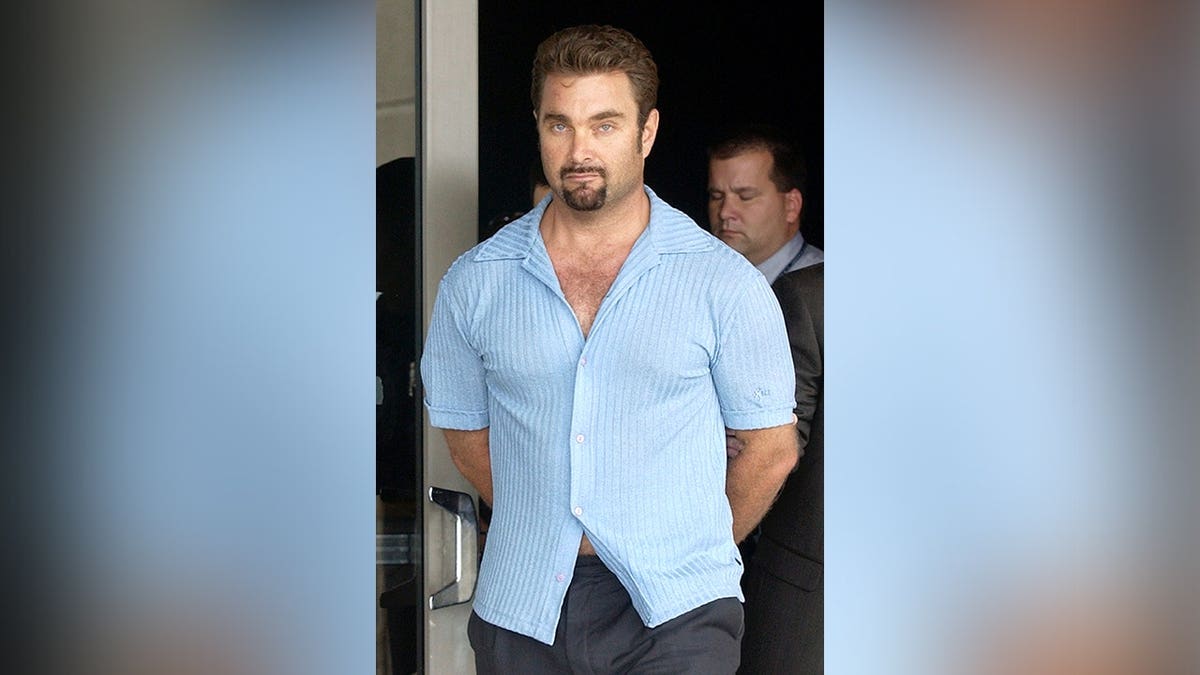
Max Factor cosmetics heir Andrew Luster is escorted to a vehicle by a law enforcement officer after arriving at Los Angeles International Airport on June 19, 2003. (Getty Images)
The punishment consisted of 20 consecutive six-year terms for rape convictions, plus an additional four-year term, adding up to 124 years behind bars.
Nick said California law permits consecutive sentences for certain sex crimes, but judges must make specific findings explaining why those terms should be stacked.
Ventura County Superior Court Judge Kathryne Ann Stoltz ordered a new sentencing hearing in March 2013, concluding that the original court had not sufficiently explained its decision to impose consecutive terms.
Luster, the great-grandson of cosmetics pioneer Max Factor, was convicted in January 2003 on 86 felony counts tied to the drugging and sexual assaults of three women.
During his April 16, 2013, resentencing, Stoltz combined consecutive, concurrent and stayed terms, bringing Luster’s total prison sentence down to 50 years.

Max Factor heir Andrew Luster stands during a break in his trial at Ventura County Superior Court in Ventura, California, on Monday, Dec. 17, 2002. (Anacleto Rapping/Los Angeles Times via Getty Images)
The court records indicate that several rape counts were assigned three-year terms at resentencing, rather than the six-year terms imposed in 2003.
Nick said one of Luster’s victims, who had previously been romantically involved with him, sent the judge a letter urging leniency.
According to the attorney, the woman had been in a long-term relationship with Luster and continued to believe he possessed redeeming qualities, despite the crimes he committed against her.
Nick paraphrased her message to the court: “This is really gross what he did, but I think the guy’s got some good character and you should be lenient on him.”
“She did not approve of what he had done to her,” Nick said.
The attorney said the letter played a role in the judge’s decision to reduce some of the terms. Without the request, he estimated, Luster might have received 60 to 65 years in prison.

This handout photograph of Andrew Luster, heir to the Max Factor cosmetics fortune, was released by the Ventura County Sheriff’s Department on Jan. 8, 2003, in Ventura, California. (Ventura County Sheriff’s Department/Getty Images)
Records show that the defense submitted several exhibits before the resentencing hearing. One was ordered redacted by the judge to protect a victim’s identity, although the docket does not indicate whether it was the letter described by Nick.
News Outlet has asked Ventura County Superior Court for the redacted exhibit and other records related to the sentencing.
The Ventura County District Attorney’s Office, meanwhile, said prosecutors fought to preserve Luster’s original sentence and opposed the reduction.
DISCOVER MORE: NYC Congressional Candidate Says Deporting Migrants Is ‘Wrong
“Our office fought at every opportunity to preserve Andrew Luster’s original 124-year prison sentence,” the office said in a statement obtained by News Outlet. “We believed then, as we do now, that drugging women, raping them, and gloating about the crimes on film requires the strongest of sentences.”
Prosecutors said they also joined Luster’s victims in successfully opposing his early parole in 2024 and 2025.
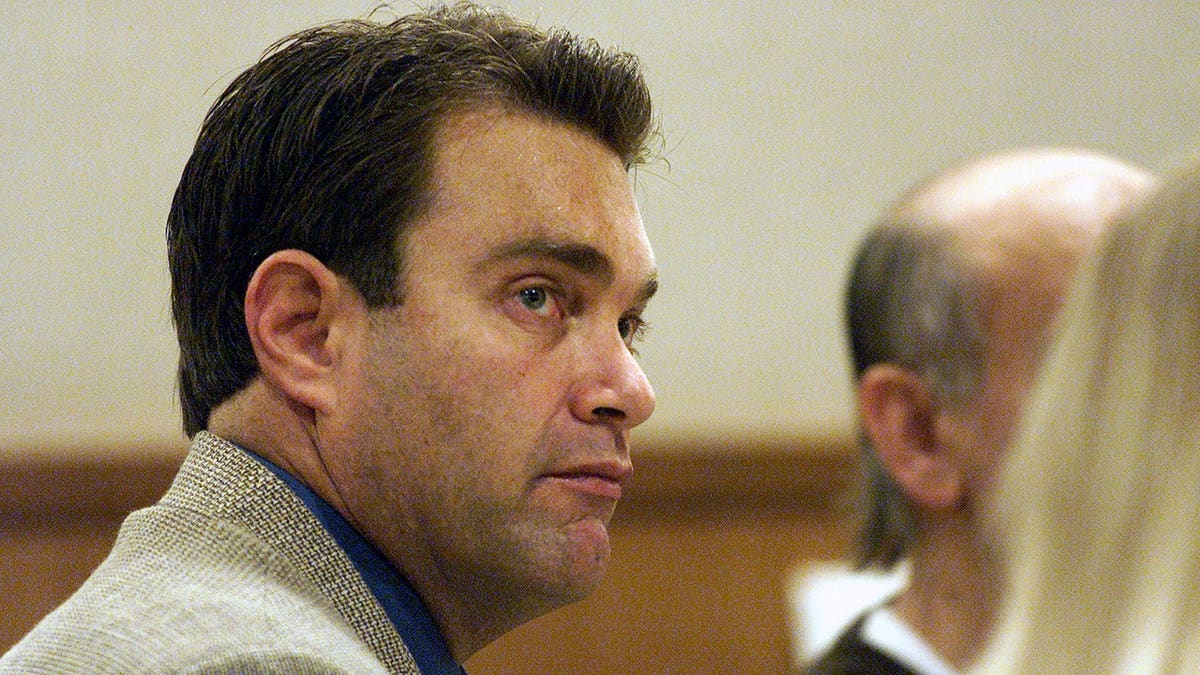
Andrew Luster, the great-grandson of cosmetics mogul Max Factor, appears in court in an archival photo. Luster was originally sentenced to 124 years in prison for drugging and raping three women before being resentenced to 50 years in 2013. (Getty Images)
“However, because of the 2013 resentencing, we knew that this day would ultimately arrive,” the DA’s office said. “Luster reached his maximum confinement date in October 2026.”
The California Department of Corrections and Rehabilitation confirmed to News Outlet that Luster was released to parole supervision Oct. 11 after completing his legally calculated prison term.
“This is not an early release,” CDCR public information officer Kyle Buis said in a statement.
The agency said Luster received 977 days of pre-sentence credit and was eligible to earn additional credits through good conduct, work and participation in prison programs.
CDCR explained that people serving fixed prison sentences can be denied discretionary parole but must still be released once they complete their legally calculated terms, including applicable credits.
Nick also challenged criticism of Proposition 57, a California ballot measure approved by voters in 2016 that expanded parole consideration and prison credits for certain offenders.
He argued that longstanding California sentencing-credit rules already allowed people convicted of certain offenses, including rape by intoxication, to earn credits toward their prison terms.
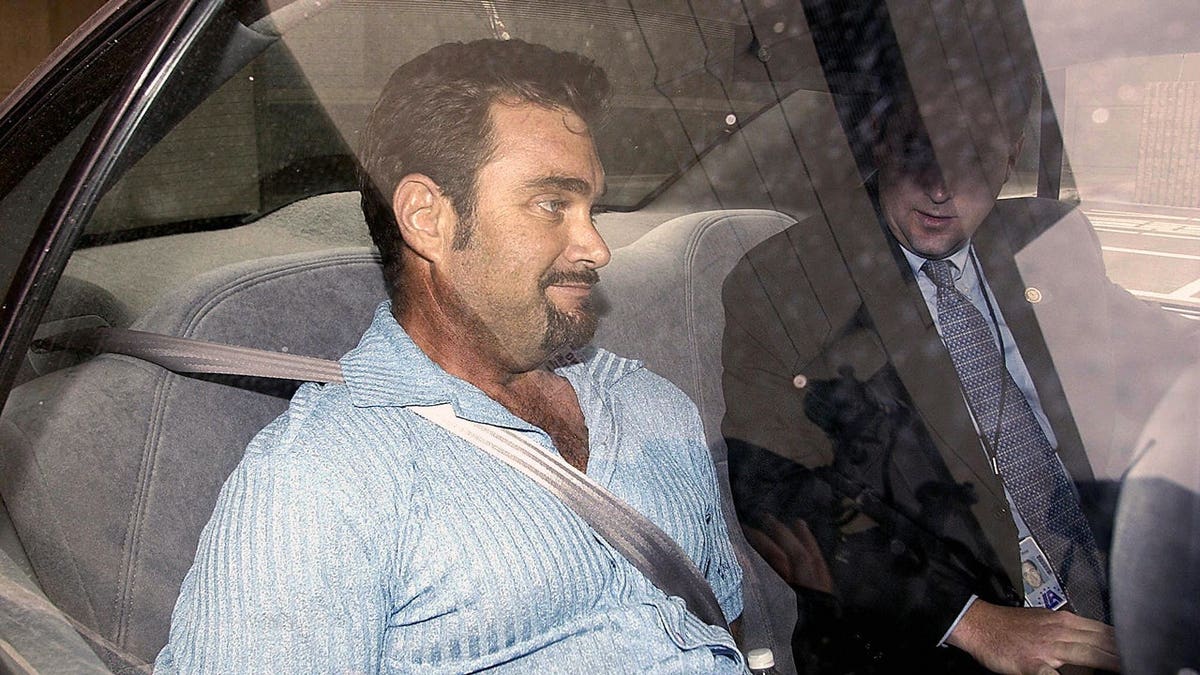
Andrew Luster sits in the back seat of a vehicle following his capture in Mexico in 2003. Luster fled the United States during his sexual assault trial before being captured by bounty hunter Duane “Dog” Chapman. (Getty Images)
“He got a couple years off with Prop 57,” Nick said, estimating that the measure shortened Luster’s time behind bars by about two years.
The Ventura County DA’s office also pointed to a 2025 change in California law that now classifies drug-facilitated sexual assaults as violent felonies, requiring offenders to serve a greater portion of their prison sentences.
Prosecutors said the change came too late to affect Luster’s sentence.
Although Luster is no longer incarcerated, he must register as a sex offender for life, will remain under parole supervision for three years and is prohibited from contacting his victims, the DA’s office said.
Nick also revealed that Luster called him from prison around the time of his release.
“He called me like the day he got out to tell me he was getting out,” Nick said, adding that Luster wanted to tell him it would be his last call from prison.
Nick said he has not heard from Luster since.
Although Nick acknowledged the seriousness of Luster’s crimes, he defended his former client’s character, saying he never considered him dangerous.
“I’ve known this person, and I’ve known a lot of serious criminals in my life too. A lot of violent criminals, a lot of deranged criminals,” Nick said.
“I’ve taken court-appointed cases in San Francisco where, you know, you get more of the street kind of element, and I can tell a dangerous criminal when I see one,” he continued. “My own personal opinion is I never found him to be dangerous. I found him to have done something that was crass and that he needed to pay a price.”
Luster’s release has sparked criticism from officials in Glendora, California, where he is reportedly residing, with local leaders raising concerns about public safety.


