

CAIRO – Senior delegations from Saudi Arabia, Pakistan and Turkey arrived in Tehran on Monday for talks with Iranian officials aimed at preventing a renewed conflict involving Iran, Israel and the United States, according to two regional officials.
The diplomatic push comes as many Iranians prepare for the possibility of a return to full-scale war. Israeli and American leaders have intensified their warnings ahead of upcoming elections in both countries, while Iran’s leadership has continued to take a defiant stance.
Saudi Defense Minister Khalid bin Salman, Pakistan’s army chief Field Marshal Asim Munir and the head of Turkey’s intelligence service were scheduled to meet Iran’s senior security officials and negotiators. Their goal was to help secure an agreement between Tehran and Washington.
The discussions also included the war in Yemen and attacks by Iranian-backed Houthi rebels against Saudi Arabia, the officials said. They spoke on condition of anonymity because they were not authorized to brief reporters.
An Iranian official, who also requested anonymity because he was not authorized to speak publicly, confirmed that the foreign delegations had arrived.
Saudi Arabia said in a statement that the delegations were seeking “ways to de-escalate tensions, enhance regional security and promote its stability.”
Concern over renewed fighting has grown ahead of Israel’s election on Tuesday and the U.S. midterm elections on Nov. 3. Iran’s Foreign Ministry spokesperson, Esmail Baghaei, said over the weekend that Tehran had not shut the door on diplomacy and that messages were still being relayed to Washington through intermediaries.
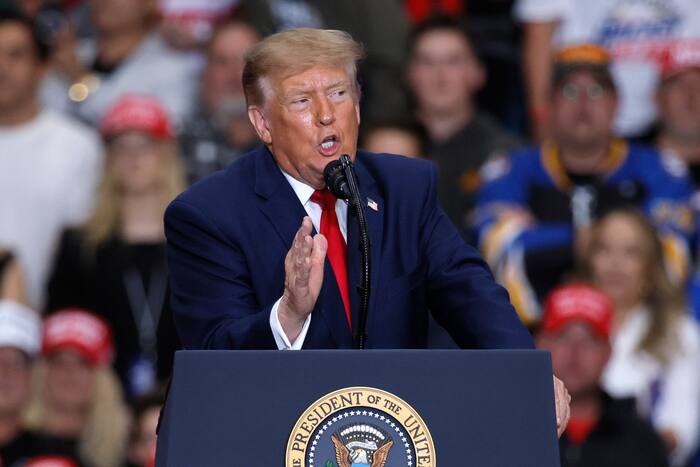
However, with negotiations stalled for some time, Baghaei said the United States appeared to be maintaining unilateral demands. He also criticized President Trump and other U.S. officials for repeatedly using the phrase “complete surrender,” saying no Iranian would accept such terms.
Israeli Prime Minister Benjamin Netanyahu repeated a warning Sunday that Iran or its proxies could launch an attack before the elections conclude in an effort to disrupt the vote. He said the warning was based on intelligence.
“The (military) is ready both to defend and to strike,” Netanyahu said in a video statement. “You will suffer disproportionate blows far greater than you can imagine,” he added.
Israel’s Channel 12 reported Sunday night that Netanyahu had clashed with the military chief of staff over an order to carry out an “action” that the army believed could rapidly reignite the conflict with Iran.
Netanyahu dismissed the Channel 12 report as nonsense during an appearance on Channel 14. The military did not immediately comment.
Yemen has emerged as an expanding front in the Iran war that began in February. The Houthis have increasingly targeted Saudi Arabia because of its support for Yemen’s internationally recognized government, which is fighting the rebels.
The fighting escalated after forces aligned with Yemen’s internationally recognized government and the Saudi-led coalition carried out airstrikes on Sanaa International Airport, which was held by the Houthis, in July. The strikes shattered a 2022 ceasefire that had largely halted the country’s civil war.
Early Monday, Houthi military spokesperson Yahya Saree said the group had launched ballistic missiles at military gatherings and weapons depots belonging to Saudi-backed government forces in Aden and Lahj provinces. He claimed the attacks destroyed military equipment and killed or wounded personnel, but provided no evidence.
The Associated Press was unable to independently verify the claims.
___
Associated Press journalists Victoria Eastwood in Cairo, Natalie Melzer in Tel Aviv, Israel, and David Rising in Bangkok contributed to this report.