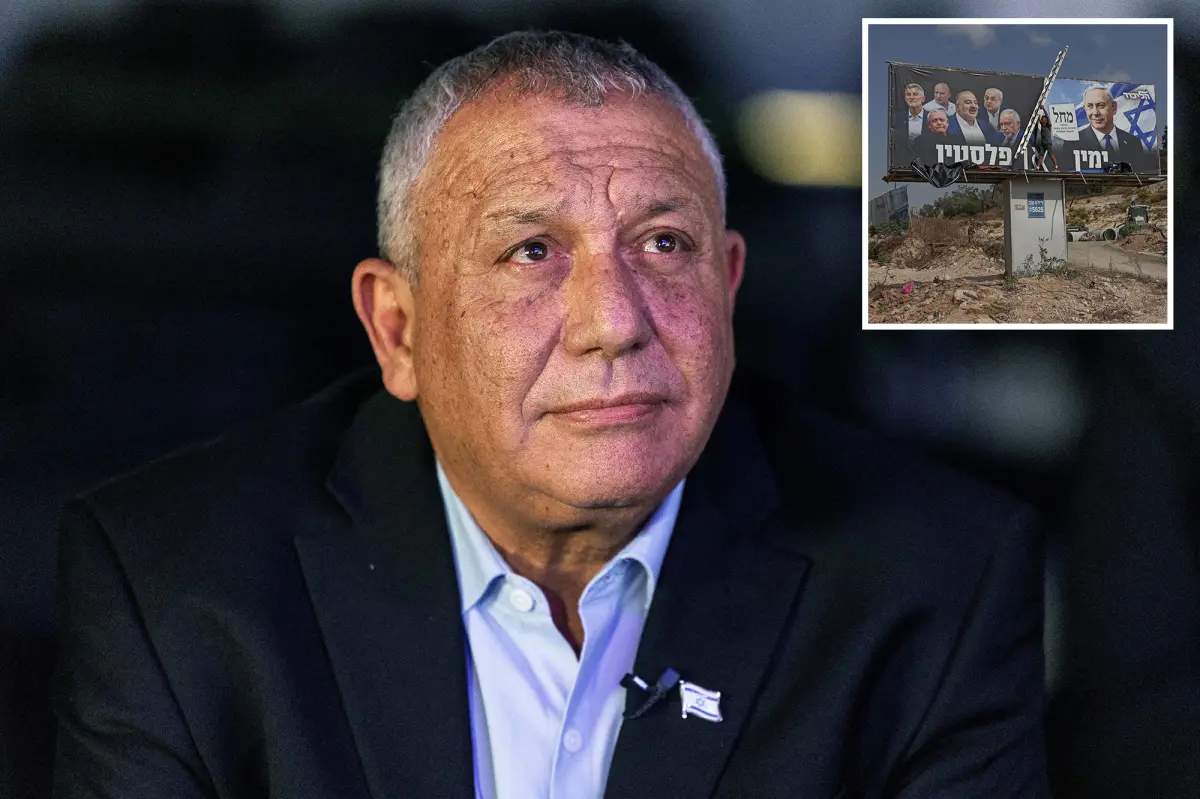

Israeli Arabs could determine the balance of power in next week’s general election, with Israel’s two leading political blocs expected to fall short of a majority in the Knesset.
Almost every poll published before Tuesday’s vote shows parties supporting Prime Minister Benjamin Netanyahu and those backing opposition leader Gadi Eisenkot winning roughly 50 of the Knesset’s 120 seats. Both blocs would therefore remain below the 61-seat threshold needed to form a government.
That result would leave both leaders seeking support from smaller parties to build a governing coalition.
A central question is whether the opposition would cooperate with the Joint Arab List and the United Arab List, which are forecast to secure at least 13 seats combined.
Eisenkot, a former chief of the Israel Defense Forces, and other opposition parties have said they will not form alliances with Arab parties.
Israel’s Arab minority, which accounts for about 20% of the population, is expected to turn out in large numbers to signal its concerns to Netanyahu and other lawmakers, said Thair Abu Ras, a researcher at the Van Leer Jerusalem Institute. He made the comments Thursday during a Brookings Institute discussion about the election.
Unlike the 5.5 million Palestinians living in the West Bank and Gaza Strip, Israel’s 2.1 million Arab citizens hold full citizenship in the Jewish state and are represented under the authority of the Knesset.
Arab parties have generally stayed outside coalition politics, in part to avoid being associated with Israeli governments responsible for policies in Gaza and the West Bank. But Abu Ras said they are now considering limited cooperation with Eisenkot’s Change coalition under an “ad-hoc cooperation” approach.
CHECK THIS OUT: Teen Accused of Killing Stepsister on Cruise Ship Gets Time to Consider Plea, but No ‘Sweet’ Deal, Expert Says
“So ad-hoc cooperation is basically to work with the Eisenkot coalition, the Change coalition, on a number of issues that they’re generally in agreement with them on,” Abu Ras explained.
Those issues could include opposing Netanyahu’s judicial reforms, which would curb the power of the country’s Supreme Court, as well as establishing term limits for lawmakers. Such limits could prevent the prime minister, who has been in and out of power since 2009, from remaining in government indefinitely.
Arab parties would also be expected to press lawmakers to confront the rise in organized crime and violence in Arab-majority communities, a problem they say has been neglected for years.
The possibility of active Arab-party participation comes after nearly every opposition lawmaker, including members of Eisenkot’s Yashar party, rejected any form of cooperation with the minority community.
Dahlia Scheindlin, a pollster and senior analyst at Haaretz, said relations between Israel’s Jewish majority and its Arab citizens reached a low point after the Oct. 7, 2023, terrorist attacks, even though Israeli Arabs were also among Hamas’ victims.
Despite his pledge, Scheindlin said she expects Eisenkot to reverse course and reach an agreement with Arab parties if he hopes to defeat Netanyahu.
“Everybody expects these parties to break their promises,” Scheindlin said, pointing to polls showing that most respondents believe Eisenkot will eventually cooperate with the Arab parties.
MORE STORY: Sam Wood’s wife Snezana Markoski ‘wanted out’ of their marriage


