
The Trump administration’s State Department has criticized a newly ratified maritime agreement between NATO member Türkiye and Libya, warning that the arrangement is heightening tensions in the eastern Mediterranean.
The Türkiye-Libya accord has drawn anger from several countries, which argue that it attempts to redraw long-established maritime boundaries in a strategically sensitive region believed to contain significant natural-gas reserves.
Libya’s eastern parliament approved the agreement in mid-October. That territory is controlled by military commander Khalifa Haftar, who has aligned himself with Türkiye. The deal does not recognize the authority of Libya’s internationally recognized government based in Tripoli, in the country’s northwest.
A U.S. State Department spokesperson told News Outlet: “The announcement of the ratification of the Turkish-Libyan delimitation memorandum of understanding has raised tensions in the region and is unhelpful and provocative — and our position on this matter has not changed.”
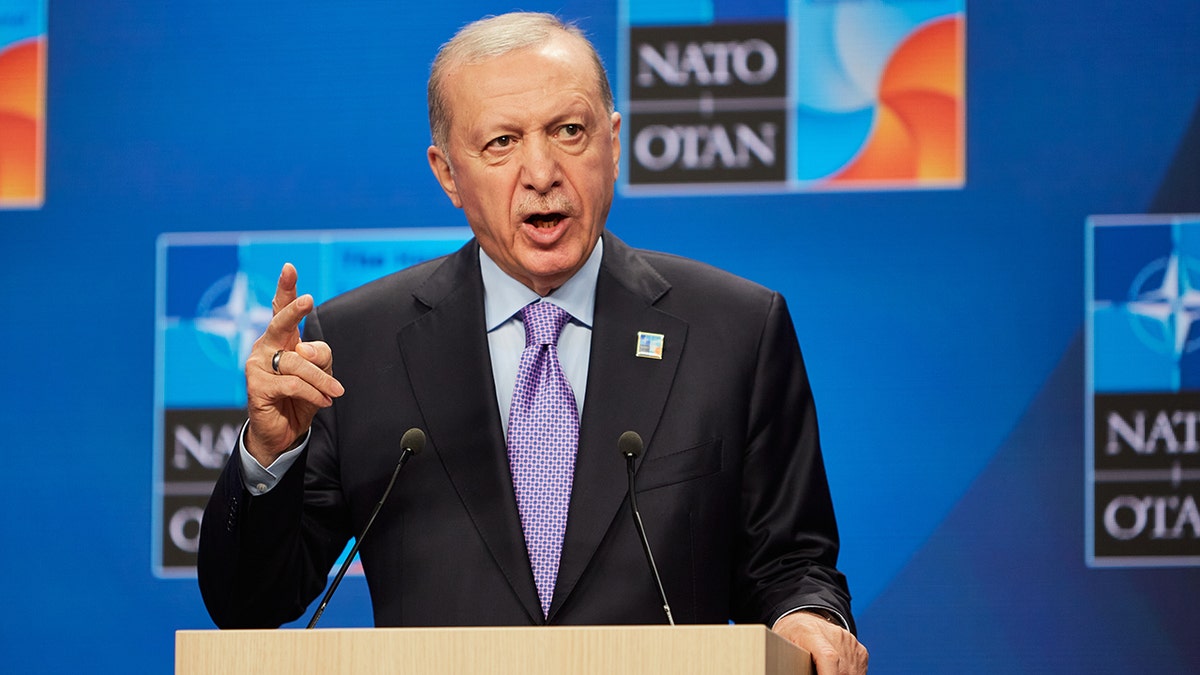
Turkish President Recep Tayyip Erdogan speaks during a press conference at the NATO summit on June 25, 2025, in The Hague, Netherlands. The gathering brought together leaders from across the alliance as members considered a new defense investment plan that would raise defense spending to 5% of GDP. (Pierre Crom/Getty Images)
The spokesperson continued: “We encourage all countries, including partners in the Eastern Mediterranean, to resolve maritime disputes through good-faith negotiations and avoid any provocative behavior. Greece and Türkiye are both NATO allies. We encourage them to engage bilaterally to address any areas of disagreement.”
The official added that a peaceful settlement of the competing claims “opens the way for commercial investment and exploration that will benefit the entire region.”
Turkish Foreign Minister Hakan Fidan said Wednesday that the maritime agreement with Libya was fully lawful and did not breach international rules, according to Turkey’s Anadolu news agency.
“This is an entirely legitimate agreement, both from a legal and a political perspective. There is no need to debate it,” Fidan said.
Reuters reported that Fidan also dismissed objections from other governments. “There are countries reacting to this. We know why they are reacting. Some are doing so because they need to, some really do have strategic problems with this issue. However, this is an entirely legitimate deal, both from a legal and a statutory perspective. There is no need to argue this.”
NETANYAHU SAYS TURKEY SHOULD NOT RECEIVE F-35S, POINTING TO ERDOĞAN’S HOSTILITY TOWARD NATO ALLIES
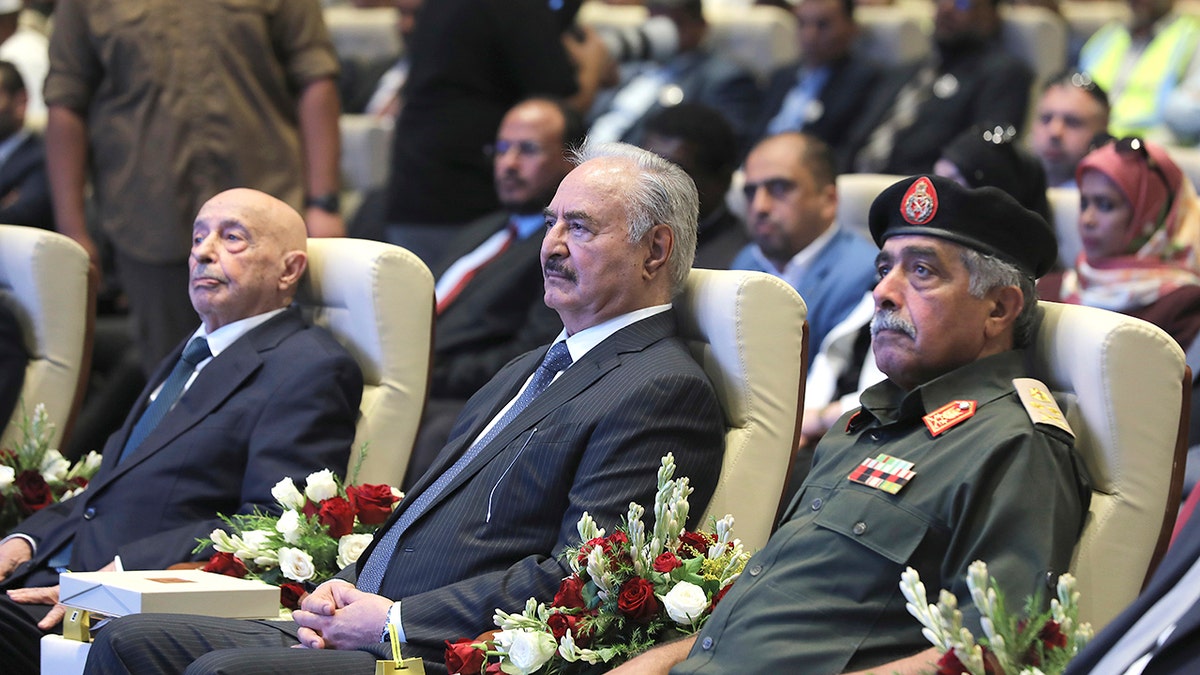
Libyan military commander Khalifa Haftar, center, attends a conference focused on the country’s development and reconstruction in September 2024. (Khaled Nasraoui/picture-alliance/dpa/AP Images)
RELATED: Trump Hosts Jungle-Themed Halloween Party at Mar-a-Lago
News Outlet contacted officials in Türkiye and Libya for comment but had not received a response by publication time.
Greek Foreign Minister George Gerapetritis rejected the agreement in a statement posted on his ministry’s website. “The memorandum will not be implemented. And it will not be implemented for the simple reason that it produces no legal effects whatsoever, as it is entirely contrary to international law,” he wrote.
Gerapetritis also accused Türkiye of using its influence in Libya to pursue its own strategic interests, while saying Turkish media outlets had intensified their criticism of Greece. “There is a constant stream of reports pushing the Turkish government to become even more aggressive,” he said.
Endy Zemenides, executive director of the Hellenic American Leadership Council, told News Outlet that the agreement poses a serious threat to the security interests of the United States and its allies.
“This memorandum specifically infringes on U.S. companies and U.S. energy policy. It effectively denies maritime rights and zones of Crete. Crete is NATO’s southernmost base. And the U.S. has been increasingly relied upon because of wars in the Mideast,” Zemenides said. He noted that U.S. energy companies Exxon and Chevron operate in the area around Crete.
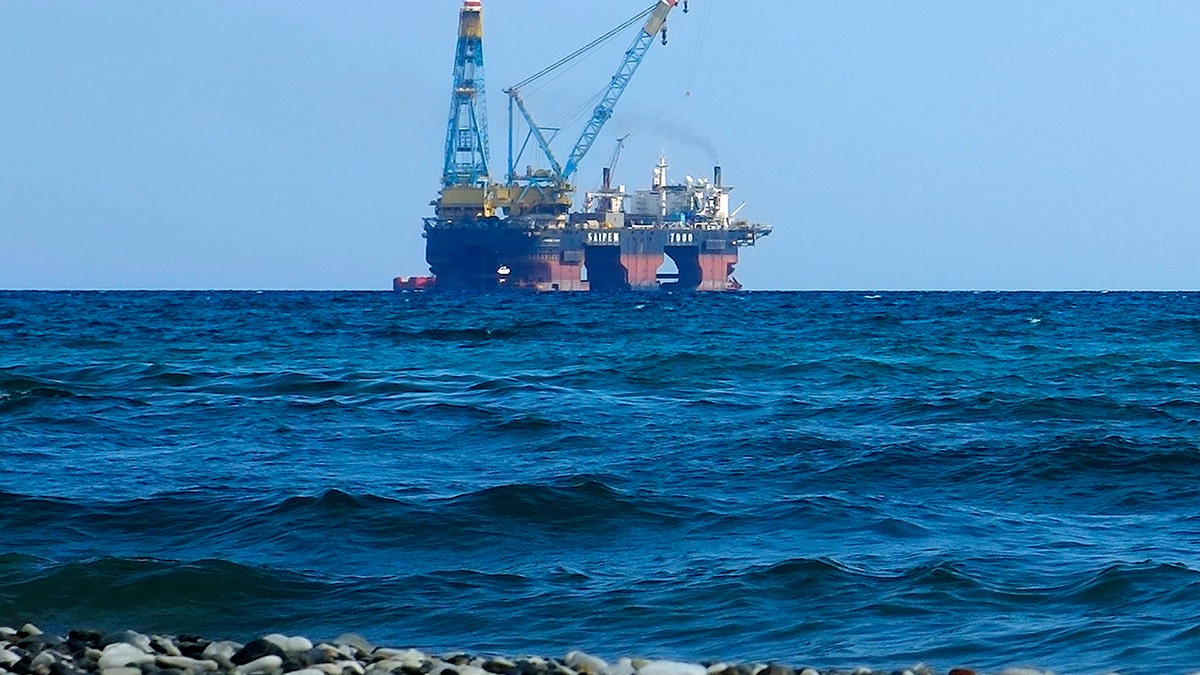
FILE – A drilling platform is pictured offshore near Larnaca port on Cyprus, an island in the eastern Mediterranean. (Petros Karadjias, File/AP)
Zemenides described the Türkiye-Libya agreement as part of an effort to push the United States out of the region. He said Washington has been unable to depend on Türkiye for roughly a decade and argued that allowing Ankara to challenge the pro-Western order does not serve American interests.
The European Union also issued an unusually forceful condemnation, saying the agreement violates international maritime law.
“The EU position regarding the MoU is firm and clear. As outlined in the European Council Conclusions of December 2019 and reiterated in June 2025, the Türkiye-Libya Memorandum of Understanding infringes upon the sovereign rights of third States and does not comply with the Law of the Sea. It is null and void and cannot produce any legal consequences for third States.”
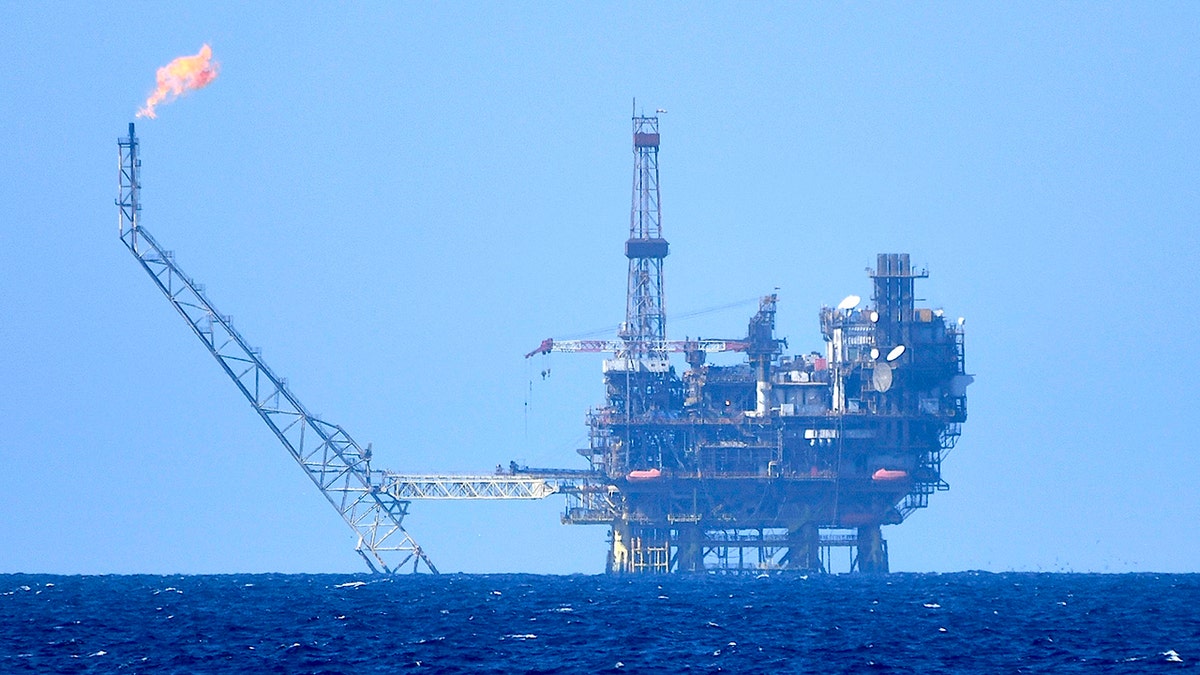
An oil and gas platform operates off Libya’s Mediterranean coast near the Bahr Essalam gas field and Bouri oil field on Feb. 25, 2022. (Europa Press via AP)
Israel also condemned the agreement. The country has strengthened a regional partnership with Greece and Cyprus, and its Foreign Ministry said on X that it “strongly condemns the decision of the Libyan House of Representatives to ratify the Maritime Jurisdiction Memorandum between Turkey and Libya.”
The ministry said the accord “infringes upon the sovereign rights of our close allies in the region.” It added: “Regretfully, once again we see Turkey working to destabilize the east Mediterranean region.”