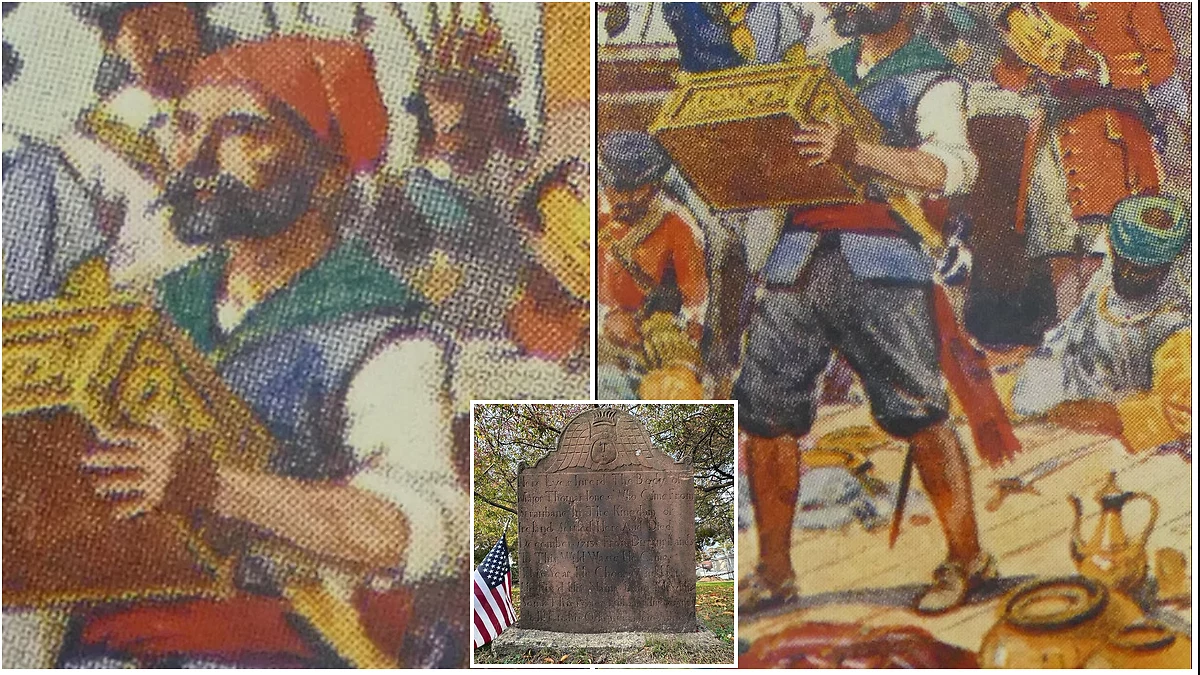

An amateur historian says he has uncovered a striking new clue in the centuries-old mystery surrounding a notorious pirate who plundered a royal Indian treasure ship—and the evidence points to a figure whose name is familiar to generations of New Yorkers.
James Bailey, who drew attention five years ago after unearthing ancient coins he believed were connected to English pirate Capt. Henry Every, now argues that colonial-era records point to Thomas Jones as a possible accomplice. Jones is the namesake of Jones Beach, New York’s most visited state park after Niagara Falls.
“You have millions of visitors and generations of New Yorkers going to this beach,” Bailey said. “Nobody knew that he was actually a major player in arguably the biggest heist in the history of piracy.”
Since making his discovery, Bailey has continued examining historical records in an effort to learn more about the bloody 1695 raid on the Ganj-i-Sawai in the Red Sea—and to determine what ultimately happened to Every.
The pirate crew reportedly tortured, killed and raped people aboard the royal vessel, provoking international outrage and prompting what is widely regarded as the first global manhunt. Some members of the crew were captured and executed, but many others—including Every—vanished. Historians believe they dispersed across Europe and the American colonies.
Lambert & Butler via Getty Images 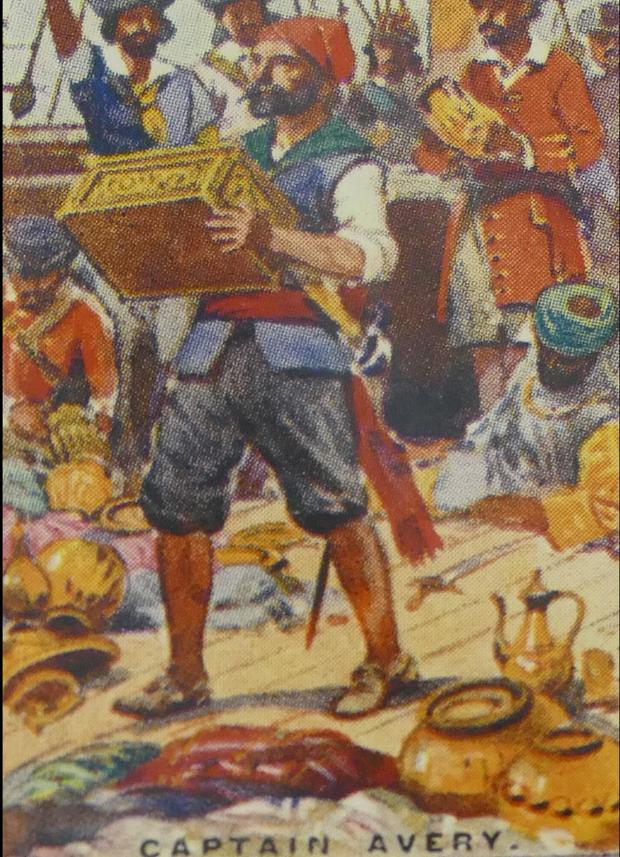
According to Bailey, depositions from Every’s associates and other documents indicate that Jones was recruited as a “wheelman”—a navigator who helped the pirates avoid capture after they escaped with gold and silver worth tens of millions of dollars.
Other records show that New York’s governor, who had been directed by the British crown to suppress piracy, investigated Jones years later. By then, Jones had reinvented himself as a wealthy whaling operator on the Long Island barrier beach that now carries his name.
Ghost stories and tall tales after Jones’ death
Bailey’s research, which he hopes to publish, expands on a troubling chapter of Jones’ past that has long been mentioned—but never fully documented—in local histories, said John Hanc, author of “Jones Beach: An Illustrated History,” which includes a chapter about Jones.
Jones had served as a major in the English military before moving to the American colonies. He first settled in Rhode Island and later became a prominent New York businessman and landowner. He controlled thousands of acres on early Long Island, then a largely rural stretch far east of the rapidly expanding city of New York.
Rumors about the origins of Jones’ wealth continued long after his death in 1713. Before his deteriorating mansion was demolished in the early 1800s, local stories claimed it was haunted by ghosts and plagued by unexplained events. His grave was repeatedly disturbed by people looking for hidden treasure before his remains were moved to a family burial plot behind a nearby church.
AP Photo/Philip Marcelo 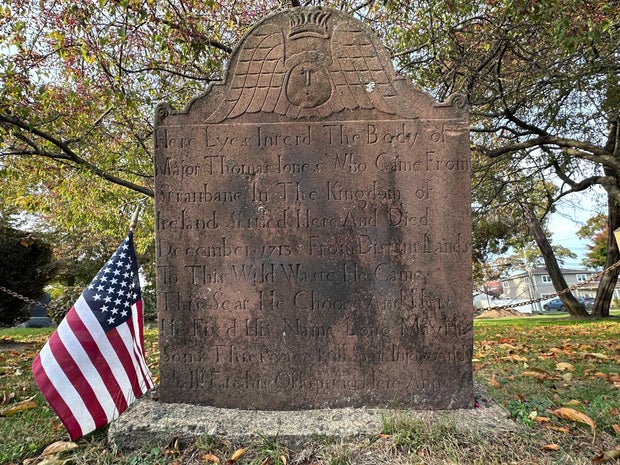
A family history published in 1906 by one of Jones’ descendants rejected the pirate stories as “slander” and “improbable fictions.”
“People were disposed to cast slurs upon his memory, either for mischievousness, or a spirit of malice,” Thomas Floyd-Jones wrote. “These myths were cherished for over a century after his death, which ignorance and superstition did not fail to magnify.”
Was Jones a privateer, a pirate or both?
Hanc and other historians say it is plausible that Jones may have crossed into piracy, at least on occasion.
CHECK THIS OUT: Dolly Parton’s Nephew Defends Sister After Museum Job Firing
After his military service, Jones worked as a privateer—a mariner authorized by the English crown to attack the commercial ships of rival nations during wartime—said Meagan Schulman, a Fordham University doctoral candidate who studies 17th-century piracy and was not involved in Bailey’s research.
When the conflict ended, however, privateers lost that official protection, Schulman said. Those who continued raiding ships on the open seas could instead be labeled pirates.
“The reality was that privateers were pirates, just sponsored by a certain government or patron,” said Schulman, who grew up visiting Jones Beach. “So maybe the short answer is, yes. Jones can be called a pirate, by some people, but he probably did not ever see himself as one.”
Documents cited by Bailey indicate that Jones returned briefly to Rhode Island after helping Every and his crew avoid capture.
Then, in 1696, Jones’ father-in-law, wealthy New Yorker Thomas Townsend, gave Jones and his wife a substantial tract of land along Long Island’s south shore, according to property records.
Bailey, who recently retired from Rhode Island’s corrections department, believes the gift gave Jones an opportunity to begin again while authorities continued searching piracy-friendly New England for Every and his associates.
Bailey says Jones established a homestead and raised a family on Long Island, but his alleged pirate connections continued to follow him.
Three years after the Ganj-i-Sawai raid, Richard Coote, New York’s colonial governor, described how an investigation into piracy had brought officials to Jones.
In a 1698 account based on witness depositions, Coote wrote that a certain “barrel of money” had been transported from the city to Long Island and delivered to Jones’ home. Jones, whom the governor identified as “formerly a pirate,” testified that he knew nothing about the barrel.
Piracy built wealth in colonial America
Bailey’s findings are intriguing but not definitive, cautioned Richard Blakemore, a maritime history professor at the University of Reading in the United Kingdom who was not involved in the research. Thomas Jones, he noted, was a relatively common name.
Still, Jones’ possible connection to Every highlights the way piracy helped generate what Kevin McDonald, a history professor at Loyola Marymount University in Los Angeles, calls “foundational and multi-generational wealth” for many influential families in the Northeast. McDonald has written a book about colonial-era piracy but was not involved in Bailey’s work.
“Popular images of pirates show them as outcasts, but many historians have argued the opposite, based on evidence like this,” Blakemore said. “It may surprise readers to find just how much early British colonies were both socially and economically connected to piracy.”