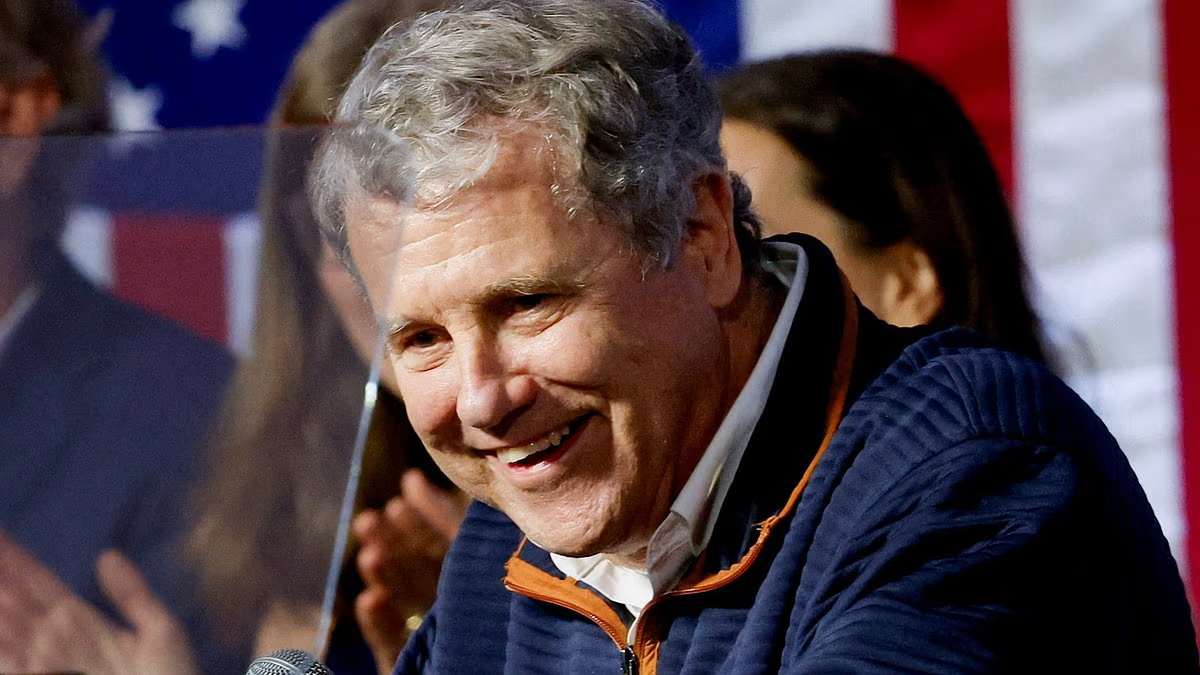

Sherrod Brown is heading back to the Senate after defeating Republican Senator Jon Husted in Ohio’s special election for the seat JD Vance vacated when he became vice president.
The Democrat led Husted 48.5 percent to 46.5 percent with 90 percent of the vote counted, according to the Associated Press.
The victory gives Democrats a major prize in their effort to reclaim the Senate. They needed to gain four seats to take control of the chamber, and Ohio was one of the Republican-held seats they had targeted.
Brown served three terms in the Senate before losing to Republican Bernie Moreno by roughly 3.5 points in 2024.
He now regains the seat Governor Mike DeWine awarded to Husted, then his lieutenant governor, after Vance left the Senate to become vice president. Brown will serve the final two years of Vance’s term.
Trump, who carried Ohio by about 11 points in 2024, endorsed Husted and held three rallies for him in October.
The contest was the most expensive race of the 2026 general election, with more than $500 million spent or reserved for advertising.
“Ohio is not for sale,” Brown declared at his victory rally, saying voters had delivered a clear message that the state belongs to its people—not to special interests.

Democrat Sherrod Brown will return to the Senate after running a forceful campaign against data centers and AI

He defeated incumbent Jon Husted, who had Trump’s endorsement but could not lead the GOP to victory
Husted delivered an emotional concession speech to supporters, telling them: “America is a great nation. You should love it, and you should fight for our founding ideals—that our rights belong fundamentally to us, not to government.”
Crypto super PAC Fairshake alone spent more than $45 million trying to defeat Brown, in what was widely viewed as a retaliatory campaign.
In 2024, Fairshake’s network spent about $40 million helping Moreno defeat Brown, who at the time chaired the Senate Banking Committee and was one of the cryptocurrency industry’s most prominent critics.
For months, Brown and his allies attacked Husted over the FirstEnergy bribery scandal, a $61 million scheme that sent former Ohio House Speaker Larry Householder to prison.
Brown’s most memorable attack described Husted as “the face of data centers in Ohio,” accusing him of directing $2.5 billion in tax incentives to the facilities.
Trump defended the industry at a rally in Vandalia and praised Husted for his unsuccessful effort to pass data-center legislation.
Brown and his allies repeatedly attacked Husted over the FirstEnergy bribery scandal, the $61 million scheme that sent former Ohio House Speaker Larry Householder to prison.
Brown’s most memorable attack labeled Husted “the face of data centers in Ohio,” accusing him of providing the facilities with $2.5 billion in tax incentives.
Trump defended the industry at his Vandalia rally and praised Husted for his failed attempt to pass data-center legislation.
Brown entered Election Day with a narrow polling advantage, holding a 3.3-point lead in the RealClearPolitics average.
Although he was campaigning as the challenger against a sitting senator, many voters viewed the race in reverse.
A Bowling Green State University poll conducted in early October found that one in four Ohio voters incorrectly believed Brown was the incumbent.

Husted replaced JD Vance as senator after Vance became vice president

Dr Amy Acton also cruised to victory over Republican rival Vivek Ramaswamy in the Ohio governor’s race
Brown will have to run again to defend the seat in two years.
It was a strong night across the board for Ohio Democrats, as gubernatorial candidate Dr Amy Acton also surged to victory over Republican rival Vivek Ramaswamy.
Ramaswamy, a close ally of JD Vance, handed Democrats a state Trump had carried by about 11 points two years earlier.
Acton led Ramaswamy 50.7 percent to 46 percent with 85 percent of the vote counted, according to the Associated Press.
Acton becomes the first woman elected governor of Ohio and the state’s first Jewish governor. Republican Nancy Hollister briefly served as governor by succession from December 1998 until early January 1999.


