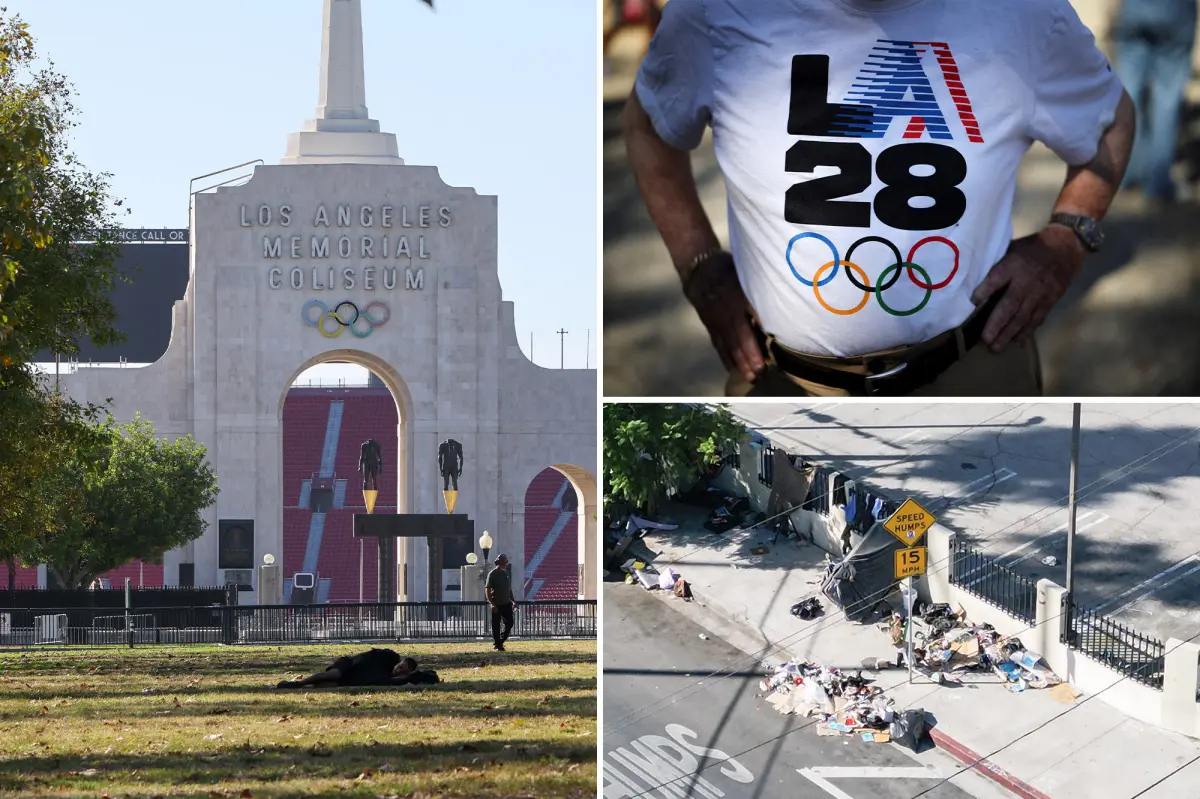

Los Angeles leaders are racing to contain the city’s homelessness crisis before the 2028 Olympic and Paralympic Games. Yet their latest proposal relies on a familiar formula: an expansive combination of government programs, taxpayer-funded housing and additional layers of bureaucracy.
As Los Angeles prepares to welcome visitors from around the world, City Hall is facing mounting pressure to address a homelessness crisis that has continued to worsen, even as the Trump administration reports a historic nationwide decline.
Los Angeles County recorded an estimated 73,040 homeless residents in 2026, a 1.2% increase, while the city’s homeless population rose 3.4% to 45,194, according to the Los Angeles Homeless Services Authority.
The Los Angeles City Council voted Friday to move forward with a homelessness strategy centered on government outreach, housing placements and expanded subsidies ahead of the Olympic and Paralympic Games.
The motion, introduced by Council President Marqueece Harris-Dawson, gives city officials 90 days to develop a plan for addressing encampments near Olympic venues, transit hubs and major thoroughfares.
Officials are also required to outline outreach deadlines, expected response levels and strategies for increasing the number of housing placements.
SEE ALSO: Internet Star The Woke Ginger Loses Bid to Sue Former Employers
Rather than directing a straightforward cleanup before Los Angeles takes the international stage, City Hall is adopting a familiar progressive approach: expanding government programs, increasing spending and adding more coordination among agencies.
The latest administrative push comes as projections indicate that the 2028 Olympic and Paralympic Games could produce more than $40 billion in economic output across the Greater Los Angeles area and support up to 224,000 jobs, according to a recent analysis prepared for the LA28 Organizing Committee.
Councilwoman Ysabel Jurado, a member of the Democratic Socialists of America who chairs the Health and Homelessness Committee, underscored the council’s priorities.
“Instead of pushing unhoused neighbors to the wayside outside of public view, we can start taking meaningful, proactive measures to confront the crisis with newfound urgency, accountability and coordination,” Jurado said.
The proposal calls on officials to investigate funding from state encampment-resolution programs, philanthropic donations, Measure ULA, LACAHSA and other government sources. It also recommends examining expanded housing subsidies and bringing uninhabitable units up to code so they can be used more quickly for housing placements.