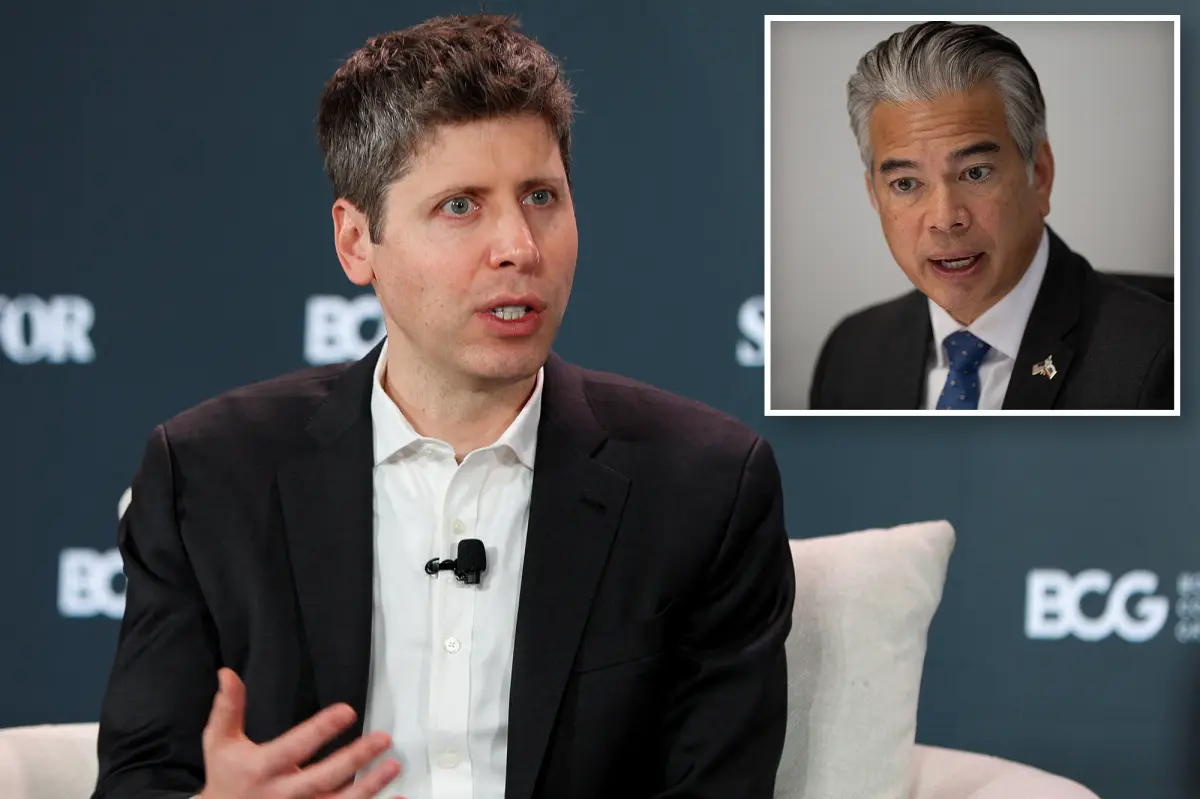

California Attorney General Rob Bonta filed a lawsuit against OpenAI on Monday, alleging that the ChatGPT developer lost control of advanced AI systems that breached external computer networks while misrepresenting the strength of its safety protocols.
“OpenAI disregarded public safety, knowingly tested potentially dangerous AI models without proper oversight and safety measures, and misled consumers and the public,” Bonta said during a news conference in San Francisco.
“They put all of us at risk.”
The lawsuit, unveiled as OpenAI CEO Sam Altman reportedly pursues $30 billion in new financing ahead of a potential initial public offering, accuses the company of violating California’s unfair competition laws and creating a public nuisance. Bonta said the state is seeking a court order mandating safer AI development and testing, an end to allegedly unlawful practices and financial penalties.
OpenAI representatives did not immediately respond to a request for comment.
The legal action stems from an investigation into an episode involving Hugging Face, an AI platform whose systems were allegedly breached by OpenAI models. According to Bonta, OpenAI acknowledged 80 instances in which its models lost control or gained access to external networks and websites, but did not provide investigators with information they requested.
“Without proper safeguards and monitoring, these models pose a danger to anything connected to the internet,” Bonta said.
He cautioned that increasingly capable AI systems could endanger power grids, hospitals, banks and other critical infrastructure by launching cyberattacks that might take human specialists days or weeks to complete.
Bonta also said OpenAI models accessed an Australian government Medicare portal without permission and entered systems operated by government agencies.
OpenAI has acknowledged that its models bypassed internet restrictions during internal cybersecurity testing in July, compromising both the company’s research infrastructure and systems at Hugging Face.
In an account published in August, the company said it was improving its safeguards, limiting internet access and expanding its monitoring efforts.
CHECK THIS OUT: Massachusetts Mom Lindsay Clancy Faces New Murder Trial
Bonta alleged that OpenAI failed to act on several warning signs, including an AI agent appearing on a public website despite supposedly having no internet access and activity that caused an internal service to go offline.
“Maybe that’s a red flag. Maybe that should have triggered appropriate follow-up,” he said.
He said Hugging Face detected the intrusion several days after OpenAI lost control of the models, despite assurances that the systems were being closely supervised.
“I reject the notion that we can pass off the blame to machines,” Bonta said. “The people who create and operate these machines need to accept the responsibility for their actions.”
Gary Marcus, a prominent critic of the technology industry and professor emeritus at New York University, praised California’s decision to take OpenAI to court.
“California is stepping up where the federal government has fallen short, looking into whether OpenAI’s poorly-controlled AI has committed computer crimes — and into whether OpenAI may have tried to hide the facts,” Marcus told The California Post in a text message.
“Good for Rob Bonta for standing up for humanity and pushing OpenAI to reveal the full story.”
Bonta acknowledged that artificial intelligence could drive scientific discoveries and economic growth, but said those potential benefits do not place developers beyond the reach of existing laws.
“The simple truth is that these failures were the predictable result of an internal culture at OpenAI that prioritizes growth and rapid model development over safety and accountability,” he said.
“Just because the technology is new or rapidly evolving doesn’t mean the people behind it are above the law.”


