
For thousands of Iowa residents, Thanksgiving began with windows shut, children kept inside and uncertainty hanging over what may have settled outdoors.
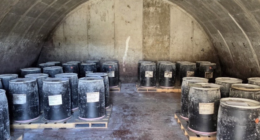
At 9 a.m. local time Wednesday, nearly 10,000 pounds of aging explosives—stored in 68 barrels—were destroyed at the Iowa Army Ammunition Plant near Middletown. The controlled blast sent thick smoke into the sky, while residents were told to remain indoors for as long as 48 hours, potentially extending the precautions through the holiday.
The central concern is what the Army operation may leave behind: toxic lead particles capable of traveling miles, landing on everyday surfaces and lingering well after the visible smoke disappears.
Homes, gardens, farms and playgrounds could collect lead dust, creating a risk that people might inhale the particles or unknowingly ingest contaminated soil and debris.
Patrick O’Shaughnessy, a public health professor at the University of Iowa, estimated that the plume could move 40 to 50 miles southwest, potentially reaching Missouri.
Andrew Nelson, director of the Army’s Construction Engineering Research Laboratory, said a fallout map highlights the areas nearest the plant where lead deposits could surpass indoor window-cleaning standards.
A second area, stretching several miles from the facility, identifies locations where deposits could exceed the clearance levels used for household floors.
In a statement issued Tuesday, the Army warned: “Deposition of lead-containing dust may occur after the detonation… all people, but especially infants, children, pregnant women, adults and children with chronic diseases such as heart disease, kidney disease, or dementia, should avoid outdoor activities within affected areas until further guidance.”

An emergency alert urged people living five to 20 miles from the Iowa Army Ammunition Plant in Middletown (pictured) to stay indoors and keep windows closed during Wednesday’s detonation

Smoke billowed from the site after the Army carried out the controlled explosion
Tony Abate, an indoor air-quality specialist, told Our News Outlet: “Lead is a highly toxic heavy metal. Inhaling airborne particles or ingesting dust deposited on soil, playgrounds, homes, vehicles and other surfaces can expose residents to a dangerous contaminant.
“Children and pregnant women are particularly vulnerable. Even relatively low levels of exposure can contribute to long-term health problems.”
At high enough exposure levels, lead can permanently harm a child’s developing brain, potentially causing learning difficulties, lower intelligence and behavioral changes. Exposure can also contribute to miscarriages.
The risk may continue after the initial plume has dispersed because lead that reaches the ground does not naturally break down.
“The consequences could also extend well beyond the immediate blast,” Abate said. “Unlike many airborne pollutants, lead does not disappear. It can persist in soil, accumulate in the environment, contaminate surface dust and potentially enter waterways and the food chain, posing risks to wildlife, livestock and pets. It’s unclear how far it could travel.”
The Army confirmed late Monday that it would go ahead with the controlled destruction of 68 barrels of lead azide at the southeastern Iowa facility, saying the plan had received “unanimous” support from the federal agencies involved.
A federal appeals court lifted a temporary stay earlier Monday, allowing the operation to proceed after officials said the unstable explosives were too dangerous to transport.
Maj. Gen. Eric Shirley said at a Tuesday news conference that “inaction is no longer an option,” adding that military specialists had repeatedly rehearsed the procedure.
The explosives were destroyed inside reinforced-concrete bunkers enclosed by sand barriers approximately two stories tall.
Officials installed a “water wall,” gel blocks and water-based foam to trap particles and absorb heat. Misters were also used to wet the surrounding soil before and during the blast in an effort to reduce airborne lead dust.

Military personnel prepared the Iowa detonation while working to contain and minimize the blast’s impact

The Army announced late Monday that it would destroy 68 barrels of lead azide at the Iowa Army Ammunition Plant near Middletown after receiving “unanimous” backing from the federal agencies involved
Even so, lead that lands on toys, patio furniture, door handles or soil could be carried indoors on shoes and personal belongings. Children could also ingest it by touching contaminated surfaces and then putting their hands in their mouths.
Dr. Lyle D. Burgoon, chief executive of Raptor Pharm & Tox, a firm that evaluates health and safety risks linked to drugs, chemicals and consumer products, told Our News Outlet: “Children can be exposed after the plume has passed.
“The best advice is to wash off all surfaces, including driveways, pavement, sidewalks, picnic tables and play equipment once the plume has passed.”
Burgoon said much of the dust would settle into the soil, where it would be less likely to be accidentally swallowed.
Grass and other vegetation can help keep the material in place, reducing the risk that it will become airborne again compared with bare, dry ground.
Lead exposure can also raise blood pressure and damage the kidneys in adults. The metal may build up in bones and remain in the body for years.

Residents prepared for the explosion as concerns grew that toxic dust could remain through Thanksgiving

Acting Army Secretary Adam Telle approved the detonation Monday evening after federal courts cleared the operation to proceed

Officials and residents remain concerned about how much lead could enter the soil and how long it may remain there after Wednesday’s blast
Helen Christoni, an environmental and wellness specialist who focuses on reducing toxic exposures in homes, air and water, told Our News Outlet: “What’s particularly concerning about lead exposure is that we don’t always know when it’s happening.
“Someone can have elevated blood lead levels without experiencing any obvious symptoms. Symptoms to watch for include persistent headaches, unusual tiredness, nausea, abdominal pain and difficulty concentrating.
“Anyone experiencing trouble breathing, severe abdominal pain, confusion or seizures should receive immediate medical attention.”
CONTINUE READING: Unveiled: The Real Story Behind the Disappearance of the Boy Scout
Experts said staying indoors or moving away from the plume should lower the immediate risk of inhaling airborne particles, but warned that longer-term concerns would depend on where the dust settles.
“Staying indoors for up to 48 hours provides a lot of protection,” Burgoon said. “The plume should dissipate by then. I would expect air levels to return to normal background lead levels in that time.
“Once people reopen their windows or return home, I would not expect there to be any additional risks.”
O’Shaughnessy told Iowa Public Radio that the plume could pass over a particular location in 15 minutes or take more than an hour, depending on wind conditions. Airborne contamination may not be visible.
For households located downwind, outdoor areas may need to be cleaned or avoided after officials announce that the airborne exposure period has ended.
“Any surfaces typically touched by children are going to be a concern, and playgrounds especially,” O’Shaughnessy said.
The Poison Control Center recommends cleaning potentially affected toys, windowsills and playground equipment with soap and water. Residents should avoid dry sweeping, which could send settled particles back into the air.
University of Iowa researchers noted that washing contaminated items moves lead into the ground rather than removing it entirely.
They nevertheless recommend cleaning surfaces to limit direct contact, washing hands frequently and taking off shoes before entering a home.

Experts have repeatedly warned that children may face the greatest danger from the lead-containing plume
Parents have also been advised to keep children away from bare soil, mulch and wood chips until environmental testing is complete. Garden produce should be washed thoroughly.
In areas expected to receive the highest lead deposits, Burgoon said the principal concern would be possible effects on brain and nervous-system development in very young children.
Christoni recommended creating a “safe room” at home, saying: “This is something I frequently recommend during outdoor air quality events.
“Choose a room where your family can spend most of its time, preferably one with fewer windows and exterior doors, and operate a high-quality air purifier continuously.”
Middletown residents and people inside the recommended evacuation zone southwest of the plant have been urged to leave temporarily.
The Federal Emergency Management Agency is providing transportation, meals, essential supplies and hotel rooms through Friday, ensuring support remains available over Thanksgiving.
The Army said accommodation would be available through Friday, November 27.
Evacuees will be notified when authorities issue the all-clear and do not have to remain away until Friday if officials lift the warning sooner.
People sheltering at home should close all windows and doors, reduce outdoor air intake and select recirculation settings on heating or cooling systems when possible.
The Army’s latest guidance says heating systems may remain on while recirculating indoor air, but fans that draw air from outside should be turned off.
Farmers face additional challenges involving livestock, animal feed and water supplies, much of which may be difficult to shield from falling dust.
Iowa agriculture officials advised farmers to move cattle, feed and equipment indoors or to alternate locations whenever possible.
Researchers have offered some reassurance regarding regional water supplies.

The controlled explosions were intended to destroy unstable lead azide stockpiles at the Iowa Army Ammunition Plant
Drew Latta, a researcher with the University of Iowa’s Center for Health Effects of Environmental Contamination, said soil should limit the amount of lead reaching groundwater by trapping much of it near the surface.
David Cwiertny, the center’s director, said he did not expect the deposition to substantially alter lead levels in a nearby body of water as large as the Mississippi River.
Researchers are taking baseline soil samples, operating air monitors and particle filters, and planning additional testing after the blast to determine what changed.
Peter Thorne, an environmental health professor at the University of Iowa, said there had not been enough time to arrange a formal comparison of residents’ blood lead levels before and after the detonation.
The Poison Control Center advises residents with concerns to speak with a healthcare provider about blood testing. People who have no symptoms do not need emergency treatment.
The Army said the lead azide had recrystallized during decades in storage, making it too sensitive to transport safely and increasingly vulnerable to an accidental explosion as temperatures dropped.
The containment strategy included reinforced concrete bunkers, two-story sand berms, a water wall, gel blocks, foam and misters designed to reduce the number of particles escaping into the surrounding area.
Forecast maps will be revised as weather conditions shift, but sampling will be required to determine precisely where lead landed and the concentrations present.
The Army has said results from post-detonation testing will be released when available, leaving residents waiting for clearer evidence about the condition of their homes, land and surrounding communities.