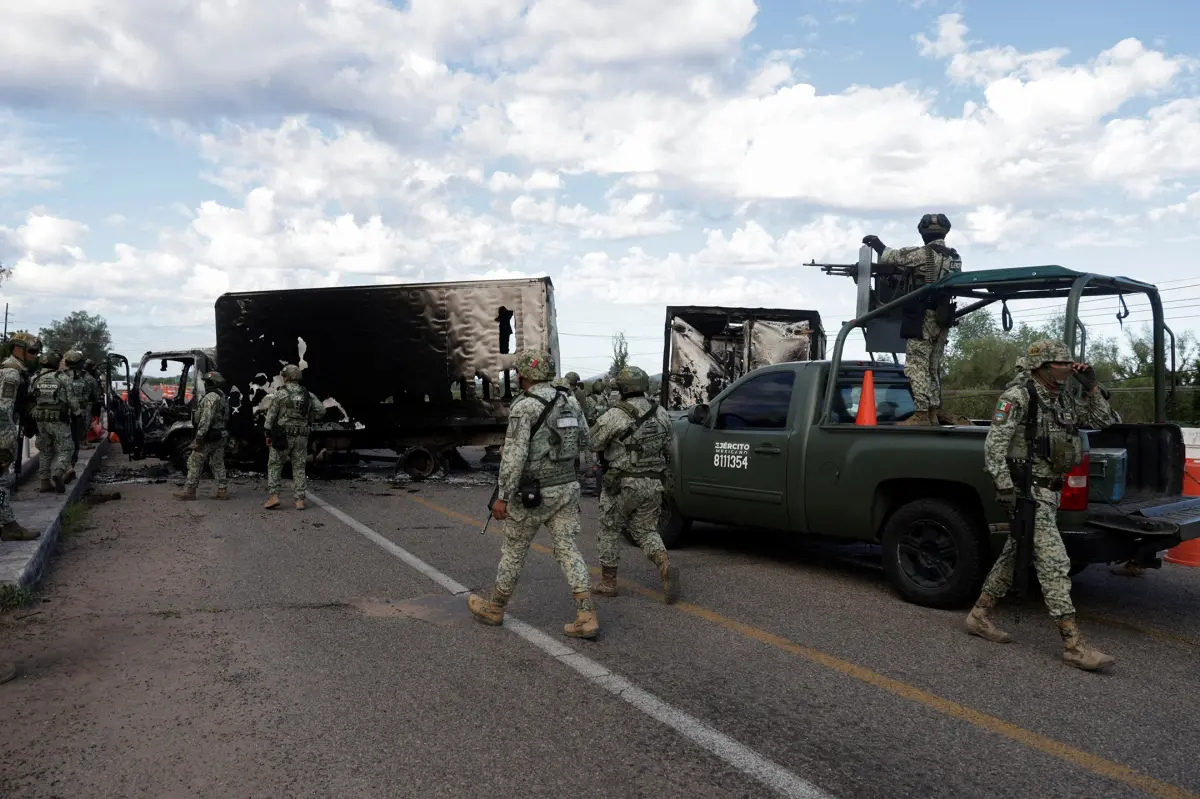

Sinaloa, Mexico — Burning vehicles, cartel roadblocks and frightened residents taking refuge inside shopping malls captured the chaos surrounding the fall of one of Mexico’s most powerful drug traffickers on Nov. 20.
Mexican special forces arrested Fausto Isidro Meza Flores, better known as “El Chapo Isidro,” at his stronghold in Guasave, Sinaloa. The operation ended years of evasion on both sides of the US-Mexico border. The notorious trafficker, who carried a $5 million bounty, allegedly ran a lucrative criminal network that smuggled tons of cocaine, heroin and methamphetamine into the United States. Four Mexican soldiers and 16 suspected cartel members died in the ensuing violence.
Yet the operation signifies more than the capture of another Mexican drug lord. It offers evidence of a fundamental change in Mexico’s approach to organized crime since the start of the year.
Former President Andrés Manuel López Obrador pursued a policy toward cartels summed up as “hugs, not bullets.” President Claudia Sheinbaum and her security chief, Omar García Harfuch, have instead embraced a more aggressive, intelligence-led campaign against criminal organizations, with close cooperation from the United States.
Sheinbaum’s administration has prioritized intelligence collection, coordination among agencies and targeted military raids. Authorities are also looking beyond cartel figureheads, pursuing financial operatives, supply chains, criminal infrastructure and senior lieutenants.
The shift came amid pressure from President Trump, who has made the fight against cartels a defining issue of his second term and has used the threat of tariffs and unilateral US military action to press Mexico.
Only hours before El Chapo Isidro was captured, Trump repeated his claim that “the cartels are controlling Mexico.” Supported by US intelligence, the operation demonstrates how pressure from Washington and cross-border cooperation are increasingly influencing Mexico’s campaign against organized crime.
Earlier this year, a source told me that Washington sends Mexican authorities a monthly list of fugitives it expects them to pursue through coordinated intelligence operations. The arrangement allows Mexico to respond to US security demands while helping prevent direct American military intervention.
Mexico’s intensified cartel crackdown and renewed use of the kingpin strategy have led to some of the most significant criminal leadership takedowns in the country’s recent history.
In February, Mexican forces killed Nemesio Oseguera Cervantes, known as “El Mencho,” the longtime leader of the feared Jalisco New Generation Cartel, or CJNG.
Later operations captured other senior CJNG figures, including Audias Flores, known as “El Jardinero,” along with several influential commanders.
Mexican Defense Secretary Ricardo Trevilla said Monday that Meza Flores’ capture followed three months of intelligence sharing with US authorities. The cooperation included surveillance flights by US drones over Mexican territory at Mexico’s request.
That partnership has become central to Mexico’s security campaign. By the government’s own measurements, the offensive is delivering notable results.
Federal data released in early November showed that Mexico’s average daily homicide rate fell by 50% between September 2024 and October 2026, declining from roughly 87 killings a day to 43.
EXPLORE MORE: Young North Atlantic Right Whale Navigates Hundreds of Ships Along Migration Route
Those numbers, however, reveal only part of the reality.
Disappearances, extortion, forced recruitment by cartels and the territorial power wielded by criminal groups remain severe problems. National homicide figures can also conceal localized surges of extraordinary violence.
That contradiction is especially stark in Sinaloa.
The removal of Sinaloa Cartel co-founder Ismael “El Mayo” Zambada in July 2024 triggered a brutal internal conflict between his followers and Los Chapitos, the faction led by the sons of Joaquín “El Chapo” Guzmán.
For more than two years, the fighting has devastated communities throughout the state.
Public killings, gun battles and cartel roadblocks have become routine. This summer, around the second anniversary of El Mayo’s capture, I traveled to Culiacán and nearby municipalities. Within two hours of reaching the state capital, I had visited four separate murder scenes.
“There is still an enormous amount to do, many people to arrest and laboratories to destroy,” Harfuch said in June, while presenting the administration’s record of high-profile cartel arrests.
Sheinbaum acknowledged in late October that homicides in Sinaloa had risen in recent months, even as killings declined nationally.
Mexico is intimately familiar with the danger posed by a renewed offensive: removing powerful criminal leaders can splinter organizations, ignite succession struggles and create openings for rival cartels to expand.
“I hate the cartels, but I think we’d all prefer keeping the leaders in power. It stops the violence. I wish I had a better answer, but they keep it organized, and life feels normal,” a Culiacán resident said outside a crime scene.
Criminal organizations have repeatedly shown that they can withstand the death or imprisonment of their leaders, particularly when their financial systems, recruitment networks and political protection remain in place.
“There were authorities who allowed themselves to be corrupted and others who, simply through omission, allowed them to continue causing harm for many years,” Harfuch said at the presidential press conference following the operation.
For ordinary Mexicans, success will not be defined by images of captured kingpins. It will be measured by whether people can reopen their businesses, trust elected officials to protect them, send their children to school and travel the country’s highways without fear.
Katarina Szulc is the host of the podcast Borderland: Dispatches.


