
In the early 2000s, Robert Pera appeared to have landed the kind of job many young engineers would envy. He was working at Apple, admired Steve Jobs and believed the role could eventually put him on a path toward helping shape the company’s future products.
The day-to-day reality was far less glamorous. Pera earned $65,000 a year and spent his time testing Wi-Fi equipment.
Still, he remained determined to climb inside one of the world’s most admired technology companies. Unfortunately for Pera, Apple’s leadership did not seem to share his vision for where his career should go.
Even though he arrived early, worked late and pushed hard for bigger opportunities, Pera received a 2 out of 5 on his first annual performance review.
Then, during compliance testing of Apple’s wireless equipment for Federal Communications Commission rules, Pera spotted a technical detail that would ultimately alter the course of his life.
He realized the radios were running well below the power levels allowed by the FCC. Pera believed that boosting the output could significantly expand their range, but when he suggested the idea within Apple, the company showed little interest. So he began testing the concept on his own.
About two decades later, those after-hours experiments had grown into Ubiquiti, a company valued at nearly $34 billion. Pera owns roughly 93% of the business, controls the Memphis Grizzlies and has a net worth of $33 billion.

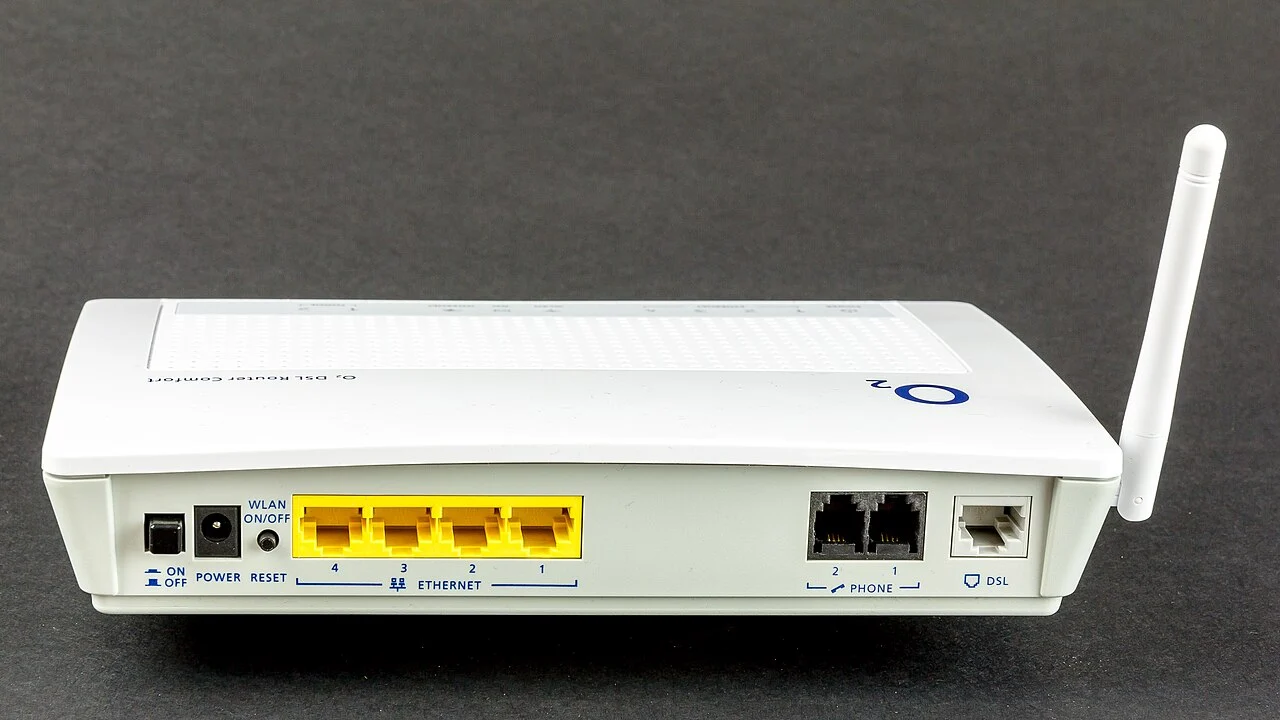
Photo by Raimond Spekking / Wikimedia Commons (CC BY-SA 4.0)
A 2-Out-Of-5 Review At Apple
Pera joined Apple after graduating from the University of California, San Diego, where he studied electrical engineering and Japanese before earning a master’s degree in electrical engineering. He wanted to build products, but instead landed in Apple’s wireless group testing Wi-Fi hardware.
The assignment may have frustrated him, but it gave Pera an unusual view into the technology. While testing Apple’s equipment, he realized wireless signals could potentially be pushed much farther than the products he was evaluating. He also discovered that people in rural and underserved areas were already modifying conventional Wi-Fi equipment with amplifiers and antennas to transmit internet signals over long distances.
Pera saw a market Apple apparently wasn’t interested in pursuing: inexpensive wireless equipment capable of bringing broadband to places where traditional cable and telephone infrastructure didn’t reach. For roughly a year, he worked on prototypes at night and on weekends while remaining at Apple.
The final irony came shortly before he left. At his next performance review, Apple upgraded Pera from a 2 out of 5 to a 4 out of 5 and gave him a raise. His manager told him, “You’re finally finding your stride.”
Pera had already decided to quit.
$30,000, Credit Cards And A $650 Office
In 2005, Pera launched Ubiquiti with roughly $30,000 derived from his own savings, Apple stock options and credit-card debt. He built prototypes, created a website and began looking for customers who needed inexpensive long-range wireless equipment.
One of the cleverest parts of Ubiquiti’s early growth was that Pera effectively persuaded customers to finance the company. He developed an embedded radio product but didn’t have enough money to manufacture it in quantity. Instead of raising a conventional venture-capital round, he found customers willing to pay in advance, then used their money to arrange manufacturing in Taiwan.
Pera was also minimizing his own expenses. When the lease on his roughly $600-a-month apartment came up, he didn’t rent another apartment. He moved into a $650-a-month office across from the San Jose courthouse, in an area surrounded by bail-bond businesses, and lived there for several months while trying to get Ubiquiti off the ground.
He later recalled his mindset at the time in fairly simple terms: if the company didn’t work, he was screwed.
It worked.
Ubiquiti began selling powerful, inexpensive radio equipment to wireless internet service providers and eventually expanded into antennas, access points, routers, switches, security cameras and large-scale networking systems. Unlike many Silicon Valley startups, the company grew for years without relying on traditional venture capital.
Five Years Later, An $84 Million Payday
The speed with which Pera went from struggling entrepreneur to extremely wealthy founder is one of the most remarkable parts of the story. In March 2010, Ubiquiti completed a financing transaction involving Summit Partners. As part of the deal, the company repurchased 28,447,230 shares directly from Pera for $2.95 per share.
Pera received approximately $83.9 million while still owning the overwhelming majority of Ubiquiti.
The company went public in October 2011 at $15 per share. After the IPO, Pera still owned approximately 57.8 million shares, representing more than 64% of the company. At the IPO price alone, his stake was worth roughly $867 million.
As Ubiquiti’s stock climbed, Pera became a billionaire.
He Never Really Sold
Lots of technology founders become extremely wealthy by starting companies and eventually selling most of their stock. Pera took a very different path: he kept control.
Over the years, Ubiquiti repurchased large amounts of stock while Pera held onto nearly all of his shares, causing his ownership percentage to increase dramatically. According to the company’s latest proxy statement, Pera owns 56,278,181 shares, representing roughly 93% of Ubiquiti.
With Ubiquiti trading around $559 per share following its latest earnings report, the entire company is valued at approximately $34 billion. At that price, Pera’s stake alone is worth roughly $31.5 billion.
The underlying business is still growing. For fiscal 2026, Ubiquiti generated a record $3.274 billion in revenue, up more than 27% from the previous year, along with roughly $960 million in net income.
Pera also has one of the stranger CEO compensation arrangements in corporate America. He reduced his Ubiquiti salary to $0 in 2013 and has continued operating without a conventional CEO paycheck. Considering his enormous equity stake, a salary is basically irrelevant.
Dividends are another matter. Ubiquiti recently declared a $1-per-share quarterly dividend. With 56.3 million shares, Pera is entitled to roughly $56.3 million from a single quarterly dividend. If Ubiquiti maintains dividends at that level for four quarters, Pera would receive more than $225 million a year while technically earning a salary of zero.
One $56 million quarterly dividend is equivalent to more than 860 years of his old $65,000 Apple salary.
Then He Bought The Memphis Grizzlies
Becoming a billionaire allowed Pera to pursue another lifelong interest: basketball. In 2012, an ownership group led by Pera purchased the Memphis Grizzlies for $377 million.
The ownership agreement included an unusual provision involving two major minority investors, Steve Kaplan and Daniel Straus. After a specified period, they could name a valuation for the Grizzlies. Pera would then essentially have to choose whether to sell his stake at that valuation or buy theirs at the same price.
Eventually, they pulled the trigger and valued the Grizzlies at roughly $1.3 billion. Pera chose to buy.
He acquired their combined 28% stake and cemented his control of the franchise. That decision turned out extremely well. The Grizzlies are now worth roughly $4 billion, meaning Pera’s controlling stake alone is worth billions of dollars on a simple pro-rata basis.
The Ultimate Vindication
There is a tendency to romanticize stories about entrepreneurs whose employers supposedly “rejected” their billion-dollar ideas, and Pera’s story deserves a little more nuance. Apple did not reject Ubiquiti, and Pera did not walk into his manager’s office carrying a complete blueprint for a $34 billion company.
What happened is arguably more interesting.
A young engineer making $65,000 noticed something important while doing a job he considered beneath his abilities. He thought Apple’s Wi-Fi hardware could transmit farther, but his bosses weren’t interested in pursuing the idea. Pera then studied how people outside Apple were using similar technology and recognized an underserved global market for inexpensive long-range wireless equipment.
So he spent nights and weekends building something himself.
Apple initially rated his performance a 2 out of 5 and told him to slow down. Five years after leaving, he cashed out nearly $84 million. Six years after leaving, his company went public. Seven years after leaving, he became the controlling owner of an NBA franchise.
Today, the former $65,000-a-year Apple engineer owns 93% of a nearly $34 billion technology company, controls the Memphis Grizzlies and has a net worth of $33 billion.
Sometimes a 2-out-of-5 performance review works out just fine.
(function() {
var _fbq = window._fbq || (window._fbq = []);
if (!_fbq.loaded) {
var fbds = document.createElement(‘script’);
fbds.async = true;
fbds.src = ”
var s = document.getElementsByTagName(‘script’)[0];
s.parentNode.insertBefore(fbds, s);
_fbq.loaded = true;
}
_fbq.push([‘addPixelId’, ‘1471602713096627’]);
})();
window._fbq = window._fbq || [];
window._fbq.push([‘track’, ‘PixelInitialized’, {}]);


