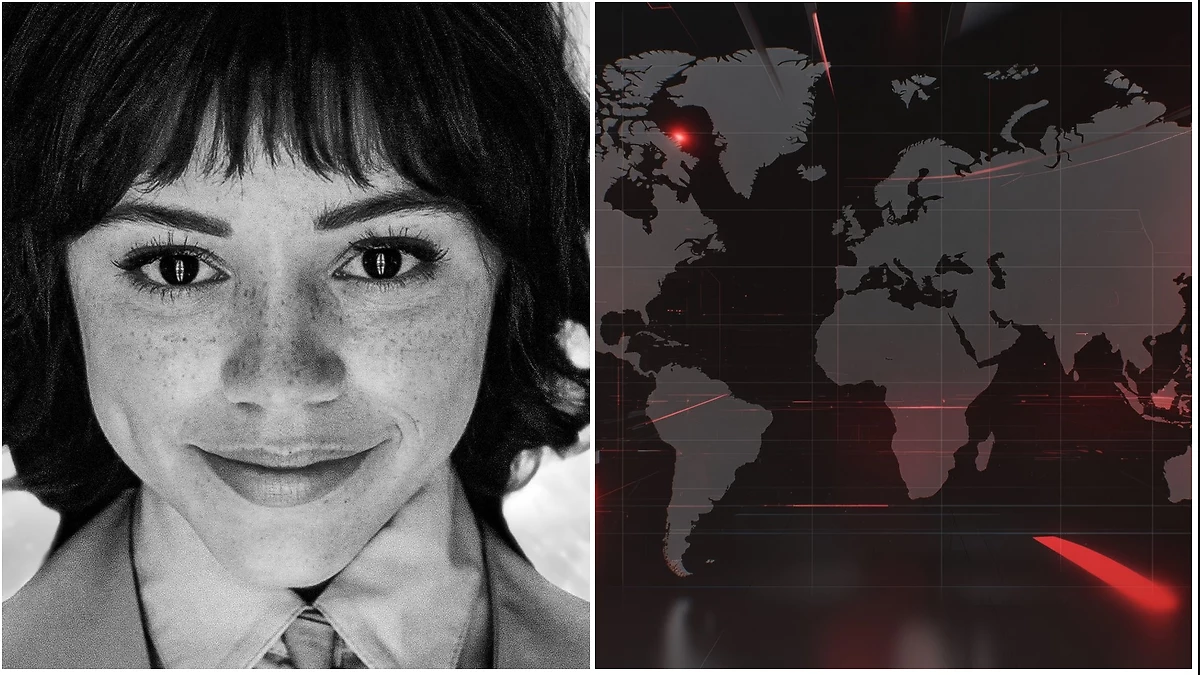


For decades, science fiction has treated artificial intelligence as a convenient source of menace. Now that AI is reshaping the real world, those once-fantastical dystopias can feel uncomfortably plausible — even if experts say the technology is unlikely to develop into anything resembling Skynet. Still, not every movie casts AI as a threat. Sometimes, an artificial creation becomes a person’s closest companion.
That idea drives “Klara and the Sun,” the film adaptation of Kazuo Ishiguro’s 2021 novel. Set in a troubled future, the story imagines a society where families can buy artificial friends. Klara (Jenna Ortega) is chosen by Josie (Mia Tharia), a girl whose intelligence has been dramatically enhanced through a risky procedure. As their bond deepens, Klara begins to discover the complexities of humanity — and what it truly means to care for someone.
With its unusual blend of melancholy and whimsy, “Klara and the Sun” explores loneliness and humanity’s growing dependence on technology to ease it. The film also joins a long tradition of stories asking whether artificial intelligence might change our definition of being human. If you’re looking for more movies that wrestle with those same questions, these five should be on your list.
A.I. Artificial Intelligence
The story behind “A.I. Artificial Intelligence” begins with Stanley Kubrick, who developed the project for years but lacked the visual-effects technology needed to realize his ambitious concept. After Kubrick’s death, Steven Spielberg took over, bringing the long-gestating film to theaters in 2001.
The film follows David (Haley Joel Osment), an artificial boy adopted by a couple whose biological son remains in cryostasis. When the boy eventually wakes, David is pushed aside and left searching for a purpose. Determined to become a “real” boy, he embarks on a quest inspired by “Pinocchio.”
The parallels between “A.I.” and “Klara and the Sun” are striking. Both unfold in bleak futures damaged by climate change, and both center on artificial beings who develop a spiritual understanding of the world around them. Klara worships the sun as a god, while David searches for the Blue Fairy who might transform him into a human.
At the heart of both films are questions about unconditional love, abandonment, and humanity’s capacity for cruelty. Even when their families are prepared to discard them, Klara and David do not respond with the bitterness one might expect. Rather than depicting AI as an unstoppable danger, these stories imagine artificial beings whose devotion makes them appear more human than the people who created them. Their unwavering programming ultimately exposes uncomfortable truths about us.
After Yang
Many AI stories ask whether an artificial being capable of empathy should still be considered artificial. Few explore that question as quietly and movingly as “After Yang,” one of 2022’s most overlooked films.
When a family’s android son, Yang (Justin H. Min), stops functioning, their efforts to restore him reveal the depth of his place in their lives. Yang is not a disposable gadget that can simply be replaced. He carries memories, and as the family examines them, they begin to understand that he may have found as much happiness in their shared life as they found in him.
“After Yang” is considerably more subdued than “Klara and the Sun.” While Taika Waititi’s film uses offbeat humor, “After Yang” gives its grief room to linger. As the family revisits Yang’s memory archive, they see how every moment helped shape the android they loved — much as our own experiences shape who we become. Anyone who has mourned someone close will recognize the film’s tender, aching sense of loss.
Hunt for the Wilderpeople
For a change of pace from the science fiction of “Klara and the Sun,” “Hunt for the Wilderpeople” offers a showcase for Taika Waititi’s distinctive comic style. Long before he directed blockbusters such as “Thor: Ragnarok,” Waititi established his voice with this warm, unconventional adventure.
The film follows Ricky (Julian Dennison), a hip-hop-loving boy sent to live with a new foster family. He quickly bonds with Bella (Rima Te Wiata), though he struggles to connect with her stern husband, Hector (Sam Neill). After Bella dies, Ricky runs away. Hector follows him into the New Zealand bush, but an injury leaves the unlikely pair dependent on each other as they try to find their way home.
Beneath its broad humor, “Hunt for the Wilderpeople” addresses serious questions about child welfare, belonging, and the many forms a family can take. Its characters may not fit a conventional mold, yet they build a meaningful relationship together. That balance echoes “Klara and the Sun,” which also uses Waititi’s playful sensibility to examine what makes someone human. His talent for pairing sharp jokes with genuine emotion helped carry him from independent comedy to the mainstream.
Never Let Me Go
“Klara and the Sun” comes from Kazuo Ishiguro, the acclaimed author whose novel “Never Let Me Go” was adapted into a film in 2010. Both stories use speculative technology as a backdrop, but their real focus is the effect that technology has on love, identity, and human connection. Ishiguro has described the relationship between the two works himself, telling Maclean’s: “For me, ‘Klara’ is an emotional reply to ‘Never Let Me Go.’ The last time I re-read it, probably seven or eight years ago, it struck me as a very sad book.”
That sorrow runs through every frame of “Never Let Me Go.” The story centers on three friends caught in a complicated love triangle: Kathy H (Carey Mulligan), Ruth C (Keira Knightley), and Tommy D (Andrew Garfield). Their understanding of the world collapses when they learn that their education has concealed the truth: They are clones created to provide organs for other people. Yet their ability to create art suggests that they possess inner lives — and deserve the same rights as anyone else.
Through clones in “Never Let Me Go” and an android in “Klara and the Sun,” Ishiguro considers who gets recognized as human. Both groups are exploited and ultimately cast aside, offering a grim reflection of the ways real people can also be reduced to their usefulness. In a society built on transactions, the way we treat beings who look human but are deemed “different” reveals how easily we can overlook the needs of our fellow human beings.
Her
Making a film about artificial intelligence is especially complicated now that AI has become part of everyday conversation. But before the technology was woven into daily life, “Her” imagined a future in which people rely on AI to satisfy their deepest need: connection.
Theodore (Joaquin Phoenix), isolated after a divorce, begins a romance with Samantha (voiced by Scarlett Johansson), an operating-system AI. Their relationship becomes his most accessible path toward intimacy. The film adds another telling detail to Theodore’s life: He writes deeply personal letters for people who cannot compose them themselves. His difficulty connecting with women leads him toward an artificial partner, while others outsource the emotional labor of writing to him — an idea that feels newly unsettling as modern AI tools are increasingly used to generate love letters.
Like “Klara and the Sun,” “Her” presents AI as a way to patch an emotional hole. People who struggle to find friendship or romance turn to a creation designed to respond to them, whether that response is genuine affection or an imitation of it. Both films feel particularly relevant in an era of widespread loneliness. Their central hope is that authentic human relationships will ultimately endure, rather than allowing technology to draw us further away from one another.


