

Marvel Studios
RATING : 4 / 10
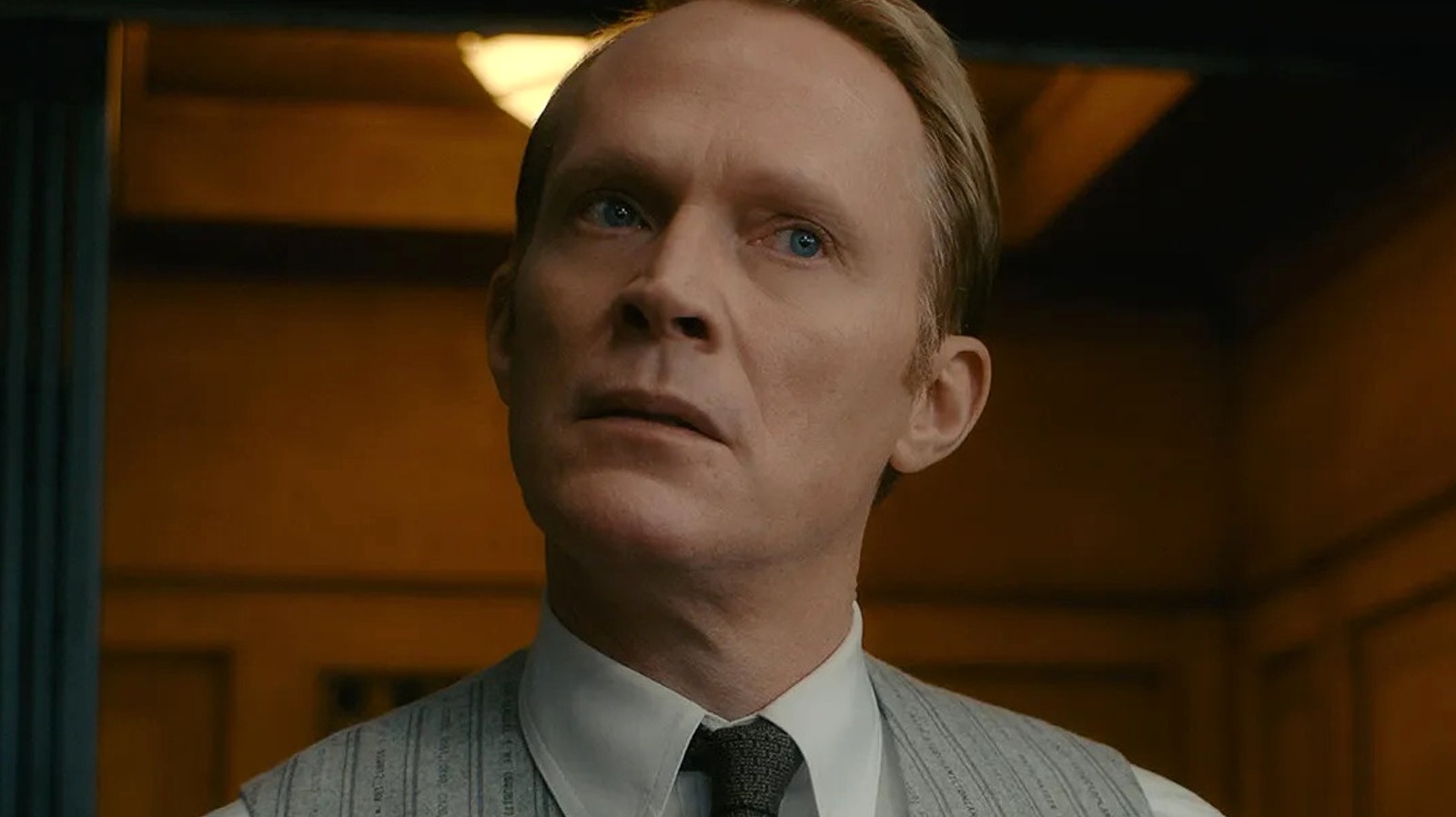
Watching “VisionQuest” may leave the Marvel writer who coined “What is grief if not love persevering?” feeling like Robert Oppenheimer after the atomic bomb: proud of the breakthrough, perhaps, but horrified by the consequences. The second spin-off from 2021’s “WandaVision” stretches that earlier series’ central idea across eight episodes, revisiting it from nearly every possible direction. Paul Bettany’s newly restored Vision tries to understand the human emotions surrounding grief, while his son Tommy (Ruaridh Mollica) struggles to make sense of his own childhood memories and life with his parents in Westview.
The original “WandaVision” line worked because of its elegant simplicity, and the series repeats it often enough to underline the problem. Those seven words already expressed the emotional argument that “VisionQuest” spends hours attempting to enlarge. Rather than finding a fresh way forward, the show feels like a calculated effort to reproduce the earlier Marvel hit, without the imaginative spark or natural emotional progression needed to justify its existence.
What is VisionQuest, if not mediocrity perservering?
Marvel Studios
After his resurrection in “WandaVision,” Vision’s human-form body settles in Edinburgh, taking a job at the pub he and Wanda (Elizabeth Olsen, who appears to have passed on a cameo) visited before the Blip. His memories remain, but the feelings once attached to them are gone. To reconnect with his humanity, he withdraws into a “Sherlock”-like Mind Palace populated by AI beings in human form, each modeled on someone from Tony Stark’s past. There, he talks through his confusion. In another conspicuous link to “WandaVision,” this inner world is presented as a vintage sitcom, even though Vision himself has none of Wanda’s apparent love for the format.
Vision’s isolated routine of replaying the past is shattered when the bounty hunter Paladin (Todd Stashwick) arrives with orders to kill him. Vision soon discovers that Tommy, his estranged son who was magically brought to life, is also being hunted. The contract came from Ultron (James Spader), the rogue AI now hiding inside a remote corner of Vision’s mind like a character from “Inception.” Forced to flee, Vision must protect a son who barely understands who his father is. Once they reunite, Ultron repeatedly appears to torment him, becoming less a terrifying threat than an irritating imaginary companion. It may be the first time a Marvel viewer has wished James Spader would have fewer scenes.
Showrunner Terry Matalas presumably understands why this is the moment to bring Ultron back to the MCU. More than a decade after his last appearance — still James Spader’s most recent film role — the rise of generative AI has made the character newly relevant. Technology leaders continue to warn that artificial intelligence may be advancing faster than the public understands, with some arguing humanity has already missed its chance to prevent serious consequences. That real-world anxiety creates a strong opening for Ultron’s return. A villain who seemed like broad speculative science fiction in 2015 could now speak directly to the present.
The trouble is that “VisionQuest” refuses to follow that idea into uncomfortable territory. Ultron alone is presented as the dangerous artificial intelligence, despite possessing the ability to rewrite his own programming — a capability that has prompted real-world warnings from AI experts. Vision and the other digital beings within him are largely benevolent, eager to study humanity and help it. Meanwhile, Vision’s attempt to recover human feeling remains the show’s primary emotional storyline.
An outdated AI story
Marvel Studios
Since “WandaVision” premiered, the notion of an AI forming a loving relationship with humans has taken on far more unsettling implications. The possibility that such technology could be manipulated for destructive purposes gives the series an obvious source of tension, yet “VisionQuest” barely explores it. Even Ultron feels less like a frightening superintelligence than a bitter online commenter: irritatingly smug and immature, even while threatening mass murder.
The series ultimately presents a surprisingly optimistic view of AI. Vision and the other Stark Industries creations are portrayed as machines that want to assist humanity and learn from it, with Ultron serving as the lone murderous exception. The supporting bots are so limited that they can be fooled by basic prompts, leading to jokes about CAPTCHA challenges and security questions that provide some of the show’s few original laughs. The other bright spot is comedian Diane Morgan, who plays Paladin’s remote assistant as a slightly more capable cousin to her “Philomena Cunk” persona. Most of the humor comes from Morgan’s delivery rather than especially sharp writing.
“VisionQuest” also feels noticeably old-fashioned in its treatment of artificial intelligence. The genre addressed many of these questions more effectively decades ago, while Steven Spielberg’s “A.I. Artificial Intelligence” already offered a definitive exploration of whether technology can develop genuine human emotion. This series returns to the same territory without uncovering a compelling new angle. Its ideas feel as familiar in standalone science-fiction terms as its grief storyline does within the MCU, where “WandaVision” handled the material with considerably more intelligence.
Matalas has compared Vision to Spock, another highly literal character who struggles with human behavior and has become important representation for generations of autistic fans. That comparison is worth noting because this version of Vision is not written with enough depth to support it. His simulations of awkward social encounters — eventually repackaged as television programs in an attempt to follow Wanda’s example — feel like early drafts of an idea that might, with substantial rewriting, become meaningful.
The larger issue is structural: “VisionQuest” begins with a near-copy of “WandaVision” instead of building thoughtfully on its emotional foundation. Once the series chooses imitation over evolution, it struggles to recover its momentum. It is not the weakest MCU series, but it may be the one that feels least invested in its own story.
“VisionQuest” premieres with its first two episodes on Disney+ on October 14.


